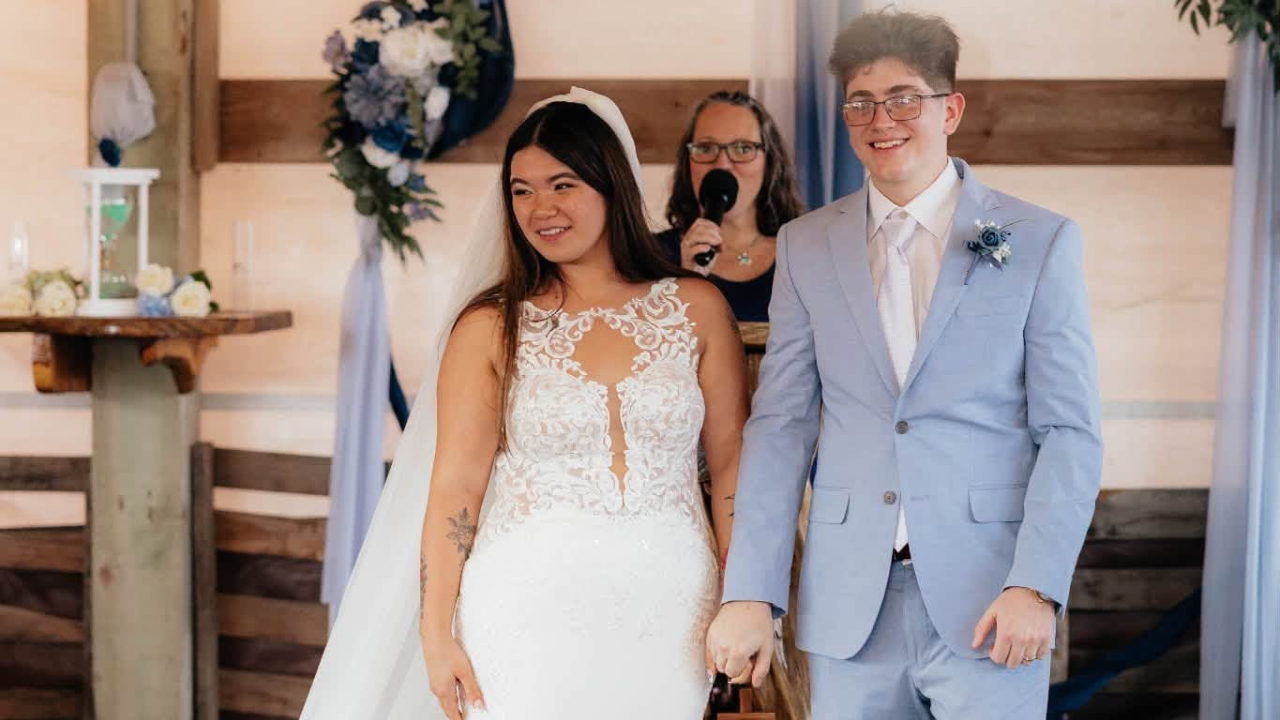
The modern wedding industry operates like a high-stakes logistics firm. Couples spend months tracking RSVPs, managing catering minimums, and coordinating vendor arrivals with military precision. When North Carolina Route 12 washes out because of a fierce nor'easter, however, spreadsheets become completely useless.
That is precisely what happened when Jayden Sink and Kimberly Laprad traveled to Hatteras Island for their long-planned beach ceremony. High winds and pounding surf battered the barrier islands, rendering the main road impassable and trapping family members on the mainland. To make matters worse, chartering a private boat for just three relatives carried an astronomical price tag of twelve hundred dollars. Their meticulously organized timeline evaporated overnight, leaving them staring down the barrel of an empty venue and a completely canceled vendor roster.
Most people would have cut their losses, retreated indoors, and waited for the weather to clear. Instead, faced with the prospect of an expensive, lonely photo shoot in wedding attire, the couple executed a sudden pivot. They posted an open invitation to social media, telling anyone stranded on the island by the storm to show up.
Within minutes, the digital call to action gained traction. Local residents and fellow travelers stranded by the washed-out highway did not just offer sympathy; they brought the infrastructure of a celebration. Photographers, musicians, cake bakers, and caterers who found themselves stuck on Hatteras Island stepped into
When Mother Nature Stole the Guest List and the Outer Banks Rewrote the Rules
lifestyle, news, travel
When a coastal tempest cuts off the mainland, logistics usually take precedence over romance. Coastal infrastructure is fragile, evacuation routes flood within hours of a high-tide surge, and a wedding scheduled on a barrier island during peak storm season is always a gamble with the elements. But in late September 2024, an extraordinary confluence of meteorological fury and community solidarity played out across the Outer Banks. Hurricane Helene churned inland, unleashing heavy winds and severe flooding that severed the bridge access and road networks connecting mainland North Carolina to parts of the barrier islands, trapping the vast majority of invited guests miles away on the other side of the water.
For a couple watching their dream celebration shrink from an eighty-person gathering to an intimate handful of stranded travelers, the natural instinct is despair. Yet what happened next bypassed the standard script of logistical disaster. Within hours, local residents, stranded vacationers, and nearby strangers transformed an empty venue into a full-scale celebration of resilience. This wasn't just a feel-good viral anecdote about wedding crashers; it was a visceral demonstration of how coastal communities operate under duress, turning isolation into inclusion.
The Geography of Isolation
To understand why this wedding divergence happened, you have to look at the unique topography of the Outer Banks. A string of narrow barrier islands separating the Atlantic Ocean from the sounds, this region is notoriously vulnerable to weather events. Route 12 acts as the solitary lifeline, and when storm surges cover the asphalt with sand and saltwater, the islands effectively become detached from the rest of the continent.
Couples choosing this destination love the wild, untamed aesthetic. They accept the risk of wind-swept hair and sudden downpours. They rarely budget for a Category-level storm system thousands of miles away dumping torrential rain that floods internal drainage basins and blocks all transit corridors.
When the bride and groom realized their family and friends were stuck behind barricaded highway checkpoints on the mainland, the baseline economics of a modern wedding evaporated. Deposits were paid, catering was ordered, and a photographer was already on site. The flowers had arrived via refrigerated truck days prior. The institutional response to such a crisis is typically cancellation or postponement, followed by months of wrangling with insurance adjusters and vendors over force majeure clauses.
Instead, they decided to proceed with whatever witnesses were breathing the same salt air.
The Anatomy of an Impromptu Guest List
Word travels fast in small island towns where everyone relies on everyone else for survival during storm seasons. When local business owners and residents near the venue heard about the deserted ceremony, the response was immediate.
Strangers from local rental houses, utility workers resting between storm-restoration shifts, and proprietors of nearby establishments walked through the doors. They didn't come to gawk; they came to participate. In a culture forged by maritime history, leaving people to weather a milestone alone violates an unwritten code.
Sociologists often talk about manufactured community spaces, but crisis situations forge organic social cohesion in real time. The dynamics shifted instantly. The polished formality of traditional wedding protocols dissolved into something far more raw and authentic. A local baker who couldn't deliver her commercial products due to road closures arrived with homemade pastries. A musician staying down the road unpacked an acoustic guitar.
This transformation highlights a broader truth about modern celebrations. We spend thousands of dollars trying to curate perfection, engineering every detail to look effortless. Yet the moments that stick in human memory are almost always the ones that go sideways. When control is stripped away, human ingenuity steps into the vacuum.
The Logistics of Resilience
Behind the romance of the impromptu gathering lies the unglamorous reality of crisis management. Operating a venue without power or standard supply chains requires improvisation. Generators roar to life. Refrigeration becomes a precious commodity. Water lines run on backup pressure.
Local vendors in the Outer Banks are uniquely qualified for these disruptions. They live with the constant hum of hurricane season tracking maps from June through November. When a wedding pivots from a planned corporate-catered affair to an ad-hoc potluck of community goodwill, it tests the flexibility of everyone involved. Photographers adjusted their shot lists from posed family portraits to candid captures of strangers sharing a toast. Venue coordinators threw out the timeline and let the evening unfold organically.
This event also exposed the fragility of modern destination wedding planning. Couples frequently outsource every detail to remote coordinators, treating the location as a static backdrop rather than an ecosystem with its own rules. When nature asserts itself, those rigid plans crack. The couples who thrive are those who embrace the local ethos rather than fighting it.
Beyond the Viral Headline
The media cycle loves a heartwarming narrative about strangers coming together. It offers temporary relief from a barrage of heavy news. But reducing this occurrence to a simple heartwarming vignette misses the deeper economic and social currents running beneath the surface of coastal communities.
Barrier islands are changing. Rising sea levels, more frequent high-tide flooding, and intense storm systems are rewriting the calculus of coastal living and tourism. Communities in these zones survive not because they have luxury amenities, but because their social capital is exceptionally high. People know their neighbors. They look out for stranded motorists. They share generators when the grid fails.
The wedding guests who made it across the barrier before the bridges closed, alongside the locals who filled the empty chairs, represented more than just warm bodies in a room. They were proxies for a community refusing to let a storm dictate the terms of human joy.
The music faded late into the evening against the backdrop of howling wind outside. The electricity flickered, stabilized, and flickered again. Long after the cake was cut by hands that had met only hours before, the bride and groom looked out over a room full of people they had never expected to know, realizing that their wedding album would feature faces entirely absent from the original spreadsheet.
The storm tried to isolate them. The island answered by expanding the family.