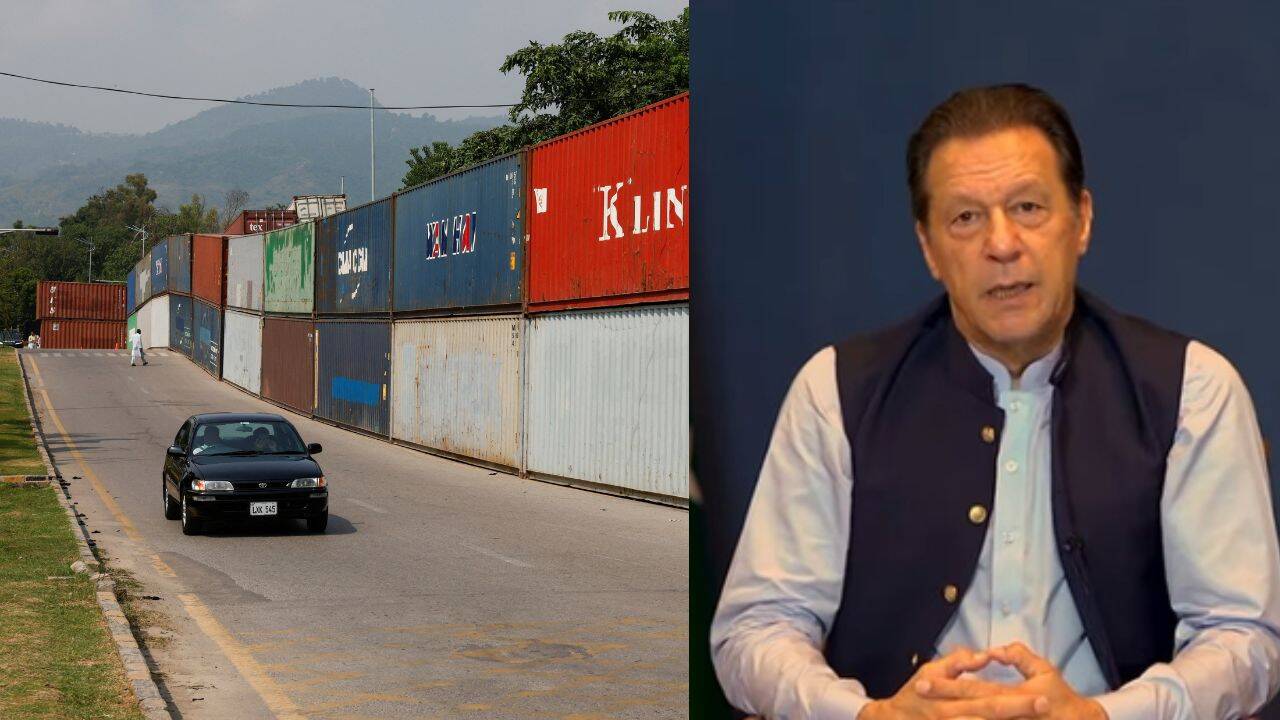
Shipping containers block major highways. Paramilitary troops patrol empty streets. The capital of Pakistan transforms into a high-security fortress whenever the opposition threatens to march.
If you watch local news or track South Asian politics, you know this routine. Former Prime Minister Imran Khan’s party, Pakistan Tehreek-e-Insaf (PTI), issues a call for a massive protest, and the government responds with total gridlock. Motorways close, shipping containers stack up like Lego bricks, and authorities deploy elite paramilitary forces to stop demonstrators before they ever touch the city limits.
Behind these security measures lies a deeper institutional struggle defining modern Pakistani politics.
The Anatomy of a Capital Lockdown
When PTI leadership declares a final march toward Islamabad, the state reaction follows a predictable playbook. Authorities don't just increase police presence. They paralyze entire regions.
Major motorways connecting Peshawar and Lahore to Islamabad get blocked overnight. The official excuse often points toward sudden road maintenance or security concerns, but everyone understands the real motive. Authorities want to choke off transportation networks to prevent thousands of protesters from converging on the Red Zone.
Train lines suspend operations. Public transit systems halt. Internet services face severe disruptions or outright shutdowns to stop demonstrators from coordinating online.
You have to look at the economic cost of these shutdowns. Billions of rupees vanish from local markets every time the government throws up barricades. Small businesses close, daily wage workers lose income, and the city grinds to a halt. Yet, state administrators argue that keeping order and protecting critical infrastructure overrides economic convenience.
Why Tensions Keep Boiling Over
You can't understand these massive security crackdowns without looking at the core grievances driving PTI supporters into the streets.
Ever since Imran Khan was ousted from power through a vote of no-confidence and subsequently imprisoned, his party has maintained relentless pressure on the federal government led by Prime Minister Shehbaz Sharif. PTI claims the current administration holds a stolen mandate, pointing fingers at powerful state institutions for allegedly rigging elections.
Add the controversial constitutional amendments targeting judicial independence into the mix, and you get a volatile recipe for mass mobilization. Khan’s supporters view these legal changes as an existential threat to democratic checks and balances.
When peaceful political dialogue breaks down, the streets become the only remaining outlet. And that is precisely why the government deploys the Punjab Rangers and Frontier Constabulary with strict orders to hold the line.
The Human Cost of Political Deadlock
Deploying paramilitary forces and blocking highways creates immediate friction on the ground. Mass arrests sweep through opposition ranks days before a planned march. Thousands of party workers find themselves behind bars under preventive maintenance laws or Section 144 restrictions.
When determined convoys still push forward—led by high-profile figures or local leaders—clashes invariably break out. Tear gas clouds intersections, batons swing, and allegations of disproportionate force fly from human rights organizations.
The information blackout makes verifying casualties notoriously difficult. Independent observers and human rights monitors frequently clash with official state narratives regarding injuries and security tactics during these high-stakes showdowns.
Stopping a political movement by barricading a city offers temporary relief for those in power, but it doesn't solve the underlying democratic crisis. Until both sides find a framework for genuine political compromise, Islamabad will keep stocking up on shipping containers, waiting for the next inevitable showdown.