Autumn in Ann Arbor arrives with a sharp chill that burns the throat and scatters amber leaves across the brick walkways of the University of Michigan. For a nineteen-year-old international student named Haoxiang Gao, October 2024 was supposed to be about midterms, late-night library study sessions, and the quiet rhythm of academic survival in a foreign hemisphere. Instead, it became a collision with a system he did not understand, governed by laws he chose to ignore.
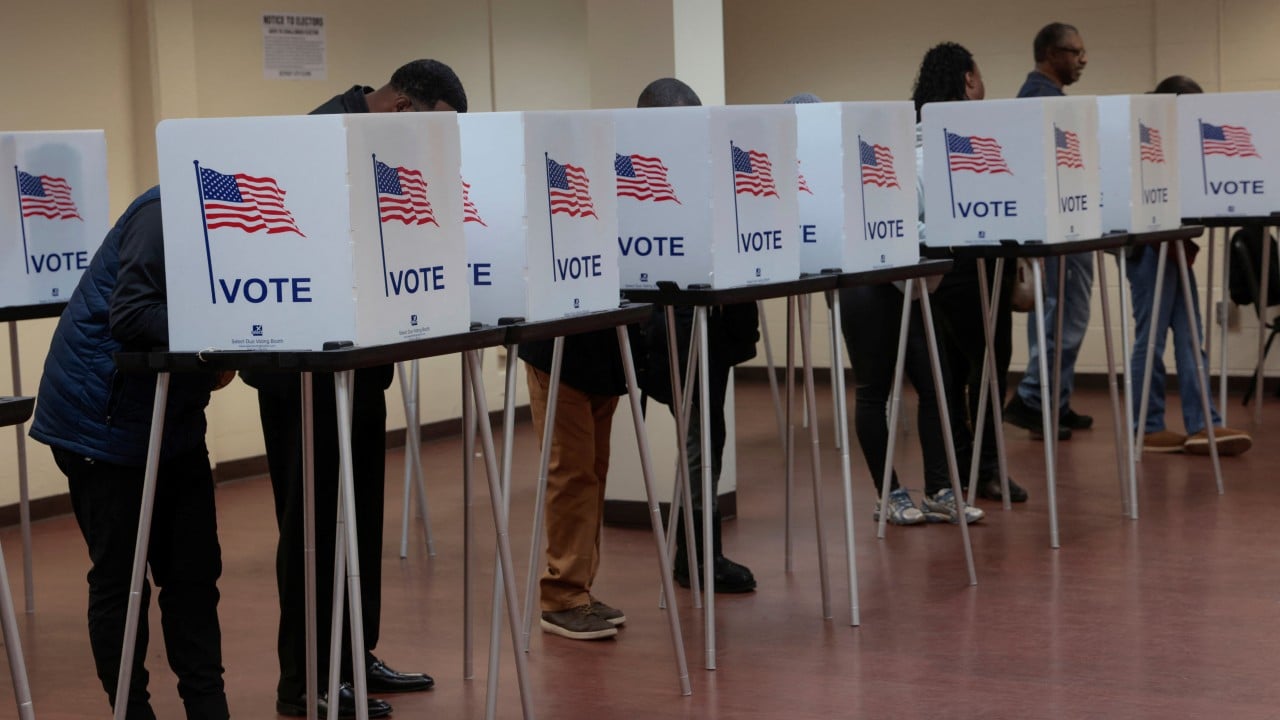
He walked into an early voting site at the University of Michigan Museum of Art. The room hummed with the quiet urgency of civic duty. Volunteers sorted papers. Tabulators clicked. Gao stepped up to a table, filled out an application, and checked a box affirming he was a United States citizen. It was a lie scribbled with a ballpoint pen. Minutes later, his ballot slid into the machine, swallowed by a democratic process reserved exclusively for citizens. Meanwhile, you can explore related developments here: Inside the White House Push to Revive the Trump Kim Summit.
Within twenty-four hours, the reality of what he had done settled over him. Panic set in. He contacted the local clerk, desperately asking if there was any way to pull his vote back out of the machine. But election ballots are anonymous by design; once cast and tabulated, they cannot be retrieved. You cannot unring a bell. You cannot unsay a word. University investigators and the FBI were soon knocking on doors.
What followed was a slow-motion legal unraveling. State charges for perjury and unauthorized voting landed with the heavy thud of felony indictments. During his arraignment, a judge granted him a personal bond on one fundamental condition: he must surrender his passport and stay within the borders of Michigan. Gao handed over a Chinese passport, its serial number logged into the court record, and the state breathed a sigh of relief. To see the full picture, check out the excellent analysis by The Washington Post.
Consider what happens next: a masterclass in deception.
While facing a system designed to hold him accountable, Gao obtained a second, entirely separate passport issued by the People's Republic of China. How he secured it remains a lingering ghost in the federal investigation. While his original passport sat locked in an evidence file, he packed a bag, slipped past the checkpoints at Detroit Metropolitan Airport, and boarded a Delta flight bound for Shanghai. That departure happened on January 19, just hours before a new political administration took the oath of office in Washington.
When his name was called for subsequent court hearings in the spring, the courtroom benches were empty. A bench warrant was issued immediately. Federal prosecutors unsealed a new charge: flight to avoid prosecution. Yet, because the United States and China share no formal extradition treaty, Gao vanished into the sprawling megacities of the East.
The incident instantly ignited a national firestorm. Critics seized upon the breach as proof of systemic vulnerability, arguing that same-day registration and lax verification policies open the floodgates to foreign interference. Lawmakers rushed to propose sweeping new legislation, demanding rigid documentary proof of citizenship for every single voter. Opponents countered that such measures risk locking genuine American citizens out of the ballot box over bureaucratic hurdles.
Yet beneath the hyperventilating cable news segments and the partisan talking points lies a quieter, more sobering statistical truth. Comprehensive state reviews by election officials and nonpartisan watchdogs revealed that noncitizen voting is extraordinarily rare. In Michigan's massive electorate of over 5.7 million voters, a tiny handful of isolated noncitizen ballots were flagged—representing a microscopic fraction of a percent. Across national audits, the numbers tell the same story: the wall holds. The system is not a sieve.
This case is not a window into a widespread conspiracy. It is a portrait of human foolishness colliding with immovable iron laws. It is about a nineteen-year-old student who thought a border was just a line on a map and a voting booth was just another line to cross, only to discover that the machinery of a republic protects its borders with unyielding gravity.
The ballot he cast remains buried in the final count, unretrievable, a drop of water in an ocean of millions. But the empty chair in the Washtenaw County courtroom remains as well—a stark reminder that when you gamble with the foundational trust of a democratic nation, the house eventually collects its debt, even if it has to wait across an ocean.