The Illusion of the Leisurely Afternoon
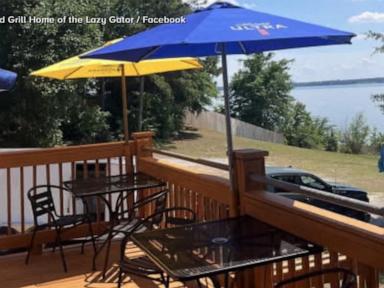
A woman dies at a lakeside restaurant because a gust of wind turns a patio umbrella into a high-speed projectile. The media calls it a "freak accident." The public offers thoughts and prayers. The restaurant owner checks their liability insurance.
They are all wrong.
Calling this a "freak accident" is a convenient lie that allows us to ignore a fundamental failure in engineering and public safety. There is nothing "freak" about a large, unanchored sail reacting to fluid dynamics. When you sit under a standard commercial umbrella, you aren't relaxing. You are sitting in the strike zone of a poorly designed mechanical system that lacks a basic understanding of aerodynamic lift.
The lazy consensus focuses on the tragedy of the event. My focus is on the physics of the negligence. We treat patio furniture like interior decor that happens to live outside. That mindset is killing people.
The Sail Hidden in Plain Sight
Let’s dismantle the "wind" argument first. Wind isn't an unpredictable monster; it is a measurable force.
Most patio umbrellas are designed with a primary focus on aesthetics—teak wood, vibrant canvas, "resort-style" vibes. They are essentially inverted parachutes. When air moves across the top of that canopy, it creates a pressure differential. This is basic Bernoulli's principle.
$$P + \frac{1}{2}\rho v^2 + \rho gh = \text{constant}$$
As the velocity ($v$) of the wind increases, the pressure ($P$) above the umbrella drops. The higher pressure underneath creates an upward force. If the weight of the base or the friction of the locking mechanism is less than that lift force, you no longer have a piece of furniture. You have a javelin.
I’ve spent years analyzing structural failures in public spaces. I’ve seen 50-pound cast-iron bases get dragged across concrete like they were made of foam because the owner thought "heavy" meant "immovable." Gravity is a weak force compared to the lift generated by a $10$-foot diameter circle in a $25$-mph gust.
The Failure of the 50-Pound Base
Standard industry advice tells restaurant owners that a 50-to-75-pound base is sufficient for a free-standing umbrella. This is dangerous misinformation.
- The Surface Area Problem: A $9$-foot umbrella has roughly $63$ square feet of surface area.
- The Leverage Problem: The pole acts as a lever arm. A gust hitting the top of a $7$-foot pole exerts a massive amount of torque on that tiny base.
- The Friction Fallacy: On a slick lakeside deck or a polished stone patio, the coefficient of friction is abysmal.
In any other industry, a device capable of generating hundreds of pounds of lift would require a professional engineer’s stamp for installation. In the hospitality world, we let a teenager who started working three days ago "set up the patio." We are trusting 19th-century hardware to handle 21st-century weather volatility.
Stop Blaming the Wind
When these tragedies occur, the immediate reaction is to look at the weather report. "The wind picked up suddenly."
This is an abdication of responsibility. If a bridge collapses during a storm, we don't blame the rain; we blame the engineers. Why do we hold a lakeside cafe to a lower standard of structural integrity?
The "nuance" the media misses is that these deaths are preventable through mechanical intervention, not just "vigilance." If your umbrella doesn't have a high-wind release valve—a physical gap that allows air to pass through rather than pushing against the fabric—it is a hazard. If it isn't bolted to a subterranean footing or a weighted frame exceeding $150$ pounds, it is a liability.
Most restaurant "commercial" umbrellas are just consumer-grade junk with thicker fabric. They aren't designed for the sustained turbulence of a shoreline. They are designed to look good in a catalog.
The False Security of the Table Hole
People believe that putting an umbrella through the hole in a heavy wrought-iron table makes it safe. It actually makes it worse.
Now, instead of just a flying pole, you have a flying pole attached to a heavy, jagged piece of metal. The table provides more surface area for the wind to catch and turns the entire assembly into a tumbling meat-grinder. I have seen photos of "secured" furniture tossed fifty feet into glass storefronts.
If it isn't anchored into the earth, it is temporary.
The High Cost of Aesthetic Negligence
Why don't we see more permanent shading? Because it's expensive. It requires permits. It requires a contractor.
It’s much cheaper to buy twelve "market umbrellas" from a big-box retailer and hope for the best. This is the calculated risk of the hospitality industry, and patrons are the ones paying the premium with their lives.
We need to stop asking "How did this happen?" and start asking "Why was this allowed to be portable?"
There is a psychological comfort in things that look familiar. We see a patio umbrella and think "vacation." We should see a patio umbrella and think "unsecured overhead load." If you saw a construction site hanging a $100$-pound beam by a single frayed rope, you wouldn't sit under it. Yet, you’ll sit under a $10$-foot canopy held down by a decorative plastic bag filled with sand.
The Actionable Truth
If you own a business with outdoor seating, your "safety check" is probably a joke. Closing the umbrellas when it "gets breezy" is a reactive strategy that fails the moment a microburst hits.
- Switch to Cantilever Systems with Concrete Footings: If the base isn't part of the foundation, it isn't a base.
- Use High-Flow Vents: Triple-tier canopies aren't just for style; they break the pressure differential.
- Implement Wind-Sensors: High-end umbrellas can be fitted with sensors that automatically retract the canopy when wind speeds exceed a set threshold. If you can’t afford the tech, you shouldn't have the umbrella.
The lakeside death wasn't a tragedy of fate. It was a tragedy of physics ignored in favor of a "cozy" atmosphere.
Stop looking at the weather. Start looking at the bolts.
If it can be moved by a human, it can be launched by the sky.