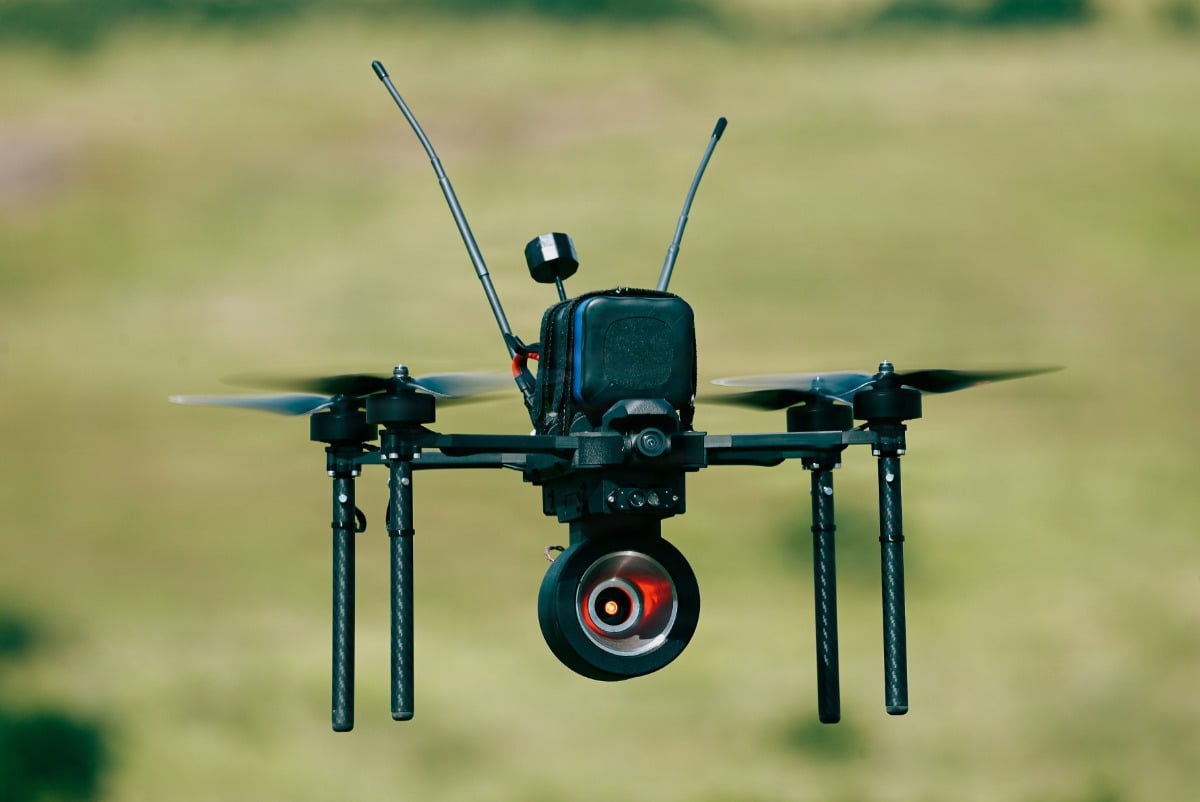
The defense establishment is celebrating again. Nineteen companies just advanced in the Pentagon’s latest high-stakes drone competition, and the press is buying the narrative wholesale. They call it a masterclass in accelerating hardware adoption. They call it a vital leap toward asymmetric warfare.
They are completely wrong.
Advancing nineteen separate companies in a military drone cohort is not a sign of a healthy procurement strategy. It is an open admission of systemic cowardice. When the Department of Defense spreads its chips across nearly twenty different corporate entities, it isn't hedging bets. It is delaying the brutal, necessary decisions required to win a modern conflict.
This multi-vendor circus ensures that no single manufacturer achieves the manufacturing scale required to counter peer adversaries. It creates a playground for venture-backed defense startups to inflate their valuations while delivering zero actual combat readiness. The Pentagon does not need nineteen boutique drone options. It needs one or two platforms manufactured by the millions.
The Mathematical Certainty of Procurement Failure
Military logistics runs on standardization. Look at the bloody battlefields of Eastern Europe. Wars of attrition are won by weapon systems that can share parts, use identical software interfaces, and scale down production costs through massive manufacturing volume.
When you break down the economics of the current Pentagon strategy, the math falls apart instantly.
Imagine a fixed modernization budget of $500 million for small uncrewed aerial systems. Spreading that capital across nineteen distinct corporate entities leaves roughly $26 million per company before accounting for bureaucratic overhead. In the hardware world, $26 million is nothing. It is a rounding error. It is barely enough to build a cleanroom, hire a dozen machine-learning engineers, and assemble a handful of hand-crafted prototypes for a demonstration in the California desert.
By refusing to pick a definitive winner, the defense apparatus causes three distinct structural bottlenecks.
Supply Chain Fragmentation
Nineteen companies mean nineteen different supply chains. Every vendor uses different electric motors, different optical sensors, different carbon-fiber composites, and different microcontrollers. Instead of consolidating buying power to secure massive quantities of American-made chips or secure components, the government forces nineteen tiny startups to fight each other for the same scarce market resources. This artificial competition drives component prices up and manufacturing speeds down.
Intellectual Property Silos
Modern drone warfare is a software fight. It requires rapid electronic warfare countermeasures, instant mesh networking updates, and adaptive computer vision. With nineteen corporate entities guarding their proprietary software architectures to appease their venture capital backers, collective progress grinds to a halt. A software fix discovered by Vendor A to bypass GPS jamming will never make its way to Vendor B. The military ends up operating nineteen distinct digital silos.
Training and Maintenance Chaos
Consider the poor infantryman or drone operator in a high-intensity combat scenario. Under the current trajectory, that operator might have to learn three different user interfaces, pack five different proprietary battery chargers, and swap components that are completely incompatible with the drone sitting in the adjacent squad's rucksack. It is a logistical nightmare masquerading as tech diversity.
The Venture Capital Grift
I have spent years watching defense tech founders pitch their ideas to military acquisition officers. The playbook is always the same. You build a sleek, carbon-fiber quadcopter. You put an impressive AI object-detection bounding box around a stationary truck in a simulated test field. You use buzzwords to describe basic autonomous navigation. Then, you secure a lucrative Small Business Innovation Research grant or an Other Transaction Authority contract.
The goal of these companies is rarely mass production. The goal is the next funding round.
The Pentagon's current selection framework rewards companies that excel at passing government audits and writing compelling contract proposals, rather than companies that know how to build a factory floor. Most of these nineteen advanced companies cannot manufacture more than fifty drones a month without their supply chains collapsing.
They rely on low-volume, high-margin production models. They treat drones like exquisite, hand-crafted Swiss watches. But modern warfare demands that drones be treated like artillery shells: cheap, expendable, and produced by the trainload.
While American defense startups focus on optimizing their corporate valuations for their Series B lead investors, factories in Asia are pumping out commercial quadcopters by the hundreds of thousands every single month. The Pentagon is bringing boutique tech-bro culture to a industrial manufacturing fight.
The Lethal Delusion of the Exquisite Drone
The core flaw in the defense establishment's thinking is the obsession with the "exquisite" platform. The Pentagon wants a drone that can fly for two hours, resist military-grade electronic warfare, stream encrypted high-definition video over hundreds of miles, use onboard machine learning to classify targets, and cost $50,000 per unit.
The reality of modern combat has thoroughly dismantled this premise.
Drones on a modern battlefield have a lifespan measured in days, sometimes hours. A $50,000 drone gets brought down by a $500 commercial jammer or a lucky burst of small arms fire just as easily as a cheap one. When you lose an exquisite drone, you lose a critical asset and a massive chunk of your budget. When you lose a $500 first-person-view drone, you simply pick up another one from the pile and launch it.
The current 19-company cohort is incentivized to pack as much complex, unproven technology into their airframes as possible to justify their exorbitant price tags to the government. This feature creep is deadly. It lengthens the development cycle, introduces hundreds of potential points of failure, and ensures the system can never be produced at a scale that matters.
| Asset Metric | The Pentagon's 19-Vendor Model | The Industrial Mass Model |
|---|---|---|
| Unit Cost | $20,000 - $80,000 | $500 - $1,500 |
| Monthly Production Cap | Dozens per vendor | Tens of thousands |
| Supply Chain Origin | Fragmented, low-volume | Consolidated, high-volume |
| Operational Lifespan | Expected to survive weeks | Expected to be expended in days |
| Software Architecture | Proprietary, closed silos | Unified, open-source standard |
Stop Evaluating Prototypes and Start Testing Factories
If the military genuinely wants to fix its autonomous systems deficit, it needs to stop looking at the drones themselves and start looking at the factories where they are built.
The current selection process is a beauty pageant for prototypes. To fix this, defense leadership must completely invert the evaluation criteria.
The next phase of any defense drone program should not ask companies to demonstrate how well their drone flies in pristine conditions. The government should demand a single, brutal test: Show us your manufacturing line producing 1,000 combat-ready units in a single week using zero components sourced from adversarial nations.
This single operational constraint would immediately eliminate the vast majority of the nineteen companies clogging up the pipeline. It would weed out the software-only shops that slap their code onto imported airframes. It would expose the hardware startups that rely on manual, hand-assembly methods.
The downside to this approach is obvious, and we must be honest about it. Forcing a hard, immediate down-selection to one or two dominant vendors creates a temporary monopoly. It risks alienating the venture capital ecosystem that poured money into the other seventeen losers. It means the government might pick a platform that is slightly less technologically advanced than a competitor's boutique prototype.
But that is a trade-off we must accept. A good drone produced by the hundreds of thousands will always defeat a perfect drone that only exists as a dozen prototypes in a laboratory.
The military must end the nineteen-company experiment immediately. Pick the two most scalable, boring, unglamorous manufacturing operations in the mix. Fund them to the absolute maximum. Force them to open-source their software interfaces so any independent developer can write code for their hardware. Scrap the exquisite feature lists and focus entirely on minimizing the cost per unit.
Stop funding the startup grift. Kill the illusion of choice. Build the factories, scale the production, and leave the nineteen-way corporate beauty pageants behind.