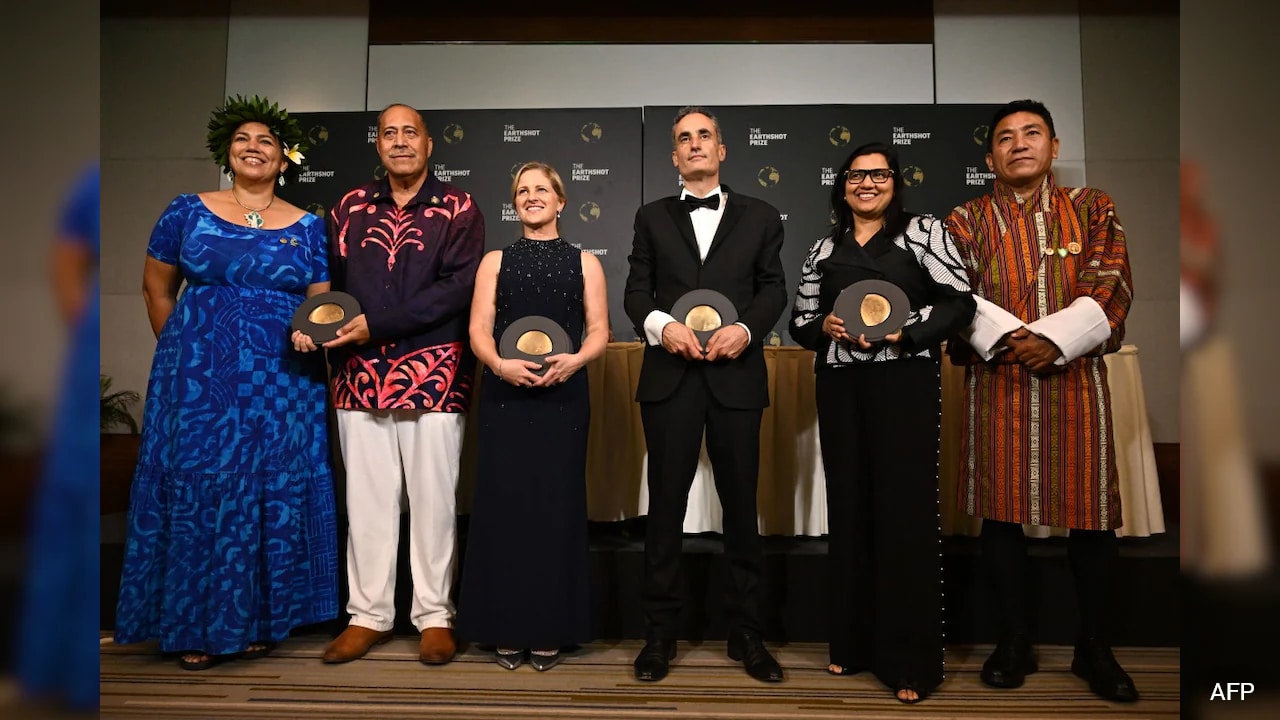
Every November, the headlines look almost identical. Prince William steps onto a green carpet, shakes hands with five innovators, and hands out £1 million—roughly $1.3 million—to each of them.
Then the news cycle moves on.
That's a shame, because treating the Earthshot Prize like a celebrity charity gala misses the entire point of how climate funding actually works. Most people assume this is just royal PR wrapped around a big check. It isn't. When Prince William and the Royal Foundation launched the initiative back in 2020 alongside Sir David Attenborough, they modeled it after President John F. Kennedy’s 1962 Moonshot challenge. The goal wasn't to fund lab experiments that might pay off in forty years. It was to find solutions that already exist right now and give them the capital, corporate connections, and global megaphone to scale before 2030.
Why Five Winners Receive $1.3 Million Each
Let's clear up the math first, because news outlets constantly mix up the currencies. The prize awards £1 million to each of the five category winners every year. Depending on the exchange rate during the ceremony week—whether the event is hosted in London, Boston, Singapore, Cape Town, or Rio de Janeiro—that translates to roughly $1.2 million to $1.3 million USD.
Five winners. Five distinct environmental categories.
Here is how the prize breaks down across the planet's most urgent ecological bottlenecks:
- Protect and Restore Nature focuses on stopping deforestation, rebuilding biodiversity, and protecting wild ecosystems.
- Clean Our Air targets industrial emissions, indoor air pollution, and urban smog.
- Revive Our Oceans backs organizations fighting overfishing, plastic runoff, and coral reef collapse.
- Build a Waste-Free World rewards circular economy models that eliminate single-use materials and landfill dependency.
- Fix Our Climate zeroes in on carbon removal, clean energy storage, and heavy-industry decarbonization.
If you've ever worked around venture capital or environmental grants, you know $1.3 million sounds big until you try to build a manufacturing plant or deploy hardware across three continents. In clean-tech, $1.3 million is basically seed money. So why do founders fight tooth and nail for a spot among the fifteen finalists?
Because the check isn't the real prize.
The real prize is the Earthshot Prize Fellowship and the Global Alliance network. Winners and finalists get direct introductions to massive supply-chain buyers, multinational corporations, and philanthropic funds that normally wouldn't take a cold call from a small conservation group in rural Kenya or an agritech startup in India. When a royal-backed organization puts its stamp of approval on a project, due diligence hurdles vanish overnight.
What the Past Earthshot Prize Winners Actually Built
Look at the track record since the inaugural 2021 ceremony, and you'll notice a sharp pattern. The judging council—which includes figures like Christiana Figueres, Indra Nooyi, Jack Ma, and Queen Rania of Jordan—rarely picks flashy Silicon Valley hype. They pick gritty, practical operations that solve unglamorous problems.
Take Kheyti, an Indian startup that won in the Protect and Restore Nature category in 2022. Smallholder farmers in India face brutal heatwaves and erratic monsoons that wipe out entire harvests. Kheyti didn't invent a complicated AI satellite platform. They designed a modular "Greenhouse-in-a-Box" tailored specifically for small plots of land. It uses 90% less water than open-field farming, shields crops from pests and extreme heat, and multiplies farmer yields up to seven times.
Or look at Takachar, another Indian innovator led by Vidyut Mohan, which took home the Clean Our Air prize in 2021. Every winter, northern India chokes on toxic smog caused largely by farmers burning leftover crop stubble because transporting bulky agricultural waste to processing plants costs too much. Takachar built a small, low-cost, portable machine that attaches to tractors and converts crop waste into sellable biochar and fertilizer right on the farm. No massive factories required.
Then there's Coral Vita, co-founded by Sam Teicher and Gator Halpern in The Bahamas, which won the Revive Our Oceans category in 2021. Traditional coral restoration is agonizingly slow. Coral Vita uses land-based "micro-fragmenting" tanks to grow resilient coral up to 50 times faster than it grows in the wild, then replants it onto dying reefs.
Notice what those three winners have in common? None of them rely on sci-fi breakthroughs. They take existing biology, chemistry, or engineering and redesign the economics so local communities can actually afford to use them.
The Selection Process Behind the Scenes
You can't just fill out an online form and pitch Prince William. Honestly, the vetting process is one of the most grueling parts of the entire program, and it's why institutional investors take the shortlist seriously.
Over 400 official nominators—ranging from academic institutions and grassroots NGOs to environmental researchers—submit more than a thousand candidates each year. From there, an expert advisory panel spends months tearing apart financial statements, verifying ecological impact metrics, and checking whether the leadership team can actually handle rapid growth.
They narrow the field down to 15 finalists—three per category.
Every single one of those 15 finalists gets flown to the host city, receives tailored coaching, and gains access to the Earthshot Launchpad, an online matchmaking platform connecting them with funders. Only five walk away with the £1 million grant on broadcast night, yet the other ten frequently raise millions more from private investors sitting in the audience.
Where the Critics Have a Point
It wouldn't be honest to pretend the Earthshot Prize has zero flaws. Environmental watchdogs and policy analysts have raised fair questions since day one.
First, there's the carbon footprint irony. Flying nominees, celebrities, film crews, and royal staff across the globe for a televised awards show generates emissions. The organizers counter this by mandating strict sustainability rules—no new outfits allowed on the green carpet, locally sourced plant-based catering, and renewable power for the venue—but critics still point out the optics of private-sector sponsors using the event for glossy greenwashing.
Second, $1.3 million per winner is tiny compared to fossil fuel subsidies. According to data tracked by the International Monetary Fund, global fossil fuel subsidies run into the trillions of dollars every year. Five grants of £1 million won't single-handedly reverse atmospheric warming.
Third, some grassroots activists argue that prize-based philanthropy favors organizations that already know how to speak the language of Western venture capital and impact metrics. A brilliant indigenous land-management collective without a polished pitch deck can easily get overlooked in favor of a media-savvy startup.
Both things can be true at once. The Earthshot Prize isn't a silver bullet for the climate crisis, and it shouldn't replace government policy or corporate regulation. At the same time, dismissing it because it doesn't solve everything ignores the measurable lifelines it has thrown to dozens of frontline teams.
How You Can Track and Support Earthshot Finalists Directly
If you want to look past the celebrity headlines and see where the real momentum is happening, skip the tabloid coverage and go straight to the source.
- Explore the official Earthshot Prize website. Every finalist since 2021 is cataloged by category and region on The Earthshot Prize, complete with breakdowns of their environmental metrics and funding needs.
- Follow the Launchpad and regional partners. Many winners—like Notpla, the UK-based startup making biodegradable seaweed packaging that replaced plastic food boxes at major stadiums—sell directly to businesses and consumers. Supporting companies that switch to Earthshot-backed packaging or materials creates real market demand.
- Watch how local governments adopt the winning models. The strongest signal that an Earthshot winner is succeeding isn't the trophy on their shelf; it's when a municipal water board, agricultural ministry, or port authority signs a multi-year procurement contract with them twelve months later.
Next time you see headlines about Prince William handing out $1.3 million checks on stage, look past the ceremony and check who won the five categories—those fifteen finalists are usually a reliable preview of the environmental solutions about to go mainstream.