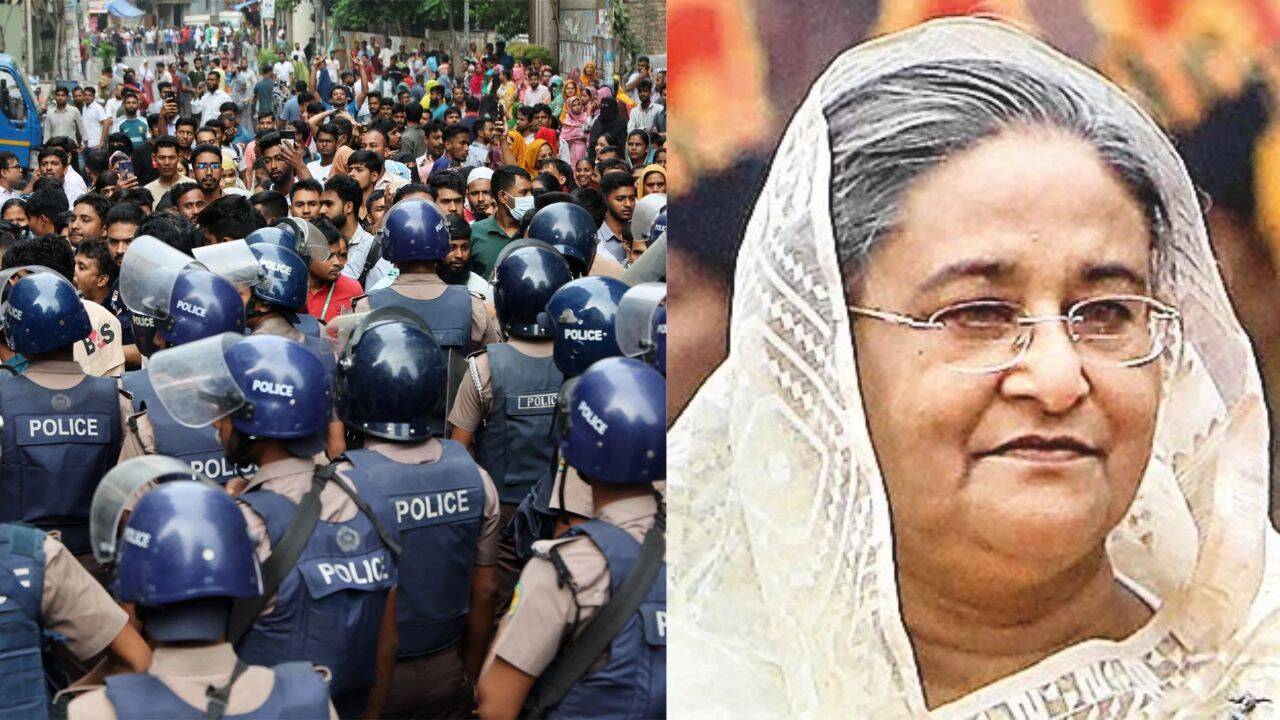
Arson attacks are ripping through Bangladesh again, and almost every headline frames it as a simple street brawl between rival political mobs. That misses the bigger picture. Look closer at what's actually burning, and you'll see a calculated battle over legitimacy, legal traps, and who gets to control the narrative before December 16.
I've tracked South Asian political crises for years, and the pattern here is unmistakable. When a former leader who governed for 15 years threatens to walk back across the border despite a death sentence hanging over her head, the violence isn't random chaos. It's political signaling with firebombs.
Why the December 16 Date Changes Everything
Sheikh Hasina didn't pick a random Tuesday to announce her comeback from exile in India. She chose December 16—Bangladesh's Victory Day, marking the 1971 independence triumph over Pakistan.
Symbolism runs deep in Dhaka. By tying her return to the exact date her father, Sheikh Mujibur Rahman, is historically linked to, Hasina is forcing Prime Minister Tarique Rahman's government into an impossible corner. Stop her at the border on Victory Day, and her banned Awami League party paints the state as an enemy of the 1971 legacy. Let her walk in freely, and the government looks weak after sentencing her to death in absentia over the 2024 student protest crackdown.
Honestly, it's a high-stakes game of chicken. Hasina, now 79, has openly stated she knows execution by hanging could await her, yet she's pushing ahead anyway. Why? Because a courtroom drama or a border standoff keeps her relevant in a country that tried to move on without her.
What Is Actually Burning and Why It Matters
Most casual readers see news of torched buses and assume it's standard hartal (strike) tactics. Look at the specific targets from late November 2026, and a sharper picture emerges:
- Financial institutions tied to the post-2024 transition: Grameen Bank—founded by former interim leader Muhammad Yunus—reported that more than 100 of its branches were hit by arson attacks over the course of November. At a targeted branch in Gopalganj, attackers explicitly told a security guard they were retaliating for Yunus's earlier order to demolish Sheikh Mujibur Rahman's historic residence. That isn't random looting. It's targeted historical payback.
- Transit arteries into Dhaka: Buses were set ablaze in Pallabi, Badda, Savar, Ashulia, and right outside the Mirpur-10 Fire Service office in Dhaka. Rival groups also clashed and torched shops and vehicles near a major Padma Bridge link connecting southwestern Bangladesh to the capital. Cutting off the Padma Bridge corridor chokes commercial lifelines and reminds Dhaka how easily the south can paralyze the center.
- Homes of former lawmakers and state outposts: Attackers torched the Rajshahi home of a former Awami League junior foreign minister, while machete-wielding groups burned a police station in Gopalganj. Both sides are settling scores in the streets while the state struggles to hold the middle.
The Passport Trap Nobody Talks About
Here's the detail most foreign coverage glosses over. Hasina can't simply buy a plane ticket from New Delhi to Dhaka.
Dhaka revoked her diplomatic passport back in August 2024, shortly after she fled, and canceled her national identity card in February 2025. When her lawyers applied for fresh travel papers at the Bangladesh High Commission in New Delhi, the government flatly refused. Prime Minister Tarique Rahman's administration insists she can only re-enter the country through formal extradition, citing passport rules against issuing documents to convicted fugitives.
Legal scholars in the region point out a glaring contradiction in that stance. Passport statutes are written to regulate citizens leaving a country, not to bar a national from returning home. Hasina's team knows this. That's why she's floating the idea of crossing via a land border instead—a move that would turn a quiet immigration checkpoint into an international media circus.
How the State Is Locking Down Gopalganj
If you want to gauge how seriously Dhaka takes this threat, look at Gopalganj. It's Hasina's ancestral hometown and the beating heart of Awami League loyalty.
Authorities haven't waited for December 16 to tighten the screws. Over 120 platoons of Border Guard Bangladesh (BGB) paramilitary troops—each platoon packing 30 to 40 personnel—have fanned out across seven districts, with 56 platoons concentrated in Gopalganj alone. BGB headquarters is coordinating ground movements using live drone feeds and body-worn cameras.
Meanwhile, daily life in Gopalganj has ground to a halt:
- Local market committees ordered shops shut across the district for two-day stretches amid fears of street battles.
- Bus operators like Star Express suspended services between Gopalganj and Dhaka.
- Direct rail links to the capital were halted, mobile banking services went dark, and several local police stations stopped functioning altogether.
Residents describe feeling trapped between state crackdowns and street militancy. When you shut down mobile banking and public transit in a regional hub, you don't just stop political activists—you squeeze ordinary shopkeepers, farmers, and families who just want to get through the week.
The Deadly Cost on the Ground
This isn't just property damage and tear gas. The clashes have already turned lethal. In Shariatpur district, roughly 80 kilometers from Gopalganj, violent street fighting left an Awami League activist named Ibrahim Sepahi dead. In Dhaka, crude bombs exploded outside Uttara North Tower and the Kurmitola Bus Stand, rattling commuters in neighborhoods miles away from traditional protest zones.
Meanwhile, the BNP, Jamaat-e-Islami, and the National Citizen Party (NCP) aren't sitting idle. They've rolled out counter-rallies across December—starting with a major BNP gathering in Dhaka on December 1 and a 40-day mobilization campaign by Jamaat-e-Islami—specifically designed to block any Awami League comeback.
Put all those pieces together and you see the real danger. You have a banned party staging torchlight marches and two-day nationwide shutdowns, rival parties flooding the streets with counter-rallies, and heavily armed paramilitary units patrolling towns where police stations have gone dark. One miscalculation at a checkpoint or bridge tollbooth could spark far wider bloodshed.
What to Watch Before December 16
If you're following this crisis for business, travel, or regional analysis, ignore the noisy social media rumors and track four concrete indicators over the next two weeks:
- Border checkpoint posture along West Bengal: Watch whether India's Border Security Force and Bangladesh's BGB reinforce land ports like Benapole-Petrapole. Movement there will tell you if Hasina's land-crossing talk is real or pure theater.
- Padma Bridge transit disruptions: Any sustained blockade or arson near the southwestern highway approaches will immediately hit Dhaka's supply chains and garment exports.
- December 1 rally turnout in Dhaka: The size and discipline of the BNP's opening rally will show whether Tarique Rahman's government can channel anti-Hasina anger peacefully without letting street groups spiral out of control.
- International Court of Justice filings: Dhaka has floated taking Hasina's extradition dispute with New Delhi to the ICJ. Any formal diplomatic move there signals that the government expects a prolonged standoff rather than a December arrest.
Stay off intercity highways around Dhaka and the southwestern districts during announced strike windows, verify transit status directly with bus or rail operators before moving, and monitor official BGB and Dhaka Metropolitan Police advisories rather than unverified viral clips.


