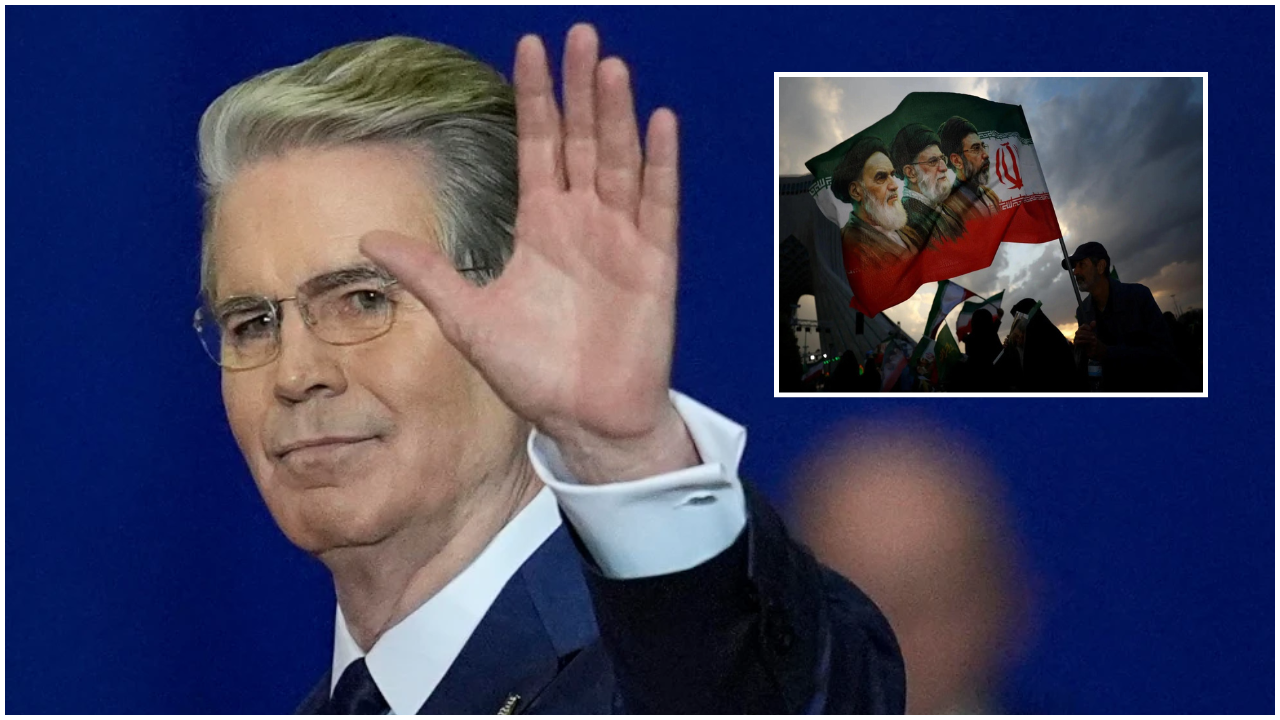
In early November 2026, U.S. Treasury Secretary Scott Bessent quietly packed his bags, left his $12.5 million Georgetown residence, and relocated with his family onto a Washington-area military installation. The move came in direct response to escalating Iranian assassination threats tied to his role as the architect of Washington’s financial war against Tehran.
Surface-level coverage treats this relocation as a straightforward protective detail adjustment. It is not. When the chief financial officer of the United States abandons civilian neighborhood life for a guarded military compound, it signals a profound shift in how modern economic warfare blurs the line between ledger sheets and kinetic retaliation.
The Architecture of Operation Economic Outcast
To understand why a former hedge fund manager became a prime target for Tehran, you have to look at what the Treasury Department has been executing since late summer. On August 24, 2026, Bessent formally unveiled Operation Economic Outcast, an aggressive sanctions campaign built to sever Iran’s remaining financial lifelines amid the broader U.S.-Israeli military conflict with the Islamic Republic.
Unlike traditional sanctions packages that slowly tighten screws over years, this campaign was designed for immediate asphyxiation. The Treasury Department expanded secondary sanctions across five critical sectors—including digital assets, aviation, and shipping—while designating dozens of front companies, ship registries, and shadow banking networks. Bessent framed the policy in stark, binary terms, warning foreign buyers and financial intermediaries that they were either with Washington or against it.
The operational impact hit Tehran’s core revenue engine within weeks. By November, Bessent publicly stated that Iranian floating oil stocks had evaporated and that Tehran had failed to load a single tanker since the August rollout. Whether those numbers reflect total maritime paralysis or temporary logistical rerouting, the financial squeeze placed immense pressure on the Islamic Revolutionary Guard Corps (IRGC) and regime insiders.
In asymmetric warfare, when an adversary cannot match naval blockades or dollar dominance on equal terms, it looks for soft targets behind the lines. Economic technicians suddenly carry the same target profile as battlefield commanders.
The Georgetown Vulnerability and the Tipping Point
Protecting a cabinet official in an open residential neighborhood is a nightmare for security planners. Georgetown’s historic row houses and detached mansions sit on narrow, public streets with minimal standoff distance.
Security concerns around Bessent spiked sharply after The Wall Street Journal published an aerial photograph of his Georgetown property, a home he had purchased shortly after his confirmation in January 2025. During a subsequent interview on CNBC, Bessent pointed directly to that publication as a major catalyst for his move, calling the photo’s release "very unfortunate" because it effectively handed hostile actors a precise geolocation map of his private residence.
Intelligence warnings compounded the exposure. According to reporting from Al Jazeera, Israeli intelligence passed along a specific threat warning regarding Iranian plots targeting Bessent, echoing earlier intelligence alerts that had prompted unusual protective measures for senior American officials. Faced with an exposed civilian address and active threat streams, federal security agencies opted to pull him behind a military perimeter rather than attempt to fortify a historic D.C. street.
A Wider Cabinet Retreat Behind Base Gates
Bessent is far from an isolated case. His move places him inside a growing cohort of senior Trump administration officials living on military installations around the capital.
Reports and open-source threat monitoring indicate that figures including Secretary of State Marco Rubio, White House Chief of Staff Stephen Miller, Attorney General Todd Blanche, and Defense chief Pete Hegseth have also operated from or resided on military bases alongside their families. Historically, on-base housing in the National Capital Region—such as Quarters One at Fort Myer or residences at Joint Base Anacostia-Bolling—was reserved almost exclusively for top uniformed brass like the Chairman of the Joint Chiefs of Staff.
Converting military flag-officer housing into a residential enclave for civilian cabinet secretaries marks a stark departure from Washington norms.
The Operational Trade-Offs of Base Living
Moving civilian leadership onto military installations solves immediate tactical problems while creating complex institutional ones.
- Perimeter Control: Military bases eliminate drive-by reconnaissance, drone overflights, and unvetted pedestrian traffic that plague civilian neighborhoods.
- Resource Strain: Housing high-profile political principals requires dedicated diplomatic security or Secret Service overlays, which must be integrated into base defense protocols already stretched by heightened force-protection postures.
- Civil-Military Optics: Critics and national security observers point out that physical insulation separates top policymakers from everyday civic life, reinforcing a bunker mentality during an active foreign conflict.
Iranian-linked networks have already attempted to turn this defensive posture into psychological warfare. In mid-November, an Iran-aligned group calling itself the Yahya Movement circulated propaganda posters naming Bessent, Rubio, Miller, Blanche, and Hegseth, explicitly threatening their families on American military bases. Tehran officially denies plotting attacks on U.S. soil, maintaining its standard diplomatic posture even as proxy groups broadcast targeted threats.
The Limits of Financial Deterrence
Bessent has tried to project defiance from behind the wire. In media appearances following news of his relocation, he described the alleged bounty on his head as proof that Operation Economic Outcast is working, comparing Tehran’s leadership to "wounded cornered animals".
That framing captures the administration's core bet, yet it also exposes a structural vulnerability in modern statecraft. Financial sanctions were originally championed as a bloodless, low-risk alternative to military force—a way to coerce adversaries from an office building two blocks from the White House.
In 2026, that insulation no longer exists. When Treasury officials wage total economic warfare designed to collapse a regime’s currency, shadow banking, and oil exports, the blowback does not stay confined to bond markets or shipping lanes. It follows the policymakers home.
Even inside a guarded installation, the broader strategic dilemma remains unresolved. Washington is currently weighing further escalatory steps against Iranian leadership while trying to keep energy markets stable and prevent wider regional retaliation. High walls and military checkpoints can protect a Treasury Secretary’s family in Virginia or Maryland, but they cannot shield the global economy from what happens when a cornered adversary decides it has nothing left to lose.