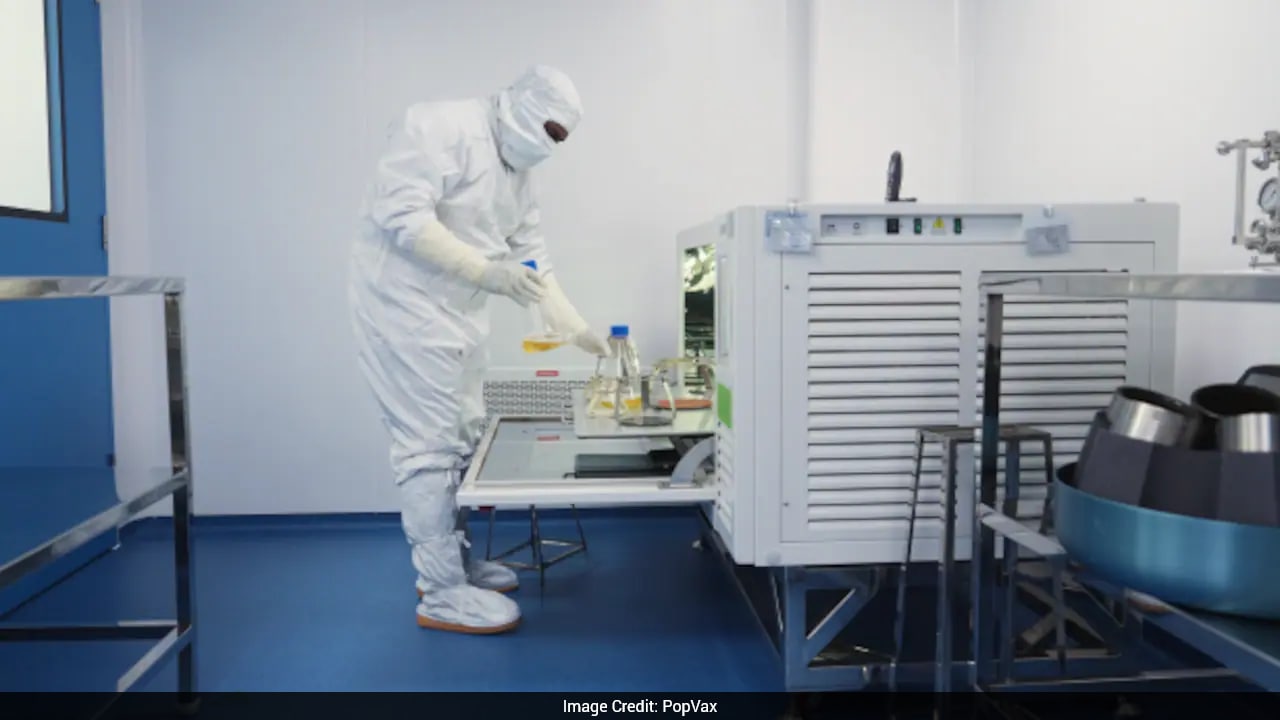
Personalised cancer vaccines represent an N-of-1 manufacturing problem disguised as a pharmaceutical product. When an Indian biotechnology startup claims to offer tailored cancer immunotherapies, the announcement must be evaluated through three rigid operational constraints: the biological mechanics of neoantigen identification, the unit economics of single-batch Good Manufacturing Practice (GMP) production, and the clinical validation thresholds required to separate therapeutic efficacy from marketing hyperbole.
Most industry commentary treats personalised oncology therapeutics as traditional software or standard small-molecule drugs, assuming marginal costs drop to zero at scale. In reality, individualized neoantigen therapies invert the standard pharmaceutical business model. Every patient requires a bespoke supply chain, dedicated sequencing compute, and isolated biomanufacturing runs. Evaluating an emerging market entrant in this sector requires stripping away corporate press release language and auditing the underlying science, regulatory posture, and commercial feasibility.
The Biological Mechanism Behind Neoantigen Targeting
Traditional cancer treatments—chemotherapy, radiation, and even first-generation targeted therapies—attack broadly shared cellular pathways or common genetic mutations like HER2 or EGFR. Personalised cancer vaccines operate on a fundamentally different immunological premise: exploiting somatic mutations unique to an individual patient's tumor.
As malignant cells divide rapidly, they accumulate DNA replication errors. Some of these mutations alter the amino acid sequence of proteins, generating novel peptides known as neoantigens. Because these proteins do not exist in healthy germline tissue, the human immune system has not developed central tolerance against them. If properly presented to cytotoxic T-cells (CD8+ T-cells), these neoantigens act as high-specificity flags for immune-mediated tumor destruction.
The Four-Step Identification Pipeline
For any biotech firm—whether in Boston, Mainz, or Bengaluru—to deliver a personalised cancer vaccine, it must execute a deterministic four-stage workflow:
- Dual-Tissue Sequencing: Clinicians extract a tumor biopsy alongside a healthy blood or saliva sample. Technicians perform Whole Exome Sequencing (WES) to map the protein-coding regions of both genomes, subtracting germline DNA from tumor DNA to isolate tumor-specific somatic mutations. Simultaneously, RNA sequencing (RNA-seq) verifies whether the mutated genes are actively transcribed into messenger RNA, filtering out silent or non-expressed mutations.
- HLA Typing: The patient’s Human Leukocyte Antigen (HLA) alleles are sequenced. HLA molecules sit on the surface of cells and bind to peptide fragments to display them to passing T-cells. A mutation is useless as a vaccine target if the patient’s specific HLA molecules cannot physically bind the resulting neoantigen.
- In Silico Epitope Prediction: Proprietary machine learning algorithms predict which mutated peptides will bind with the highest affinity to the patient's HLA class I and class II molecules, and which are most likely to trigger a durable T-cell response. This step narrows thousands of somatic mutations down to a prioritized payload of 10 to 30 neoantigens.
- Payload Synthesis and Delivery: The selected neoantigen sequences are encoded into a delivery vehicle—most commonly mRNA encapsulated in lipid nanoparticles (LNPs), synthetic long peptides (SLPs), or viral vectors—and manufactured under sterile conditions for injection back into the patient.
The critical vulnerability in this pipeline lies in step three. Current bioinformatic prediction models suffer from high false-positive rates. While algorithms reliably predict HLA binding affinity, predicting actual immunogenicity—whether a T-cell receptor will recognize the peptide-HLA complex and initiate cytotoxic killing—remains an unsolved biological bottleneck. An Indian startup claiming rapid vaccine generation relies on the exact same publicly validated foundational datasets (such as the Immune Epitope Database) as global giants like Moderna and BioNTech, unless it possesses proprietary clinical immunopeptidomics data generated from thousands of local patient biopsies.
The Operational Bottleneck Vein-to-Vein Time
In advanced oncology, biology dictates the operational clock. A patient with metastatic or high-risk resected solid tumors cannot wait six months for a therapeutic intervention. The defining operational metric for personalised cancer vaccines is vein-to-vein time (or biopsy-to-needle time): the elapsed days between tissue extraction and the administration of the first vaccine dose.
Every stage of the pipeline introduces compounding friction:
- Logistics and Cold Chain: Tumor tissue must be preserved immediately upon resection to prevent RNA degradation. Transporting viable samples from regional oncology centers in tier-two Indian cities to a centralized sequencing facility introduces temperature-excursion risks that can invalidate RNA-seq data.
- Sequencing and Compute Latency: High-depth WES (often requiring 100x to 200x coverage to detect subclonal tumor mutations) and bioinformatics processing require 7 to 14 days under optimal conditions.
- Single-Batch Manufacturing and Release Testing: This is the primary choke point. Unlike traditional biologics produced in 2,000-liter bioreactors for millions of patients, a personalised vaccine requires a micro-batch produced exclusively for one person. Following synthesis, the batch cannot be released until it passes mandatory sterility, endotoxin, and potency assays. Traditional compendial sterility testing alone requires a 14-day incubation period under standard pharmacopeial guidelines.
When global leaders initiated early-stage trials, vein-to-vein times routinely exceeded 16 to 20 weeks. Through massive capital expenditure in automated microfluidics and rapid PCR-based sterility assays, top-tier firms have compressed this window to roughly 4 to 6 weeks. For a nascent startup operating within India’s infrastructure constraints, achieving a sub-six-week turnaround requires end-to-end vertical integration. If the company outsources sequencing to third-party genomics labs or relies on imported raw materials—such as GMP-grade modified nucleosides, capping reagents, or ionizable lipids—customs clearance delays alone can push vein-to-vein time past the clinical window of utility.
Deconstructing the Unit Economics of N-of-1 Manufacturing
The economic viability of an Indian biotech offering personalised cancer vaccines hinges on cost structure arbitrage versus insurmountable fixed overheads.
In traditional drug development, Research and Development (R&D) is a massive sunk fixed cost, while Cost of Goods Sold (COGS) is negligible. In personalised oncology, R&D and COGS merge. Every single patient dose incurs direct variable costs for reagents, sequencing flow cells, single-use bioreactor bags, and dedicated quality control (QC) labor.
The Cost Function of an Individualized Dose
To understand the pricing floor, the total cost per patient ($C_{total}$) can be modeled as:
$$C_{total} = C_{seq} + C_{comp} + C_{mfg} + C_{qc} + C_{amort}$$
Where:
- $C_{seq}$ (Sequencing Cost): Dual WES and RNA-seq at high depth. While Illumina and MGI sequencing costs have plummeted, clinical-grade sample prep and high-depth coverage still carry hard reagent floors.
- $C_{comp}$ (Compute Cost): Cloud or on-premise GPU/CPU hours required to run variant calling and neoantigen prioritization pipelines. This is the only component that scales cheaply.
- $C_{mfg}$ (Manufacturing Cost): Dedicated raw materials (plasmids, enzymes, lipids) used for a single batch, plus cleanroom suite occupancy time. Because cross-contamination between patients is fatal, equipment must be single-use or undergo exhaustive sanitization between runs.
- $C_{qc}$ (Quality Control Cost): In a 100,000-dose batch, the cost of destroying 50 vials for destructive sterility and potency testing is 0.05% of the batch. In an N-of-1 batch, destructive QC testing consumes a massive fraction of the total manufactured yield and requires the exact same regulatory documentation per patient as a commercial mega-batch.
- $C_{amort}$ (Amortized Facility Overhead): Maintaining a Class A/B cleanroom facility compliant with Central Drugs Standard Control Organisation (CDSCO) and international GMP standards requires continuous HVAC, environmental monitoring, and specialized personnel regardless of patient volume.
India possesses a structural advantage in $C_{comp}$ and $C_{qc}$ labor costs, where skilled bioinformaticians and analytical chemists command lower salaries than in North America or Western Europe. However, India holds zero structural advantage in $C_{seq}$ or $C_{mfg}$ raw materials. Sequencing reagents, GMP enzymes, and specialized lipids are overwhelmingly imported from the US, Europe, or China, priced in US dollars, and subject to import duties.
If a startup claims to offer these vaccines commercially in India at a fraction of Western prices (where personalised therapies like CAR-T or experimental neoantigen vaccines are priced between $100,000 and $400,000), one of three conditions must be true:
- They are subsidizing the COGS using venture capital to acquire initial clinical data.
- They have replaced expensive GMP mRNA/LNP platforms with simpler, lower-cost modalities like synthetic peptides combined with standard adjuvants, which carry lower manufacturing complexity but often exhibit weaker CD8+ T-cell induction.
- They are operating under a clinical trial framework or compassionate-use exemption rather than a fully commercialized, GMP-certified drug approval, bypassing full commercial overhead.
Regulatory Architecture and Clinical Validation Standards
A critical distinction must be drawn between offering a therapy under an experimental clinical trial and selling an approved therapeutic with proven overall survival benefits. Media coverage of early-stage biotech startups routinely conflates Phase I safety trials or academic investigator-initiated studies with commercial readiness.
Under India’s regulatory framework—governed by the New Drugs and Clinical Trials Rules (2019) under the CDSCO—a personalised cancer vaccine is classified as a novel biologic or gene/cell-based therapeutic product. Bringing such a product to market requires clearing three distinct evidentiary hurdles:
1. Chemistry, Manufacturing, and Controls (CMC)
Regulators must approve the process rather than a static chemical structure. Because every patient receives a different active pharmaceutical ingredient (the unique neoantigen sequence), the manufacturer must prove that its automated pipeline produces consistent purity, encapsulation efficiency, and stability regardless of the specific nucleotide or amino acid sequence fed into the system.
2. Phase I/II Immunogenicity and Safety
Before claiming therapeutic efficacy, the startup must demonstrate in human subjects that the vaccine is non-toxic and actually generates antigen-specific T-cells. This requires complex downstream blood assays, such as ELISpot or peptide-MHC multimer staining, performed on patient peripheral blood mononuclear cells (PBMCs) weeks after vaccination. Generating a strong T-cell response in a Petri dish or a mouse model does not guarantee that those T-cells will successfully infiltrate a dense, immunosuppressive human solid tumor microenvironment.
3. Randomized Controlled Efficacy (Phase IIb/III)
The gold standard in oncology is demonstrating statistically significant improvement in Recurrence-Free Survival (RFS) or Overall Survival (OS) against the current standard of care. Notably, almost all leading global neoantigen vaccine candidates—such as Moderna and Merck’s mRNA-4157 (V940) in melanoma—are not administered as monotherapies. They are combined with immune checkpoint inhibitors (like pembrolizumab).
The biological rationale is clear: a vaccine generates the T-cell army, while the checkpoint inhibitor removes the tumor's PD-1/PD-L1 molecular shield so those T-cells can kill cancer cells. If an Indian startup is testing or offering a personalised cancer vaccine as a standalone monotherapy in late-stage, heavily pre-treated patients whose immune systems are already exhausted by chemotherapy, the probability of clinical failure is exceptionally high.
Strategic Risk Matrix for Stakeholders
For healthcare providers, investors, and patients evaluating claims from an early-stage personalised oncology startup, due diligence must bypass narrative storytelling and audit four specific operational realities:
- Platform Modality vs. Cold-Chain Reality: Determine whether the vaccine uses mRNA-LNPs, DNA plasmids, dendritic cell pulsing, or synthetic peptides. Dendritic cell vaccines require leukapheresis (extracting white blood cells from the patient), ex vivo culturing, and re-infusion—a labor-intensive process notoriously difficult to standardize across multiple hospital sites. Peptide vaccines are stable and cheap to synthesize, but historically struggle to elicit potent cytotoxic T-cell responses without advanced, proprietary adjuvants.
- Proprietary vs. Open-Source Bioinformatics: Verify if the company has validated its neoantigen prediction algorithm using mass spectrometry-based immunopeptidomics on Indian patient cohorts. Genetic diversity across Indian subpopulations presents distinct HLA allele frequencies compared to the predominantly Caucasian datasets used to train Western prediction models. An algorithm trained exclusively on European HLA distributions will systematically miscalculate binding affinities for South Asian patients.
- Combination Therapy Access: Check whether the clinical protocol pairs the vaccine with checkpoint inhibitors. Because patented checkpoint inhibitors remain prohibitively expensive in India, the total treatment cost to the patient is dictated not just by the startup’s vaccine price, but by the mandatory co-administration of imported biologics.
- Manufacturing Autonomy: Audit the physical facility. True vertical integration requires in-house plasmid DNA production, in vitro transcription (IVT) suites, microfluidic LNP formulation skids, and an internal analytical QC lab. Reliance on Contract Development and Manufacturing Organizations (CDMOs) destroys the unit economics and stretches vein-to-vein timelines beyond clinical viability.
The Strategic Play for Emerging Market Biotech
An Indian biotechnology firm cannot win a direct capital war against multinational pharmaceutical conglomerates on bespoke mRNA-LNP infrastructure. The structural path to commercial viability in emerging markets requires shifting away from pure N-of-1 bespoke manufacturing toward off-the-shelf shared neoantigen libraries or semi-personalised platforms.
Instead of sequencing and manufacturing a unique batch from scratch for every patient, the optimal operational play is building a pre-manufactured, warehouse-stocked library of the 50 to 100 most frequent public neoantigens and tumor-associated antigens specific to prevalent regional cancers—such as oral squamous cell carcinoma, gallbladder cancer, and specific subtypes of breast and lung cancer. Upon rapid HLA typing and targeted panel sequencing of a patient's tumor, clinicians select and mix three to five pre-manufactured, pre-tested GMP vials from the shelf.
This "warehouse model" collapses vein-to-vein time from six weeks to 72 hours, eliminates single-batch destructive QC waste, leverages economies of scale in bulk GMP production, and brings the final price point within reach of the domestic healthcare market. Any startup attempting pure N-of-1 manufacturing in India without this structural pivot will remain trapped as a low-volume, capital-intensive clinical research service rather than a scalable commercial therapeutics company.