Stop mourning the empty podium.
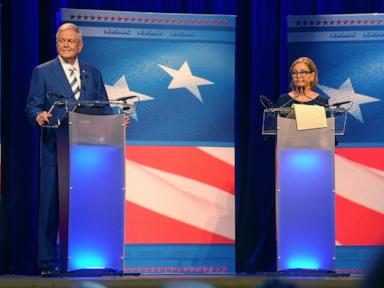
Every election cycle, legacy political reporters clutch their pearls and write the exact same obituary for democracy. They point to the numbers—like the 60% of U.S. Senate races reaching Election Day without a single debate, or the gubernatorial toss-ups in states like Ohio, Georgia, and Nevada where candidates simply refused to share a stage. They call it cowardice. They call it a crisis of accountability. Discover more on a connected issue: this related article.
They are completely wrong.
The mainstream media loves televised debates for one reason: free, high-margin content that turns complex governance into a reality television boxing match. For voters, however, the modern political debate has become a net negative—a heavily rehearsed, algorithmic clip-factory that rewards performative cruelty over actual policy competence. Candidates aren't skipping debates because they are afraid of tough questions. They are skipping them because the format is fundamentally broken, and participating in one is strategic malpractice. Further analysis by The Washington Post highlights related views on the subject.
The Myth of the "Civic Job Interview"
The lazy consensus among editorial boards is that a debate is a "job interview" for the voters. If you accept that premise, skipping a debate looks like refusing to show up to work.
Here is the problem with that analogy: no competent CEO hires a chief financial officer by putting two finalists in a room, giving them 60 seconds to answer complex macroeconomic questions, allowing them to interrupt each other with pre-written zingers, and letting a television anchor interrupt them both to hit a commercial break.
I have sat in war rooms and watched campaign teams spend hundreds of thousands of dollars prepping candidates for these events. Do you know how much of that prep is spent on legislative mechanics, budget reconciliation, or crisis management? Almost zero. Ninety percent of debate prep is spent memorizing "pivots"—verbal gymnastics designed to dodge the moderator's question and deliver a 12-second soundbite tailored for TikTok and X.
When a candidate steps onto a modern debate stage, they aren't being tested on their ability to govern. They are being tested on their ability to memorize focus-grouped insults while standing under hot lights.
- Time constraints destroy nuance. You cannot explain healthcare reform, energy grid infrastructure, or municipal zoning in 45 seconds.
- Moderators incentivize conflict. Broadcast networks need ratings, not policy whitepapers. Questions are framed to provoke personal attacks ("Your opponent called you a fraud—how do you respond?") rather than substantive comparisons.
- The "gaffe" asymmetry. A candidate can deliver 89 minutes of brilliant, nuanced policy analysis, stumble over one adjective in minute 90, and that single three-second clip will define the entire news cycle.
Voters aren't learning how a candidate thinks. They are watching a high-stakes game of verbal dodgeball.
Why Smart Campaigns Are Walking Away
Look at the mechanics of modern campaign strategy. Political scientists, including researchers at the Brookings Institution who have tracked debate declines for decades, have documented a steep drop-off since the turn of the century. In 2000, the top five most competitive Senate races featured 17 debates combined. Today, candidates across the ideological spectrum—from frontrunners protecting a lead to challengers refusing to share a stage with opponents they deem dishonest—are pulling the plug.
Media pundits frame this as a bipartisan conspiracy against transparency. In reality, it is basic game theory.
Consider the math of a modern campaign. Suppose you are a candidate with a five-point lead in a competitive state. Your opponent is trailing and desperate for an earned-media breakthrough because they cannot afford to match your television ad buy. If you agree to a televised debate, you are handing your opponent free access to your audience, elevating their stature to equal footing, and introducing massive downside variance into a race you are already winning.
Even in dead-heat races, the return on investment has collapsed. Twenty years ago, a televised debate was one of the only ways to reach undecided suburban voters at scale. Today, media consumption is completely fragmented. The people who actually sit down to watch a 90-minute broadcast debate on a Tuesday night are overwhelmingly partisan die-hards who made up their minds six months ago. Undecided voters aren't watching C-SPAN or local affiliate broadcasts; they are consuming information asynchronously through podcasts, short-form video, local newsletters, and community forums.
Why would a campaign burn two weeks of valuable fundraising and voter-contact time preparing for a theatrical spectacle that reaches a shrinking, hyper-polarized audience, when they can spend that same time doing unscripted, two-hour long-form interviews where their actual ideas can breathe?
What Voters Actually Need (And How to Get It)
If you are a voter frustrated by the disappearance of debates, you are asking the wrong question. You shouldn't be asking, "How do we force politicians back onto the debate stage?" You should be asking, "What formats actually force politicians to reveal how they will govern?"
When candidates skip debates, it creates a vacuum. If voters demand the right replacements, that vacuum gets filled with vastly superior accountability tools.
- Long-Form, Unedited Interviews. Compare a 60-second debate rebuttal to a 90-minute sit-down interview with a local investigative journalist or a policy-focused podcaster. In a 90-minute conversation, memorized talking points run out by minute twenty. The candidate has to actually explain their reasoning, defend their past votes, and demonstrate genuine domain knowledge. You cannot hide behind a zinger for an hour and a half.
- Written Policy Questionnaires with Binding Metrics. Nonpartisan civic groups and local newspapers should replace televised debates with standardized, public policy questionnaires. Force candidates to put their exact positions on taxes, housing, crime, and infrastructure in writing—complete with budget math. Written records create permanent accountability; verbal debate promises evaporate the morning after the broadcast.
- Separate, Sequential Town Halls. Instead of putting two candidates on stage to shout over each other, put them in front of undecided voters sequentially—45 minutes each, answering unscreened questions from constituents, with live fact-checking displayed on screen. This eliminates the circus atmosphere while preserving direct voter access.
The Honest Downside of Ditching Debates
I am not arguing that the death of the televised debate is a utopia. Walking away from the stage carries real risks, and pretending otherwise would be dishonest.
When candidates refuse to debate, voters lose the one guaranteed moment where two rivals have to occupy the same physical space and react to each other in real time. There is a visceral, human element to watching how a leader handles pressure when someone is standing ten feet away calling them out. Without debates, it becomes much easier for wealthy or well-connected candidates to stay inside friendly media ecosystems—doing softball interviews with aligned outlets while completely avoiding hostile questioning.
Imagine a scenario where a deeply flawed incumbent refuses every debate, avoids independent journalists, and communicates exclusively through heavily edited social media videos and friendly talk radio. In that environment, the lack of a debate isn't protecting voters from a circus; it is shielding a bad candidate from scrutiny.
That is a legitimate danger. The solution, however, is not to resurrect a dead, broken television format. The solution is for voters and local press to punish candidates who hide from all unscripted scrutiny, while rewarding those who engage in substantive, long-form formats.
Stop Rewarding the Circus
Political journalists will continue to write tearful columns every time a candidate declines a network invitation. Ignore them. They are defending their business model, not your democracy.
A politician's willingness to stand behind a lectern and trade rehearsed insults for 90 minutes tells you nothing about their ability to manage a state budget, negotiate legislation, or lead during an emergency. Stop judging candidates by their willingness to participate in cable news theater. Demand long-form interviews, demand written policy specifics, and let the televised debate die the quiet death it earned.
To see a perspective on how media outlets view the drop in candidate participation, check out What do we lose when candidates avoid debates?. This discussion highlights the traditional arguments surrounding declining debate attendance and what it signals about politicians' changing relationship with the press.