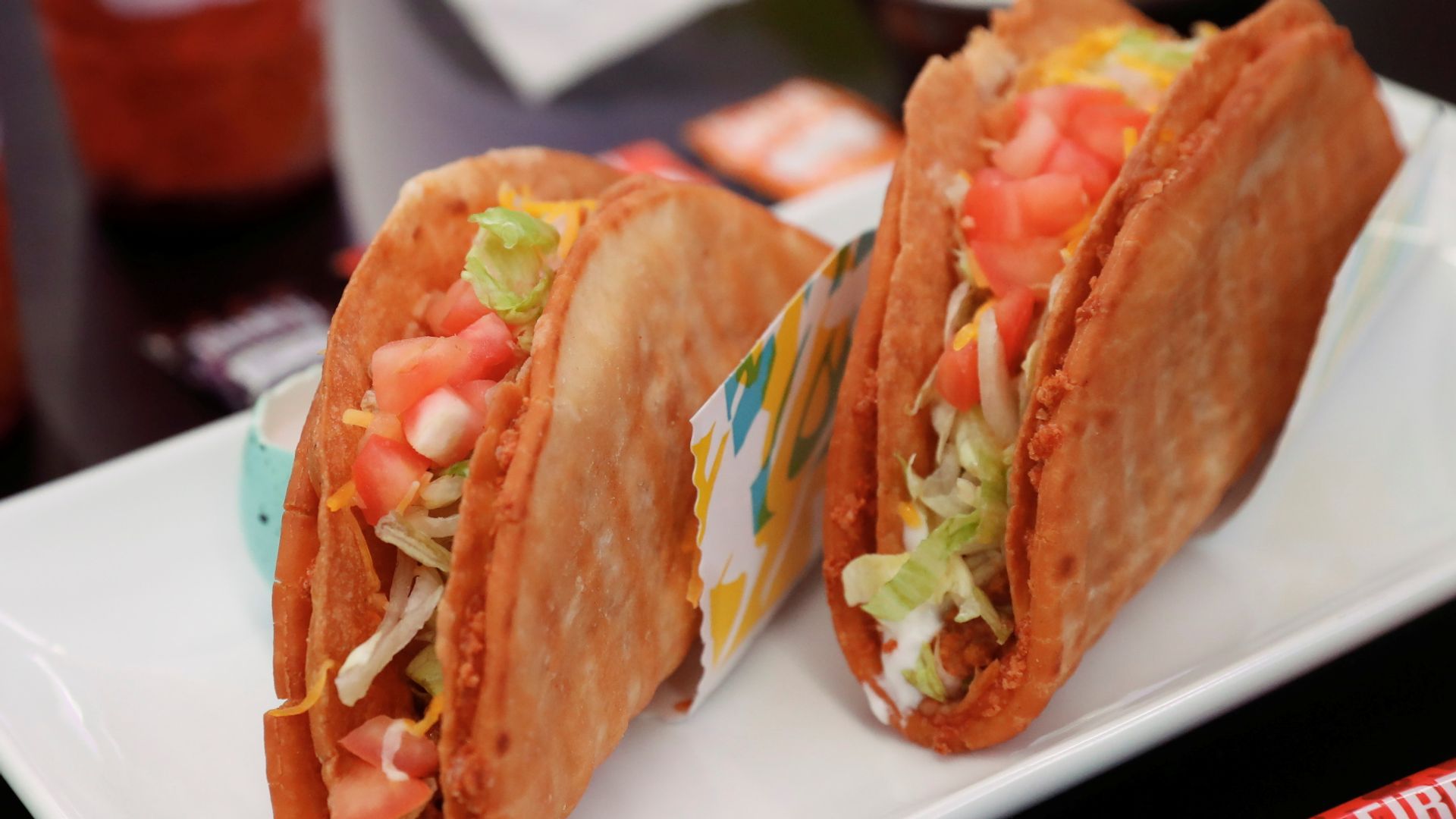
The crunch of shredded iceberg lettuce in a fast-food taco is a sound we associate with freshness. It is a sensory trick, really. We register that crisp, cold snap in our mouths and our brains instantly translate it to "healthy." It offsets the seasoned beef, the warm flour tortilla, and the melted cheese.
Marcus did not think twice about that crunch on a humid Tuesday afternoon in Detroit. He was in a rush, idling in a drive-thru lane, grabbing a quick lunch before heading back to his construction site. The taco was cheap, fast, and familiar. Don't miss our recent post on this related article.
Ten days later, Marcus lay curled on his bathroom floor, shivering under a bath towel, wondering if he was dying.
What Marcus did not know—what he could not possibly have seen—was that his quick lunch was the final stop of a microscopic hitchhiker. Inside the folds of those crisp green leaves was Cyclospora cayetanensis, a resilient, single-celled parasite that had traveled thousands of miles to find a home in his small intestine. If you want more about the background here, Medical News Today provides an informative breakdown.
Marcus is not alone. Across 34 states, a quiet epidemic has been unfolding since the early days of May. Families, office workers, and students who thought they were simply eating a quick meal have found themselves caught in the grip of an unusually massive outbreak of cyclosporiasis. The numbers are staggering. Over 1,645 cases have been laboratory-confirmed. At least 141 people have been hospitalized. Federal health officials are quietly tracking more than 5,100 additional suspected cases, waiting for the slow, bureaucratic gears of laboratory verification to turn.
At the center of this medical mystery is a trail of paper, water, and soil that leads from the neon-lit drive-thrus of the Midwest to the agricultural fields of Mexico.
The Perfect Survivor
To understand how a microscopic organism can bring a grown man to his knees, you have to understand what Cyclospora actually is. It is not a bacterium like Salmonella or E. coli. It is a parasite, a protozoan that behaves like a tiny, biological squatter.
Think of it as a microscopic seed with an armored shell. When it is expelled in waste, it is not yet infectious. It needs time. It sits in the soil or the water, baking under the sun, undergoing a process called sporulation. Once it matures, it is nearly indestructible. It laughs at chlorine. It ignores standard chemical washes. It clings to the microscopic ridges of a lettuce leaf with a desperate, physical grip.
Once swallowed, the parasite enters the warm, acidic environment of the human stomach. The armor dissolves. The parasite wakes up. It penetrates the delicate lining of the small intestine, beginning a frantic cycle of reproduction that wreaks havoc on the host.
For Marcus, the symptoms started as a dull, persistent ache in his abdomen. He figured it was stress, or perhaps a minor stomach bug. Then came the fatigue. It was not the kind of tiredness you feel after a hard day of physical labor; it was a heavy, leaden exhaustion that made lifting his arms feel like moving concrete.
Then, the floodgates opened.
Cyclosporiasis is famous among epidemiologists for causing what is politely termed "explosive" diarrhea. In reality, it is a relentless, exhausting cycle of fluid loss that strips the body of nutrients and dignity. It comes in waves. Just when Marcus thought he had recovered, when he managed to swallow a few sips of water and a cracker, the cramping would return with agonizing force. He lost twelve pounds in a week. His skin took on a gray, papery hue.
"You feel hollowed out," Marcus said, speaking from his home where he is still recovering, his voice a thinned-out version of its former self. "You don't realize how much you take your body for granted until something you can't even see takes complete control of it."
The Detective Work of the FDA
When an outbreak of this scale occurs, public health agencies do not just look at medical charts. They become detectives, piecing together a massive, chaotic puzzle of human memory.
Imagine trying to remember every single thing you ate over the last fourteen days. What did you put on your sandwich last Thursday? Did you grab a handful of grapes from the communal fridge at work? Did you get the salad or the fries?
This is the challenge facing the Food and Drug Administration and the Centers for Disease Control and Prevention. Epidemiologists interview hundreds of sick patients, looking for a common denominator. In this outbreak, a pattern began to emerge. A significant number of the sickened individuals in five states shared a single commonality: they had eaten at Taco Bell.
But Taco Bell does not grow its own vegetables. The chain, owned by Yum Brands, relies on a vast, interconnected network of agricultural suppliers to keep its thousands of kitchens stocked daily.
Federal investigators began a process known as traceback. They collected invoice records, shipping manifests, and bills of lading from the affected restaurants. They traced the journey of the ingredients backward, step by step, from the prep tables to the distribution centers, and finally to the processing plants.
The trail led to Taylor Farms, a massive agricultural entity based in Salinas, California.
Taylor Farms is a titan of the produce industry. On its website, the company proudly calls itself the leading global producer of salads and fresh foods. Its reach is immense, supplying bagged salads and pre-cut vegetables to grocery store shelves and major restaurant chains across North America. But when a company operates at that scale, a single point of contamination can have a massive, multi-state footprint.
According to sources close to the investigation, the traceback points to a single supplier of iceberg lettuce in Mexico, which was processed by Taylor Farms and shipped to Taco Bell locations.
In response, Taco Bell acted. The company voluntarily and temporarily removed lettuce and other fresh ingredients from select locations in the affected regions. Signs began appearing at drive-thrus in places like the Detroit metro area, informing customers that guacamole, pico de gallo, and lettuce were temporarily unavailable due to a "national recall."
Yet, pinpointing the supplier is only half the battle. Finding the actual parasite on the farm is another matter entirely.
The Ghost in the Irrigation Canal
The difficulty with Cyclospora is that by the time people get sick, the contaminated batch of lettuce is usually long gone. Iceberg lettuce has a short shelf life. It is harvested, cooled, shipped, sold, and consumed within a matter of weeks. By the time Marcus was shivering on his bathroom floor, the lettuce he ate had been digested, and the remaining heads from that harvest had already been discarded or consumed.
This leaves investigators chasing a ghost.
To find the source, the FDA must look at the farm environment itself. They test the soil. They test the hygiene facilities provided for harvest workers. Most importantly, they test the agricultural water.
In past outbreaks of cyclosporiasis, the smoking gun has often been found in the irrigation systems. In a similar outbreak years ago, investigators found Cyclospora in regional water management canals used to irrigate crops. The parasite enters the water supply through agricultural runoff, or when human sewage leaks into the water systems.
When a farm pumps that water onto a field of iceberg lettuce, the water pools in the tight, shaded crevices of the growing heads. The sun cannot reach these hidden folds to disinfect them with ultraviolet light. The moisture remains, creating a perfect, cool sanctuary for the parasite to wait.
It is a sobering reminder of the physical reality behind our modern convenience. We live in an era where we expect fresh, crisp greens in the dead of winter and the heat of summer alike. We want our food clean, washed, and ready to eat, wrapped in plastic bags or tucked neatly inside a paper wrapper.
We have built a system of unimaginable efficiency, a conveyor belt of freshness that spans continents. But that system is only as strong as the water used to irrigate a single field thousands of miles away. When that water is compromised, the conveyor belt distributes the illness with terrifying speed and efficiency.
A System Under Strain
For health advocates, this latest outbreak is not an isolated incident; it is a symptom of a larger, systemic vulnerability.
The scale of this year's outbreak has prompted sharp concern from lawmakers. Some public officials are openly questioning whether federal and state food safety programs have the resources they need to police a global supply chain. The physical inspections required to keep these pathogens out of our food supply are labor-intensive, expensive, and increasingly rare.
The reality is that our food safety system is largely reactive. We find the contamination only after the hospitals begin to fill up. We investigate the farm only after the damage has been done.
For Marcus, the debate over regulatory funding and international supply chains feels distant, abstract, and entirely secondary to his daily reality. He is finally back on his feet, but his relationship with food has changed. He finds himself looking at salads with a new sense of suspicion. He stares at the lettuce in his grocery cart, wondering where it was grown, whose hands touched it, and what kind of water kept it alive.
"I used to think of food poisoning as something you get from bad seafood or a burger that wasn't cooked long enough," Marcus says. "You think, 'If I just cook it, I'll be fine.' But you don't cook lettuce. You trust that it's clean. You have to trust it."
That trust is a fragile thing. Once broken, it is not easily repaired.
The FDA's investigation into Taylor Farms and the Mexican lettuce fields continues. Investigators are collecting samples, analyzing shipping routes, and trying to build a definitive scientific link between the parasite in the patients and the parasite in the soil.
Meanwhile, the conveyor belt keeps moving. Millions of heads of lettuce are harvested, washed, packaged, and shipped across the continent every day. The vast majority of them are perfectly safe. But as Marcus knows all too well, it only takes one.