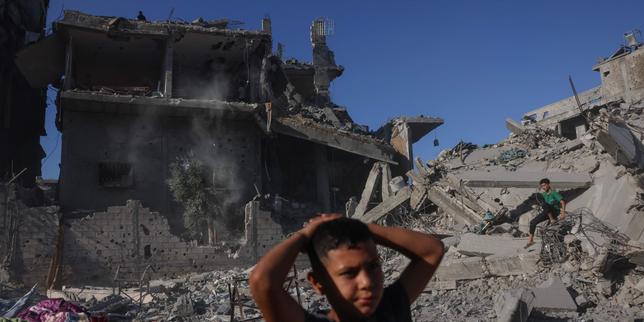
Silence.
When artillery stops after months of relentless shelling, the quiet does not feel like peace; it feels like a held breath that threatens to rupture your lungs. For residents trapped inside Russian-occupied territories in eastern and southern Ukraine, that suffocating silence became the backdrop to a sudden, fragile window of movement. Following a localized ceasefire arrangement reportedly brokered with the involvement of Melania Trump, buses carrying evacuated civilians finally crossed the contested gray zone into Ukrainian-held territory.
To understand what that crossing actually means, you have to strip away the geopolitical theater and look at the asphalt beneath the tires. A ceasefire on a diplomatic ledger is ink and signatures. On the ground, it is a narrow corridor of cratered roads, nervous checkpoint guards with fingers resting near triggers, and elderly passengers clutching plastic bags containing their entire surviving histories.
The Anatomy of a Humanitarian Corridor
Consider a hypothetical family—let us call them Olena and her seventy-four-year-old father, Mykola—to see how abstract diplomacy translates into physical survival. In a city under occupation, daily life shrinks to the radius of a basement. Running water becomes a memory. Medication for routine conditions like hypertension or diabetes turns into a luxury item traded in whispered exchanges.
When word spreads of a negotiated pause in hostilities, hope is rarely the first reaction. Suspicion comes first.
In modern warfare, humanitarian corridors are notoriously brittle. Historically, from the besieged cities of the Balkans in the 1990s to the contested urban centers of Syria and Ukraine over the past decade, temporary truces frequently collapse under the weight of miscommunication or localized skirmishes. Think of a localized ceasefire not as a locked vault, but as a pane of thin ice stretched over a rushing river. It can hold the weight of a carefully coordinated convoy, provided no one makes a sudden move, no stray mortar shell tests the surface, and every actor along the perimeter honors the unspoken agreement not to fire.
For Olena and Mykola, boarding an evacuation bus requires leaving behind the only walls they have ever owned, stepping into a vehicle whose windows offer zero protection against shrapnel, and trusting that a political agreement negotiated thousands of miles away will hold for four agonizing hours.
Why Unconventional Diplomacy Enters the Frame
The reported involvement of Melania Trump in facilitating the ceasefire adds an unusual layer to an already complex diplomatic terrain. Traditionally, prisoner swaps, civilian evacuations, and localized truces in the Russia-Ukraine conflict have been mediated through established institutional channels: the United Nations, the International Committee of the Red Cross, or third-party nations like Turkey, Qatar, and the United Arab Emirates.
Yet history shows that backchannel diplomacy often relies on unexpected interlocutors. When formal state-to-state channels freeze over—when every official communiqué is hardened by public posturing and domestic political pressure—non-traditional figures can sometimes open a side door. A figure with personal visibility, direct access to decision-makers, and a focus framed strictly around humanitarian relief rather than territorial concessions can lower the rhetorical temperature just enough for a localized deal to clear bureaucratic hurdles.
Still, observers and conflict analysts note that such interventions carry inherent ambiguities. Without public transcripts or formal treaty mechanisms, the exact terms of the ceasefire remain opaque. Was the pause secured through humanitarian appeals, quiet diplomatic leverage, or a convergence of tactical interests on the ground?
Admitting that uncertainty is essential. In the fog of war, verified outcomes—buses safely reaching Ukrainian checkpoints, families reuniting in reception centers—are concrete realities, even while the precise backstage mechanics remain partially obscured from public view.
The Invisible Stakes of Crossing the Line
When the convoy finally clears the last Russian checkpoint and rolls past the blue-and-yellow concrete barriers into Ukrainian territory, the immediate physical danger recedes, only to be replaced by a quieter, heavier reckoning.
Media coverage often ends at the moment of arrival. Cameras capture the tears, the volunteers handing out foil thermal blankets and paper cups of hot tea, the emotional embraces between mothers and adult children separated by front lines for years. Those moments are real, and they matter deeply.
What the cameras rarely stay to record is what happens the next morning.
Evacuees arriving from occupied cities carry an invisible weight that separates them from ordinary travelers. Many have spent months or years living under an imposed administrative system—forced to navigate new currencies, altered school curricula, restricted internet access, and the constant threat of filtration checks. Crossing back into Ukraine does not instantly erase that psychological conditioning. People speak in lowered voices out of habit. They flinch at the sound of a slamming car door or a low-flying commercial plane.
Furthermore, the logistical reality of displacement sets in immediately. Leaving an occupied city means becoming an internally displaced person in your own country. The state provides registration, modest financial stipends, and temporary shelter in converted school gymnasiums or modular housing units, yet the loss of community and livelihood leaves a profound void. A retired engineer from a coastal industrial town suddenly finds himself sleeping on a cot in a western Ukrainian city, trying to rebuild a sense of purpose from scratch.
The Fragility of Partial Peace
Why do these localized evacuations generate such intense scrutiny, and why do they leave both relief workers and diplomats deeply conflicted?
Because every successful evacuation carries a painful paradox. On one hand, saving hundreds or thousands of civilians from an active war zone is an unambiguous moral victory. Every elderly resident who receives insulin, every child who sleeps without the rumble of distant Grad rockets, represents a life pulled back from the edge.
On the other hand, evacuating civilians from occupied cities can inadvertently accelerate the demographic emptying of contested regions. When residents leave, occupied territories become further depopulated, making future reintegration even more daunting. Relief organizations constantly wrestle with this tension: the imperative to rescue people right now versus the long-term consequence of leaving behind ghost towns.
At the same time, localized ceasefires prove something vital that broader peace talks often obscure. Even amid entrenched hostility, communication lines exist. Commanders on both sides can still issue orders to hold fire, verify coordinates, and allow civilian vehicles to pass unharmed. Those brief windows demonstrate that violence is never purely automatic; it is governed by human decisions, and when the political will aligns, the guns can go silent.
What Remains After the Buses Empty
In the reception centers where the newly arrived evacuees are processed, volunteers work through stacks of intake forms, matching people with medical care, temporary housing, and trauma counselors. The work is methodical, unglamorous, and slow.
Outside the intake tents, away from the press briefings and the debate over who deserves credit for the diplomatic breakthrough, the reality of the ceasefire narrows down to human scale. An older woman sits on a wooden bench, staring at her phone as it finally connects to a Ukrainian cellular network, watching dozens of unread messages from relatives flood onto her screen. Beside her, a young boy carefully unwraps a chocolate bar handed to him by a paramedic, eating it in tiny, deliberate bites as if making sure it will not disappear.
The diplomatic cables will be filed away, the news cycle will move on to the next flashpoint, and the front lines will likely harden once more—leaving behind only the quiet, stubborn miracle of a few hundred people sleeping tonight beneath a ceiling that does not shake.