You wouldn't expect a rodent on a remote tropical island to dictate what happens beneath the waves, but nature doesn't care about our neat boundaries between land and sea. Out in the remote reaches of the Indian Ocean, specifically across the Chagos Archipelago, an invisible ecological chain reaction is playing out. Invasive rats are destroying seabird populations on land, and that single disruption is fundamentally reshaping the tiny fish and creatures living on the coral reefs below.
If you think conservation stops at the shoreline, you're missing the big picture. Land-based pests are rewriting marine food webs, and the fallout affects everything from microscopic bottom-dwellers to large predatory fish.
The Guano Pipeline That Powers the Ocean
Seabirds are elite couriers. They spend weeks foraging far out in the open ocean, capturing energy and nutrients that would otherwise stay trapped in deep waters. When they fly back to land to roost, nest, and breed, they drop massive quantities of nitrogen-rich guano onto the island soil. Heavy tropical rains wash those nutrients down the slopes and straight into the coastal marine environment.
Think of guano as a natural, slow-release fertilizer for coral reefs. It supercharges the growth of algae, plankton, and microscopic organisms.
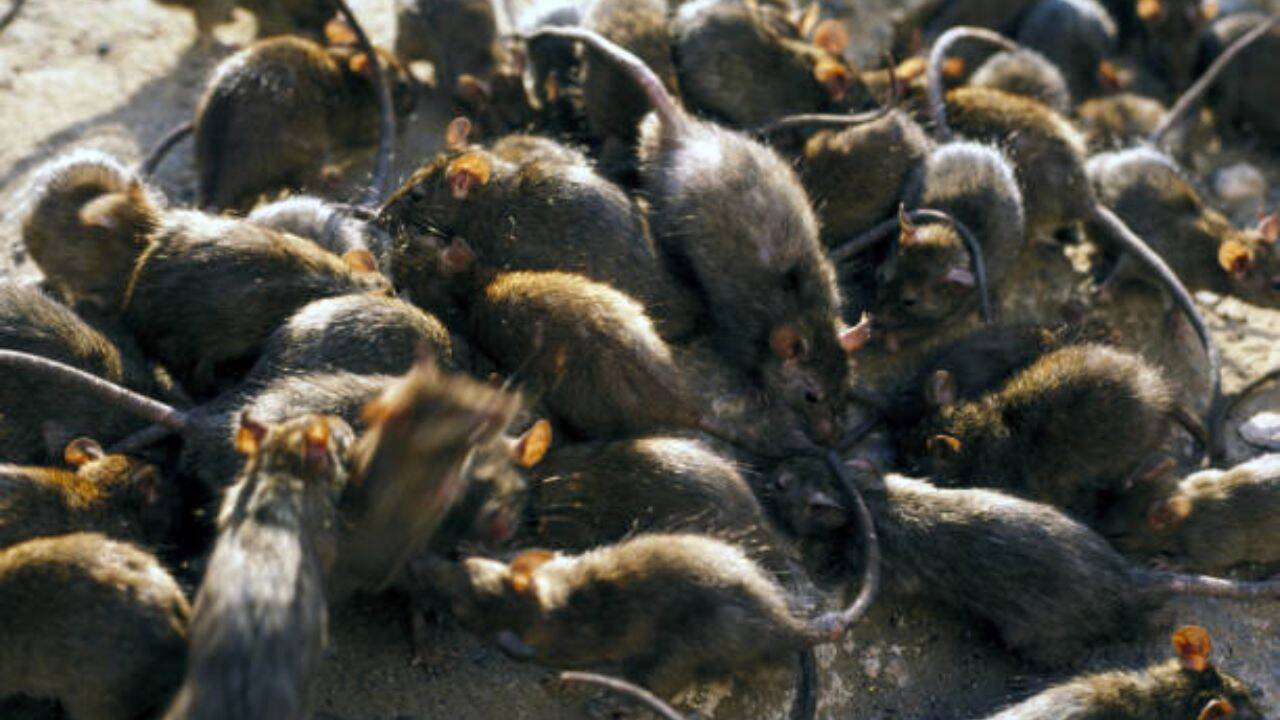
Enter invasive rats. Centuries ago, these rodents arrived as stowaways on human ships and spread across global island chains. Without native predators to check their numbers, they multiplied rapidly and began pillaging seabird colonies, eating eggs, vulnerable chicks, and sometimes even adult birds.
Data published in the journal Ecology shows that seabird densities on rat-free islands are roughly 760 times higher than on islands infested with rats. When you wipe out the birds, you shut off the fertilizer pipeline. The reef loses its primary nutrient subsidy.
Winners and Losers on the Seafloor
What happens to a coral reef when the nutrient supply dries up? Marine scientists from Lancaster University and the University of Texas decided to find out by studying what they call "cryptofauna"—the tiny fish and invertebrates living hidden among coral branches, crevices, and rubble.
These creatures are easy to ignore because they're small, but they form the baseline of energy transfer on the reef. They are the snack-sized protein packs that larger predators rely on to survive.
On healthy islands untouched by rats, the reefs are absolute hotspots for tiny cryptobenthic fish, like gobies and triplefins. Their biomass is more than five times greater than the small invertebrates sharing the same space. Why? Because these fish grow and reproduce at lightning-fast rates. They require high amounts of energy and nutrients, meaning they thrive when the seabird guano is flowing. When these fish populations explode, they crowd out other species, outcompeting them for food and habitat.
Flip the script to an island overrun by rats, and the dynamic completely inverts.
Without seabird nutrients, cryptobenthic fish struggle. Their populations drop drastically. With the fish out of the way, small invertebrates like coral crabs, porcelain crabs, and snapping shrimp suddenly find room to breathe. Invertebrates have lower metabolic rates and don't need a heavy nutrient fix to survive. As a result, near rat-infested islands, the biomass of tiny fish and small invertebrates becomes nearly equal.
Why This Shift Breaks the Entire Food Web
You might wonder why a shift from tiny fish to crabs and shrimp matters to anyone other than a marine biologist.
It comes down to nutrition and accessibility. Cryptobenthic fish are pure, protein-dense, highly digestible energy packets for larger predators. They don't have hard, heavy shells. An ambitious predator can snap them up quickly and get a massive caloric reward with minimal effort.
Invertebrates are a different story. Much of a crab or shrimp's body mass is locked away inside a tough, indigestible shell. When a reef's base shifts from being dominated by nutrient-rich fish to being dominated by shelled invertebrates, the energy transfer up the food chain stalls. Larger predatory fish lose an optimal food source. The entire trophic structure of the reef is rewired.
Fixing the Ocean Means Fixing the Land
For decades, marine conservationists made a critical mistake. They treated coral reefs as isolated underwater worlds, trying to manage pollution, overfishing, and warming waters solely from a scuba diver's perspective.
This research proves that strategy is fundamentally flawed. You cannot protect a coral reef while ignoring the dirt and trees sitting right beside it.
Eradicating invasive rats from tropical islands is brutal, complex work, but it yields massive ecological dividends. Evidence shows that when rats are removed, seabird populations eventually bounce back. Vegetation recovers. The guano starts flowing again. Nutrient pathways knit themselves back together across the land-sea interface.
If we want resilient oceans, we have to start killing rats on beaches. Stop separating terrestrial conservation from marine management. Support island eradication projects and protect the seabirds doing the heavy lifting for our planet's coastlines.