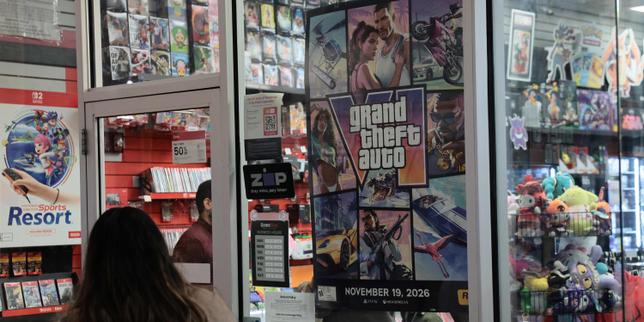
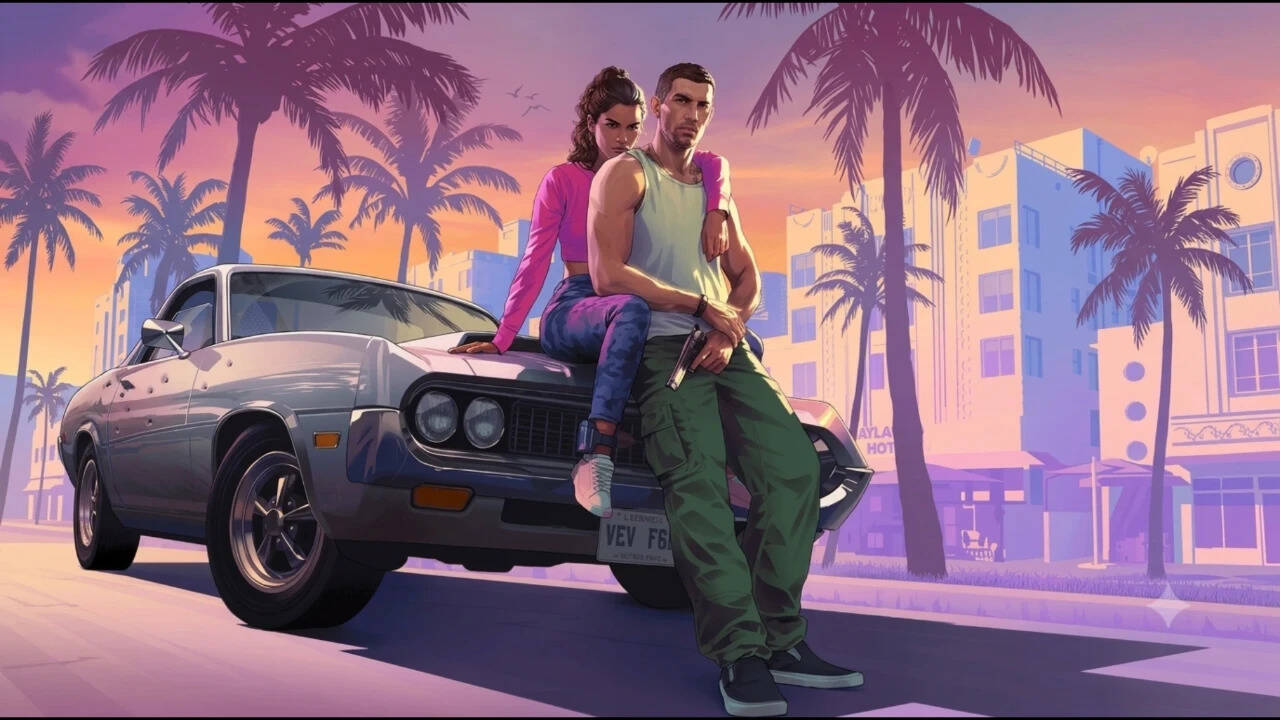
Playing Grand Theft Auto VI costs significantly more than a standard video game purchase because the true price extends far beyond the retail box, bundling modern $70-plus AAA software pricing with mandatory current-generation hardware upgrades, online subscription fees, and aggressive live-service monetization. While the base edition follows the industry's new standard pricing tier, the actual barrier to entry for a player starting from scratch easily crosses the $600 threshold once you factor in a PlayStation 5 or Xbox Series X, required network memberships, and post-launch digital ecosystems. Rockstar Games and its parent company, Take-Two Interactive, have spent over a decade engineering an entertainment juggernaut designed to capture maximum consumer spending over a ten-year lifecycle.
The sticker shock hits players in waves. First comes the base software price, which has finally broken free from the decades-old $60 ceiling that held firm through three console generations. Then come the collector editions, early access tiers, and deluxe bundles that push the upfront software transaction past $100. Yet focusing solely on the retail price tag misses the broader financial architecture supporting modern blockbuster development.
The Death of the Sixty-Dollar Ceiling
For fifteen years, video game publishers operated under an unspoken truce. From the launch of the Xbox 360 in 2005 until the arrival of the PlayStation 5 in 2020, a standard new release cost $59.99. Inflation climbed. Development teams ballooned from dozens of programmers to thousands of specialized artists, physics engineers, and voice actors. Still, the retail price stayed frozen.
Publishers absorbed those rising production costs by inventing alternative revenue streams—downloadable content, season passes, and loot boxes. That math eventually broke down. Take-Two Interactive was among the first major publishers to pull the trigger on a $70 baseline price point with the release of NBA 2K21 on current-generation consoles. Take-Two CEO Strauss Zelnick has repeatedly argued in earnings calls that video games offer unmatched value per hour compared to movies, streaming services, or live concerts.
When you look at the sheer scale of Grand Theft Auto VI, the economic argument from the executive suite becomes clear. Production budgets for top-tier interactive entertainment now rival or exceed the most expensive Hollywood tentpole films, often crossing hundreds of millions of dollars before a single marketing billboard goes up in Times Square. Take-Two is not just recouping the cost of making a single game; they are financing a massive technological leap in artificial intelligence, dense urban simulation, and bespoke motion capture.
The Hardware Tax Nobody Factors In
You cannot play Grand Theft Auto VI on a PlayStation 4, an Xbox One, or a Nintendo Switch. Unlike many cross-generation releases from the early 2020s that catered to older hardware to maximize their addressable market, Rockstar built this title exclusively for current-generation silicon. And at launch, PC players are left waiting in the wings, following Rockstar's long-standing playbook of staggering their platform releases.
For millions of casual fans who only buy a console to play Grand Theft Auto, FIFA, or Call of Duty, this creates an immediate, unavoidable hardware tax.
Consider a hypothetical scenario for a lapsed gamer whose last console was a PlayStation 4 bought in 2016. To step onto the neon-soaked streets of Leonida, that player cannot simply buy a disc. They must first purchase a PlayStation 5 or an Xbox Series X, running roughly $450 to $500 depending on regional taxes and disc-drive configurations. Even the budget-friendly Xbox Series S demands around $300, and that comes with strict storage limitations that will quickly choke on a massive open-world installation file.
Add a second controller, an extra terabyte of high-speed NVMe expansion storage, or a decent headset, and the hardware bill climbs effortlessly toward $700 before the game even finishes downloading. Rockstar does not see a dime of that hardware revenue, of course. Sony and Microsoft take those margins—or rather, they absorb the hardware losses to lock players into their digital storefronts. Yet from the consumer's perspective, the cost of playing the game is inextricably tied to the machine required to run it.
Tiered Pricing and the Psychology of FOMO
Modern game publishers rarely sell a single product anymore. They sell a ladder of access.
If past releases from Take-Two and Rockstar serve as a reliable blueprint, Grand Theft Auto VI arrives with a carefully calibrated menu of editions designed to nudge consumers upward from the base tier. The Standard Edition gets you through the front door. Above that sits a Deluxe or Special Edition, typically priced around $90 to $100, padded with in-game currency, exclusive vehicles, custom weapons, and early access windows. At the top sits a Collector's Edition, often crossing $150 or $200, stuffed with physical trinkets like steelbooks, maps, and branded apparel.
The pricing psychology here is brutal and effective. By anchoring a $100 edition right next to a $70 edition, the mid-tier option suddenly looks like a rational compromise for a dedicated fan who has waited over a decade for a sequel. Digital items cost Rockstar virtually nothing to duplicate once the initial 3D asset is modeled. Every $30 upgrade sold represents almost pure profit margin.
The Subscription Tollbooth
Buying the console and the game still leaves you locked out of half the experience. Once the single-player campaign wraps up, the long-term gravitational pull of the franchise shifts to its multiplayer component.
On console ecosystems, online play sits behind a mandatory paywall. PlayStation Plus and Xbox Game Pass Core both require recurring monthly or annual fees just to connect to multiplayer servers. A year of basic online access adds another $60 to $80 to the annual cost of ownership.
In 2013, when Grand Theft Auto V originally launched on the PlayStation 3, online multiplayer was still free on Sony's network. The industry shifted the goalposts during the PlayStation 4 era, normalizing the idea that consumers must pay an internet service provider for bandwidth, pay a publisher for software, and then pay a console manufacturer a third time just to let those two things talk to each other.
The Real Engine of Expense Is Post-Launch Monetization
If you want to understand why Grand Theft Auto VI is structured to extract so much money from its audience, stop looking at the box price and start looking at Grand Theft Auto Online.
Over the past decade, GTA Online transformed Take-Two Interactive from a hit-driven publisher into a recurring-revenue machine. Through the sale of Shark Cards—virtual currency packs purchased with real-world money—Rockstar generated billions of dollars in high-margin microtransactions long after the initial 2013 launch hype faded.
The economy inside these virtual worlds is deliberately engineered around friction. Players can earn in-game cash by grinding through missions, heists, and repetitive delivery runs. That path is slow. Alternatively, they can bypass dozens of hours of tedious labor by pulling out a credit card.
As the virtual world matures, inflation hits the digital streets just like it hits the real world. Early vehicles in GTA Online cost a few hundred thousand in-game dollars. Later additions—flying motorcycles, orbital cannons, sprawling underground bunkers, and luxury superyachts—regularly cost millions. To acquire the newest, flashiest status symbols on day one of an update, a player either needs an enormous stockpile of hoarded virtual cash or a willingness to spend real money.
Rockstar also introduced GTA+, a monthly subscription service that bundles recurring in-game cash deposits, exclusive discounts, rotating classic games, and special vehicle perks. It represents the final evolution of game monetization: layering a recurring membership fee directly on top of a microtransaction economy inside a full-priced game.
Why Consumers Keep Paying the Price
Critics and forum commenters routinely complain about predatory pricing, bloated budgets, and aggressive microtransactions. Yet the sales numbers tell a completely different story. Every time Take-Two raises the bar on pricing, consumers clear it with room to spare.
The reason comes down to basic market economics: scarcity and cultural monopoly.
There is no real competitor to Grand Theft Auto. Other studios have tried to build sprawling, satirical open-world crime simulators. Saints Row imploded under the weight of a misguided reboot. Watch Dogs stalled out after failing to capture the same cultural lightning. Cyberpunk 2077 offered a dense futuristic metropolis, yet it lacked the sandbox chaos and multiplayer longevity that defines Rockstar's flagship series.
When a product has no viable substitute, the creator holds immense pricing power. Rockstar releases a mainline Grand Theft Auto title roughly once a decade. Because the wait is so long, the release transforms from a simple software launch into a global cultural event. People take days off work. Streamers build entire careers around the launch week. Friends who haven't played a video game in five years buy a console just to be part of the conversation.
In that environment, price elasticity vanishes. Whether the base game costs $70, $80, or $100, the core audience buys it anyway because missing out feels like skipping the biggest entertainment event of the decade.
The Hidden Costs of Storage and Connectivity
Beyond the obvious financial outlays, playing modern AAA titles imposes subtle infrastructural costs that rarely show up on a receipt.
Modern open-world games are massive data hogs. Between 4K textures, uncompressed audio files, and sprawling environmental assets, file sizes routinely exceed 150 gigabytes. On a standard console with 825GB or 1TB of usable internal space, a single installation consumes nearly a fifth of your entire hard drive. That forces players to either constantly delete older games or spend another $100 to $200 on proprietary solid-state expansion cards.
Then there is bandwidth. Day-one patches, seasonal updates, and multi-gigabyte hotfixes require fast, reliable internet connections. For players living in regions with strict monthly data caps enforced by telecom monopolies, downloading a 150GB game followed by a 40GB patch can trigger immediate overage fees on their monthly internet bill.
How to Play Without Getting Bled Dry
You cannot avoid the hardware requirement if you want to play on launch day, and you cannot dodge the retail price of the disc or digital download. You can, however, refuse to participate in the secondary monetization traps designed to inflate your total spend.
Skip the Deluxe and Collector editions entirely. Digital bonus currency and early-access vehicles lose their novelty within forty-eight hours of gameplay, and physical collector items rarely hold secondary market value. Buy the standard base version of the game.
Wait before diving into the online ecosystem. The single-player campaign alone offers dozens of hours of meticulously crafted narrative, exploration, and side activities that require zero recurring subscription fees and zero microtransactions. You do not need PlayStation Plus or Xbox Game Pass Core to play through the story.
If you eventually step into the multiplayer mode, treat the virtual economy with extreme skepticism. Never buy virtual currency packs to chase new updates. Developers design the digital treadmill to make you feel poor so you will spend real money to catch up. Play the content with friends, enjoy the chaos of the open world using the tools you earn naturally, and walk away the moment the experience starts feeling like an unpaid second job.
The video game industry will continue pushing prices upward as long as players reward them with record-breaking launch weekends. Rockstar built an extraordinary technological achievement, and they priced it like a luxury good because they know the market will bear it. Your only real defense as a consumer is deciding precisely where your wallet closes after the title screen loads.