Rocks flew through the air in Tehran. Government officials scrambled for cover. During the massive six-day state funeral for the late Supreme Leader Ali Khamenei, Iran's political unity didn't just crack. It completely shattered in public.
As President Masoud Pezeshkian walked beside the coffin, parts of the crowd didn't offer prayers. They screamed a chilling chant. "Death to the compromiser." Nearby, angry mourners pelted Foreign Minister Abbas Araghchi with rocks, branding him a traitorous sellout.
This isn't just standard political theater. It's an open revolt. Iran's ultra-hardline factions are now openly accusing their own government of staging a soft coup. They claim a small circle of visible leaders has hijacked the state. The target of this alleged coup is none other than the new Supreme Leader, Mojtaba Khamenei.
People watching Iran from the outside often make a huge mistake. They view the Islamic Republic as a single, monolithic block. It isn't. Right now, a brutal internal war is raging for the very soul of the regime. The visible government wants survival and sanctions relief. The radicals want total war.
The Ghost in the Machine
To understand why the hardliners are terrified, you have to look at who is missing. Mojtaba Khamenei is the new Supreme Leader. He took over after his father was killed in devastating US-Israeli airstrikes on February 28. But since taking power, Mojtaba has been a total ghost.
He hasn't given a single public speech. He hasn't appeared on television. The Pentagon even claimed he was wounded and likely disfigured in the strikes that killed his father. True or not, his physical absence has created a massive vacuum.
If you're an ultra-hardline radical in Tehran, this absence is a catastrophe. In the Iranian system, everything flows from the Supreme Leader. Hardliners get their power, their money, and their ideological legitimacy directly from his office. With Mojtaba isolated in a secure, hidden bunker, the radicals have lost their access card.
They can't get to him. They can't get his blessing for their hardline policies. They're stuck on the outside looking in.
Meanwhile, three men have stepped directly into the spotlight. Parliament Speaker Mohammad Bagher Ghalibaf, President Pezeshkian, and Foreign Minister Araghchi are running the day-to-day operations of the country. They're the ones talking to the public. They're the ones making the calls. To the radical right, this looks like a coordinated power grab. It looks like a coup.
The Mechanics of a Soft Coup
What does a soft coup look like in Tehran? It doesn't involve tanks on the street. It involves committees, paperwork, and backroom diplomatic deals.
Hardline lawmakers are furious about a secret agreement negotiated with the United States. They argue that instead of launching a massive military retaliation to avenge Ali Khamenei's death, the Pezeshkian administration chose to surrender. They claim the current truce directly violates the core ideological principles of the Islamic Republic.
Radical member of parliament Kamran Ghazanfari put it bluntly in a recent video statement. He accused senior officials of systematically weakening both the parliament and the office of the Supreme Leader. How? By shifting all major decision-making power to the Supreme National Security Council.
By inflating the council's authority, Ghalibaf and Pezeshkian can effectively bypass the traditional religious and legislative checks. They can run the war, sign treaties, and manage the economy without needing direct approval from an isolated leader or a hostile parliament. It's a masterclass in bureaucratic sidelining.
The anger isn't just contained to speeches. Outspoken conservative lawmaker Mahmoud Nabavian sent shockwaves across Iranian social media when he posted a blunt warning on X. "Is a coup on the way for the Iranian people?"
Days later, standing near the funeral processions, Nabavian doubled down. He told his followers to raise the banner of vengeance and resist the political takeover. The rhetoric is escalating fast. Threatening messages are flowing toward the presidency. Mohammad Ali Bakhshi, a religious singer with tight links to the security apparatus, publicly warned Pezeshkian that if he defies the strict revolutionary path, the radicals will bring hell upon him.
Sidelining the Radicals
The public-facing government isn't just taking these hits sitting down. They're fighting back using the levers of state power.
Look at what happened in parliament just days ago. Nabavian and several other highly vocal ultra-hardline critics were suddenly stripped of their positions on the influential National Security Commission. They were pushed out. This wasn't an accident. Ghalibaf is actively using his political muscle as speaker to isolate the wildest elements of the hardline faction.
The visible leadership knows they can't manage a delicate diplomatic dance with Washington while internal radicals are constantly throwing wrenches in the gears. If you want to negotiate an end to economic sanctions, you can't have members of your own security commission leaking details to the press to blow up the talks.
But purging these figures carries massive risks. For decades, the regime relied on these exact radicals to act as the shock troops of the revolution. They're the ones who organize the nightly street rallies. They're the ones who enforce ideological purity. Pushing them into a corner makes them desperate. And desperate radicals do dangerous things.
What Happens to the Region Now
Don't let the diplomatic talk fool you. The broader establishment still agrees on the big picture. Everyone in Tehran wants the crushing economic sanctions lifted. Everyone wants to maintain control over the critical shipping lanes in the Strait of Hormuz.
But the path to those goals is where the consensus breaks.
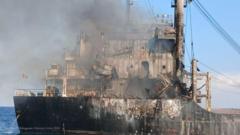
The current fragile truce with the United States is hanging by a single thread. Over the weekend, the Iranian Revolutionary Guards launched fresh attacks on shipping vessels in the Gulf. The US military hit back hard, targeting Iranian surveillance outposts, logistics bases, and underground weapons caches. The conflict is spreading, hitting civilian infrastructure like roads and desalination plants.
Every time a US missile strikes an Iranian target, the hardliners gain ammunition for their narrative. They tell the public that the government's diplomatic approach is a failure. They point to the smoke and say that compromise brings nothing but weakness. Former Foreign Minister Manouchehr Mottaki even went on state television to suggest a radical escalation. He openly advocated for capturing hundreds of American troops stationed in the region, claiming that holding just 100 soldiers hostage would give Iran total leverage.
This is the chaotic environment Mojtaba Khamenei is supposed to lead. If he stays hidden, the accusations of a soft coup will only grow louder. If he emerges, he will have to choose a side. He can back the pragmatic managers who are trying to keep the economy from collapsing, or he can side with the ideological purists who want to burn the system down to prove a point.
If you are tracking geopolitical risk, stop looking only at the missile trajectories. Watch the internal purges in Tehran. Watch the state media broadcasts for any sign of Mojtaba's voice. The most dangerous threat to the Iranian regime isn't sitting in Washington or Tel Aviv. It's sitting right inside the halls of power in Tehran.