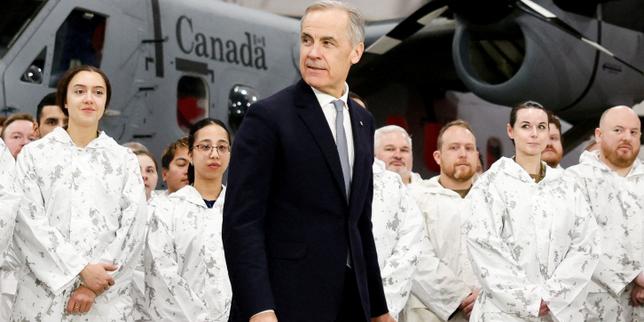
The headlines are buzzing with a narrative that feels suspiciously like a victory lap. Candidates are "flocking" to the Canadian Armed Forces (CAF). Lines are forming. Patriotic sentiment is supposedly hitting a fever pitch. But if you’ve spent any time in the trenches of defense procurement or human resource logistics, you know the truth is far grimmer. What the media interprets as a resurgence of national duty is actually a massive, systemic bottleneck that the CAF is fundamentally unprepared to handle.
Quantity is not quality. An "influx" of applicants is a vanity metric that masks a deeper, more corrosive reality: the Canadian military is currently a high-performance engine with a clogged fuel line and a rusted-out chassis.
The Recruitment-Retention Paradox
The mainstream narrative focuses on the front door. "Look at all these people who want to join!" they cry. They ignore the back door, which is currently unhinged and falling off its frame.
The CAF is facing its most significant personnel crisis in decades, not because people don't want to sign up, but because the institution cannot keep the ones it already spent millions training. When you see a sudden spike in applicants, you aren't seeing a solved problem. You are seeing a massive administrative burden dumped onto a system that is already failing to process the people it has.
In the private sector, if a company has a 10% vacancy rate and a 15% turnover rate, they don't celebrate a high volume of resumes. They fix the culture and the compensation. The military, however, remains addicted to the "churn."
The Cost of a "Green" Force
Imagine a scenario where a tech firm loses its senior architects and replaces them with 5,000 interns. The headcount remains the same. The productivity collapses.
That is exactly what is happening. We are witnessing the "hollowing out" of the middle-tier leadership.
- The Loss of Institutional Memory: Sergeants and Captains with 10–15 years of experience are leaving because of housing costs, stagnant wages, and "forced" relocations that destroy their spouses' careers.
- The Training Bottleneck: You can recruit 10,000 people tomorrow, but if you only have enough instructors to train 2,000, those other 8,000 sit in a "holding platoon" for a year.
- Skill Decay: Waiting for a basic training slot or a trade school seat isn't just boring; it’s demoralizing. By the time these "eager" candidates actually get to their units, the fire is out. They’ve spent twelve months painting rocks and scanning ID cards at a gate.
Patriotism is Not a Recruitment Strategy
The competitor's piece leans heavily on the "I want to defend my country" trope. It’s a beautiful sentiment. It’s also a terrible foundation for a modern professional force.
In 2026, warfare is increasingly about cyber-resilience, signals intelligence, and high-end technical mastery. The "willingness to fight" is the baseline—it’s not the differentiator. If the CAF recruits based on sentimentality rather than technical aptitude and competitive compensation, it will continue to be a secondary player on the global stage.
The Housing Crisis is a National Security Threat
You cannot defend a country if you cannot afford to live in it. This is the "nuance" that glossy recruitment articles conveniently skip.
The CAF moves its members frequently. Ten years ago, a posting to Comox or Ottawa was a career milestone. Today, for many members, it’s a financial death sentence. When the "influx" of new recruits realizes that their private's salary won't even cover a basement suite in the cities they are posted to, that "patriotic" fervor evaporates instantly.
We are asking young men and women to sign up for a life of service while the institution fails to provide the basic infrastructure of a middle-class existence. That isn't a recruitment drive; it's a bait-and-switch.
Stop Counting Resumes, Start Counting Capabilities
The obsession with "number of applicants" is a relic of the 20th-century mass-mobilization mindset. We don't need a massive, under-equipped infantry; we need a lethal, agile, and highly specialized force.
If the CAF wants to actually "defend the country," it needs to stop being a jobs program and start being an elite employer.
- Ditch the Generalist Model: The idea that every recruit needs to fit the same mold is dead. We need hackers who can’t run a 5k and mechanics who don’t want to lead a platoon.
- Fix the Lateral Entry: It shouldn't take two years for a civilian specialist to join the military at a rank that reflects their expertise. The current "entry-level for everyone" approach is an insult to talent.
- Regionalized Postings: End the "move for the sake of moving" culture. Let people build lives, buy homes, and integrate into communities. Stability is the greatest retention tool we have.
The Brutal Truth About "Defending the Country"
The surge in interest isn't just about patriotism. It’s often about economic anxiety. When the private sector wobbles, the military looks like a safe harbor. But the military is a terrible place to "hide" from a bad economy.
The job is dangerous, the hours are grueling, and the bureaucracy is soul-crushing. If a recruit joins because they want a steady paycheck and a "sense of purpose" but finds themselves stuck in a broken procurement loop—using 40-year-old trucks and waiting for parts that never come—they won't stay.
We are currently bragging about the number of people standing in line for a ride on a bus that has no engine.
The False Metric of Success
The government will use these recruitment numbers to deflect from the real issues: the failure to hit the 2% NATO spending target, the disastrous state of the submarine fleet, and the fact that we can't even provide basic flight suits to our pilots on time.
"Look at the recruits!" is the perfect smoke screen for "Don't look at the equipment."
The Pivot to Reality
If you are one of these candidates, ask yourself: Am I joining an organization that is ready to use my skills, or am I just a data point in a PR campaign designed to make the Ministry of National Defence look competent?
Real institutional health is measured by the people who choose to stay for their third and fourth contracts. Until the CAF addresses the toxic combination of high-cost living, archaic procurement, and a glacial training pipeline, a thousand new applicants is just a thousand new reasons for the system to buckle.
The influx isn't a sign of strength. It's a stress test that the CAF is currently failing. Stop celebrating the queue and start fixing the destination.
The military doesn't need more "bodies." It needs a reason for the brains to stay. Until that changes, the "surge" is just more noise in a dying frequency.
Fix the house before you invite more guests.