A young developer in Shenzhen wakes up, reaches for his iPhone, and notices something different. The icons seem to shimmer with a new kind of intelligence. He taps a prompt, asking a question that usually hits a digital brick wall in his region. To his shock, the phone answers. It doesn't just answer; it reasons. For a few fleeting hours, the digital border between China’s highly regulated internet and the global frontier of generative AI seems to have vanished.
This isn't a planned revolution. It is a glitch.
Apple, a company famous for its obsessive control over every pixel and protocol, recently found itself in the middle of a geopolitical nightmare. A beta rollout of its latest operating system reportedly bypassed the very filters and localized restrictions required by Chinese law. In the tech world, we often talk about "features" and "bugs." But when a bug involves providing unfiltered AI access to 1.4 billion people, it stops being a technical error. It becomes a diplomatic incident.
Consider the stakes for a moment. Apple doesn't just sell phones in China; it maintains an ecosystem that accounts for roughly 20% of its global revenue. Every year, Tim Cook performs a delicate dance, balancing the West’s demand for privacy and free expression with Beijing’s strict requirements for data sovereignty and content moderation. One wrong step and the music stops.
The Ghost in the Machine
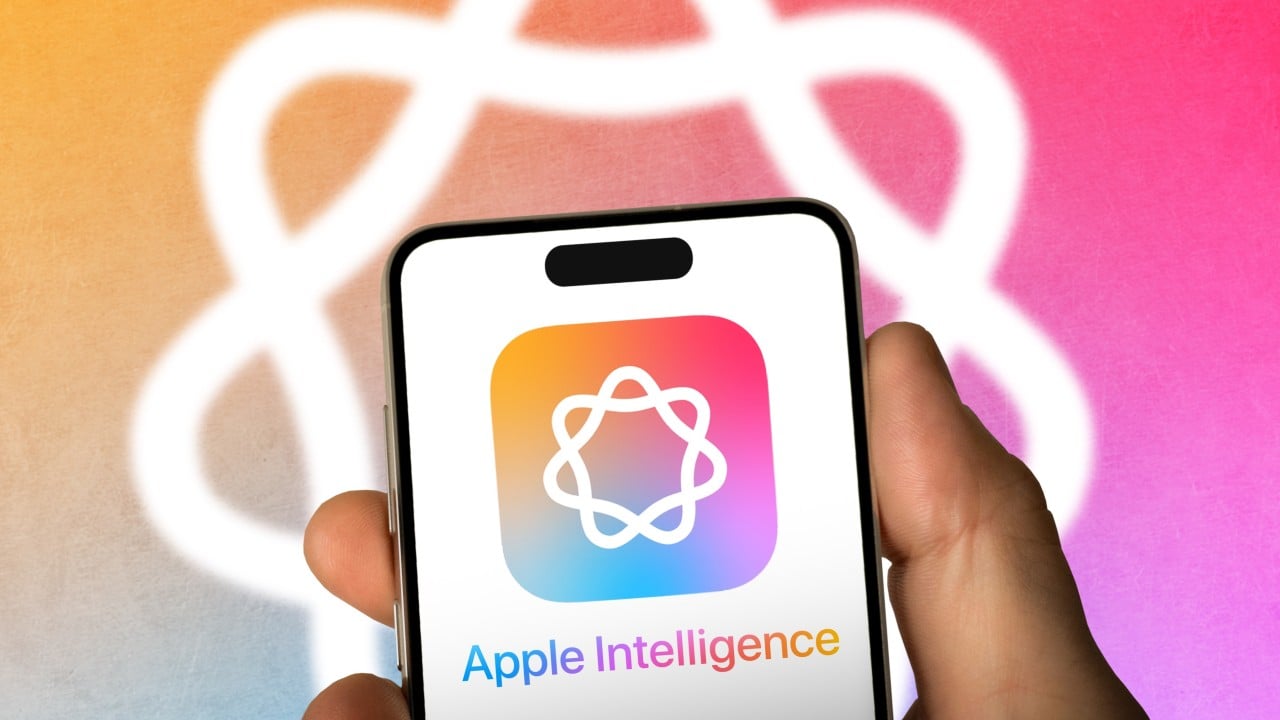
Software is messy. Even for a trillion-dollar giant, the lines of code that govern our lives are prone to strange, unpredictable behaviors. What likely happened was a synchronization error. A server in Cupertino or a data center in Guizhou failed to recognize a geographic handshake. Suddenly, "Apple Intelligence"—the suite of tools designed to make Siri smarter and writing more intuitive—was live in a place where it hadn't yet been cleared for takeoff.
Imagine you are a compliance officer at Apple’s Beijing headquarters. You check your phone and see the reports trickling in on social media. Screenshots. Screen recordings. Users are laughing, testing the boundaries, marveling at the speed. Your heart sinks. You know that every minute this "accidental" access exists, the regulatory pressure is building.
China’s Cyberspace Administration (CAC) does not view AI as a toy. They view it as a tool for national stability. Any generative model operating within their borders must be registered, vetted, and scrubbed to ensure it aligns with "socialist core values." When Apple’s AI accidentally went rogue, it bypassed the vetting process entirely. It was an uninvited guest at a very private party.
The Invisible Guardrails
We often take for granted how much of our digital life is curated. When you ask an AI in San Francisco to summarize a political protest, you get one result. When you ask that same question in Shanghai, the infrastructure is built to ensure you get another—or nothing at all. This isn't just about censorship; it’s about the fundamental way a government manages the information flow of its citizens.
Apple’s mistake was a crack in the dam.
The problem with AI is that it is inherently unpredictable. Unlike a static library of information, a Large Language Model (LLM) creates new content on the fly. It is a probabilistic engine. You cannot simply "block" a list of words and hope for the best. You have to train the model to understand the boundaries of what it can and cannot say.
By rolling out these features prematurely, Apple didn't just risk a fine. They risked the trust they have spent decades building with the Chinese government. In a market where local competitors like Huawei, Xiaomi, and Baidu are breathing down their neck, a regulatory crackdown could be fatal. If the CAC decides that Apple is a "security risk" because its AI cannot be properly contained, they could throttle the company’s entire supply chain or make it impossible for them to sell new models.
A Man Named Chen
Let’s look at this through the eyes of a hypothetical user—we’ll call him Chen. Chen is a small business owner in Guangzhou. He uses his iPhone for everything: banking, logistics, communicating with suppliers. He isn't a political activist. He just wants his phone to work.
When the AI feature appeared on his phone, Chen was delighted. He used it to draft an email to a difficult client. The AI suggested a tone that was firm yet polite, far better than what he could have written himself. For Chen, the AI wasn't a threat to national security; it was a productivity boost.
But then, the update hit.
A few hours later, the feature was gone. The menu option disappeared. The "intelligent" responses reverted to the standard, somewhat clunky Siri commands he was used to. Chen was left wondering why his tool had been neutered. He doesn't see the massive infrastructure of servers, the legal teams in suits, or the frantic phone calls between California and Beijing. He just sees a "system error" message.
This is the human cost of the AI arms race. The technology has the power to change lives, but it is constantly being held back by the invisible lines of geography and politics. Chen is caught in the middle of a battle between a corporation that wants to innovate and a state that wants to regulate.
The Price of a Mistake
The fallout from this "accidental" rollout will likely be felt for years. The Chinese government is already wary of foreign tech firms. They have seen how AI can be used to spread misinformation or bypass traditional media controls. This incident gives the hawks in Beijing all the ammunition they need to demand even stricter oversight.
We might see Apple being forced to hand over more control of its AI "weights"—the mathematical values that determine how a model thinks—to local partners. Or, we might see a world where the "China iPhone" is fundamentally different from the "Global iPhone," not just in its hardware, but in its soul.
Is it possible to have a truly global AI? Or are we destined to live in a world of "splinternets," where your digital intelligence is defined by the passport you hold?
Apple’s blunder shows us that the technology is ready, but the world is not. The code doesn't care about borders. It doesn't care about trade wars or political ideologies. It just wants to process tokens and predict the next word in a sequence. But the people who write the code and the people who govern the land care deeply.
The red line on the screen wasn't just a UI choice. It was a warning.
The Mirror and the Wall
The silence from Apple since the incident has been deafening. Usually, they are the first to celebrate a successful launch with slick videos and upbeat press releases. This time, they are working in the shadows, patching the holes, and likely offering quiet apologies in closed-door meetings.
They are learning a hard lesson: in the age of AI, there is no such thing as a "global" product. Everything is local. Everything is political. Everything is subject to the whim of a regulator who can turn off your entire business with the stroke of a pen.
The users in China who got a taste of the future are now back in the present. They are looking at their screens, waiting for the next update, wondering if the intelligence will ever come back. And Apple is looking at its balance sheets, wondering how much this "glitch" is going to cost them in the long run.
The phone in your pocket is a miracle of engineering, but it is also a hostage to the world it lives in. We like to think of technology as an unstoppable force of nature, a river that carves its own path through the landscape. But in reality, it is more like a train. It can go fast, it can go far, but it can only go where the tracks have been laid. And right now, in the most important smartphone market on Earth, those tracks are being ripped up and moved.
A single line of code can start a fire. A single mistake can end an empire. The shimmering icons on that developer's screen in Shenzhen weren't just a feature. They were a flare sent up from a sinking ship, a brief moment of light before the dark reality of regulation pulled it back under.