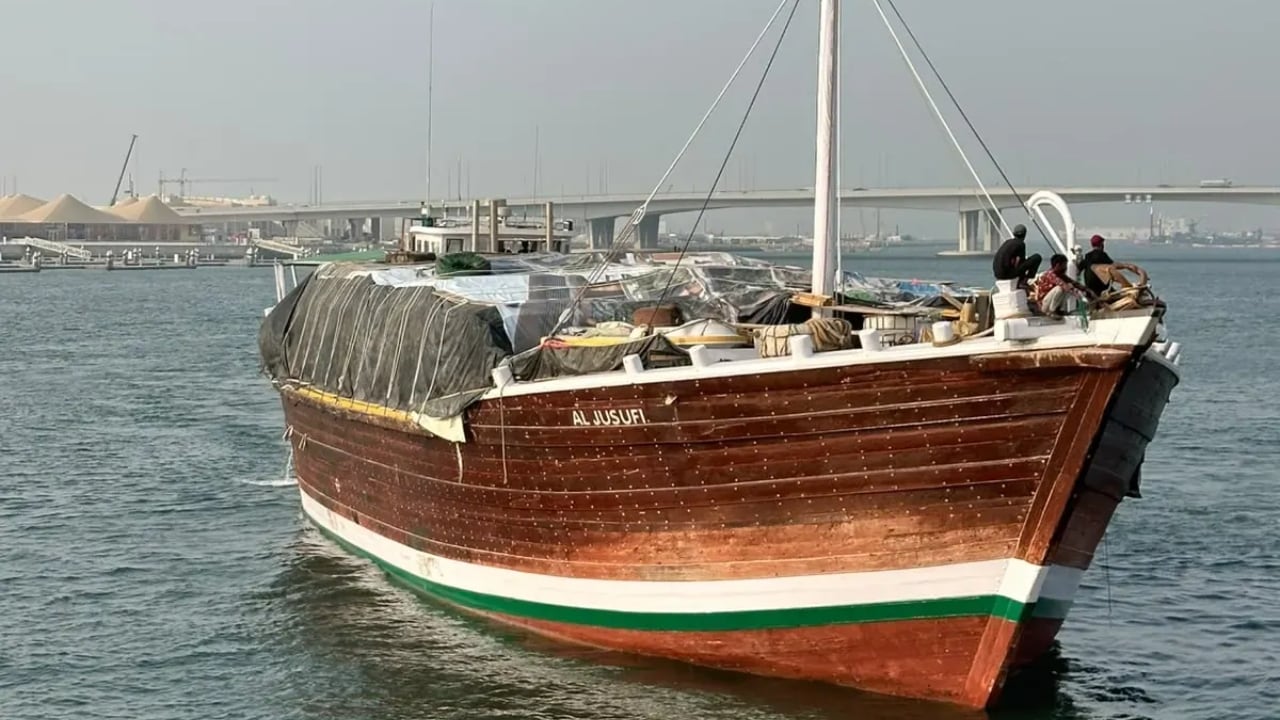
The salt eats everything on Qeshm Island.
It crusts on the hulls of the wooden lenj boats bobbing in the harbor of Bandar-e Laft. It clouds the windshields of battered pickup trucks hauling dried fish inland. And when the night sky over the Strait of Hormuz tears open with the white-hot flash of American ordnance, that same salt carries the tang of cordite across the water, settling onto the tongues of people who have never once cast a vote in an American midterm election.
Listen.
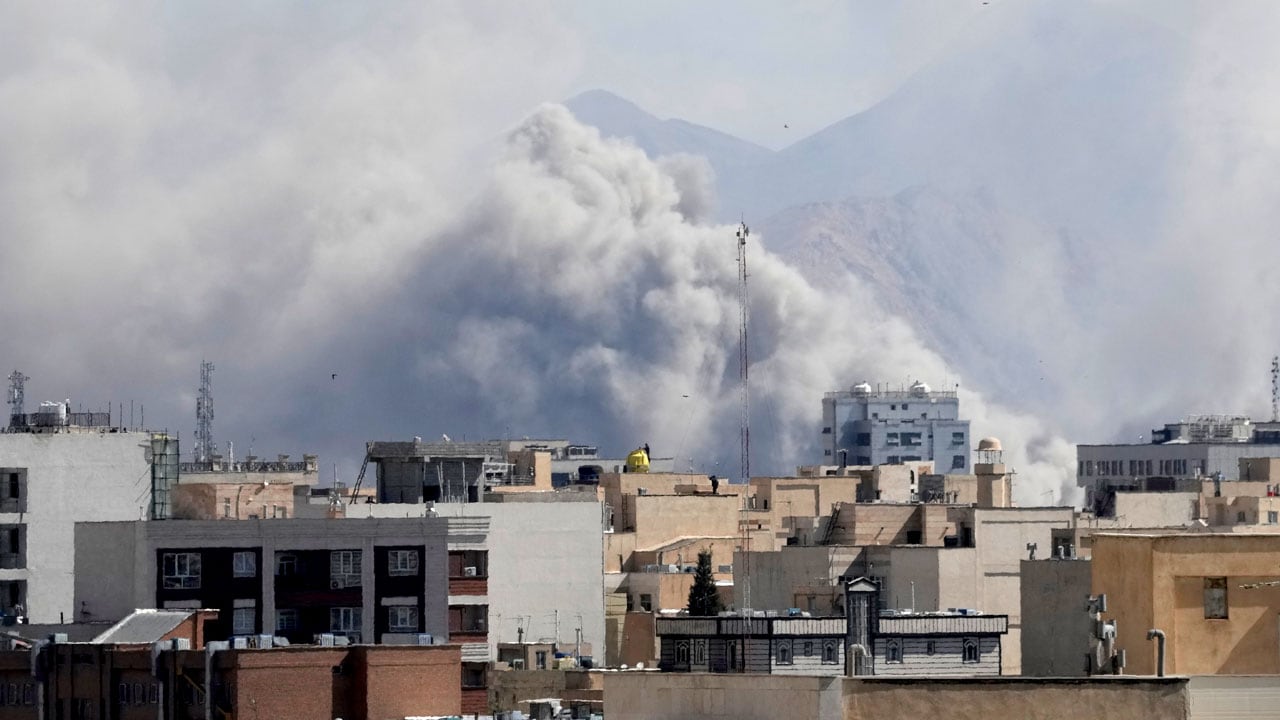
You can hear the hum of a distant generator dying out before the shockwave even arrives. Imagine a hypothetical fisherman—let us call him Reza, though his story belongs to a hundred thousand real inhabitants of this sun-bleached strip of limestone—standing on a flat roof at three in the morning. He is checking the wind. In the Persian Gulf, reading the wind is how you stay alive. Tonight, however, the wind brings the shriek of precision-guided munitions striking military infrastructure along the island’s northern coast, just across the narrow Clarence Strait from the Iranian mainland.
Thousands of miles away, in the fluorescent-lit studios of Washington and Jerusalem, pundits are already reducing that concussive roar to a talking point. They call it deterrence. They call it signaling. Mostly, if you strip away the polite diplomatic varnish, they are calling it timing.
When United States forces strike targets on Iran’s Qeshm Island in the shadow of American midterm elections, and immediately on the heels of vocal calls from Israeli Prime Minister Benjamin Netanyahu for decisive military action against Tehran, the headlines write themselves in cold, clinical shorthand. Escalation. Retaliation. Geopolitical pressure. Yet treating this strike as a mere chess move on a glowing war-room table misses the terrifying, deeply human mechanics of what actually happens when domestic political clocks synchronize with hair-trigger military geography.
The Geometry of a Chokepoint
To understand why a rocky, dolphin-shaped island in southern Iran matters to a commuter filling up a sedan in Ohio, you have to picture a garden hose pinched between two fingers.
Qeshm is the largest island in the Persian Gulf, stretching roughly eighty miles long, parallel to the Iranian coast. It sits directly astride the Strait of Hormuz—the narrow, curved maritime throat through which roughly one-fifth of the world’s petroleum liquids must squeeze every single day. On a map, the strait looks like an accidental scratch between Oman’s Musandam Peninsula and southern Iran. At its narrowest point, the shipping lanes are barely two miles wide in either direction, separated by a two-mile buffer zone.
For decades, Qeshm has lived a double life. By day, it is a designated free-trade zone of mangrove forests, dramatic geological canyons, and quiet fishing villages where Bandari women wear intricate, colorful boregheh face masks to shield their skin from the relentless glare. By night, its rugged coastline and proximity to the shipping lanes have made it a vital node for the Islamic Revolutionary Guard Corps, housing naval facilities, radar arrays, missile batteries, and logistics hubs built to project power over the water.
When American bombers or cruise missiles hit Qeshm, they are not striking an empty desert training ground. They are striking the nerve center of Iran’s maritime tripwire.
I remember standing on a bluff overlooking a contested waterway years ago, watching an oil tanker crawl along the horizon at twelve knots. Up close, a supertanker looks less like a ship and more like a floating city block, sluggish and profoundly vulnerable. You realize, watching that steel giant inch forward, how fragile modern civilization really is. Our entire global economy—the plastic casing on your phone, the diesel hauling groceries to your local supermarket, the jet fuel lifting families across oceans—depends on the gentlemen’s agreement that nobody will drop a match into that narrow stretch of saltwater.
Every strike on Qeshm tests how thin that agreement has become.
The Calendar of Crisis
Why now? Why this specific island, at this specific hour?
Ask anyone who has spent time walking the marble corridors of Capitol Hill, and they will tell you that Washington runs on two clocks: the national security clock, which ticks in years and decades, and the electoral clock, which ticks in frantic, two-year increments. Every autumn before a midterm election, those two clocks collide.
For an incumbent administration, foreign policy crises in an election year are a form of political poison. Voters rarely reward a president for quiet, patient diplomacy that prevents a war nobody ever sees. Instead, voters punish perceived weakness. When American troops in the region face harassment from Iranian-backed militias, when commercial shipping comes under threat, or when opposition lawmakers accuse the White House of appeasement, the pressure to do something visible becomes almost unbearable.
Enter Benjamin Netanyahu.
For more than two decades, the Israeli Prime Minister has functioned as the world’s most persistent alarm bell regarding Tehran. Whether standing before the United Nations General Assembly with a cartoon drawing of a bomb or addressing joint sessions of Congress, Netanyahu’s strategic doctrine has remained remarkably consistent: diplomacy with the Islamic Republic is a trap, containment is an illusion, and only overwhelming, credible military force can halt Iran’s regional ambitions and nuclear trajectory.
When Netanyahu publicly calls for strikes against Iran, he is not merely speaking to his own cabinet in Jerusalem. He is speaking directly into the bloodstream of American domestic politics. He knows that in the final stretch before November ballots are cast, no American president—Democrat or Republican—can afford to look hesitant while an ally demands action and adversaries test the perimeter.
Consider what happens next in the Situation Room.
Intelligence reports land on the polished mahogany table showing heightened IRGC naval activity around Qeshm, perhaps tied to drone deployments, arms smuggling routes, or fast-attack boat swarms threatening international shipping. Military planners offer a menu of options. Option A is a cyber operation—clean, deniable, invisible to the evening news. Option C is a strike on the Iranian mainland—catastrophic, almost certain to trigger a full-scale regional war that sends gas prices soaring to six dollars a gallon two weeks before Election Day.
And then there is Option B. Qeshm Island.
On paper, Qeshm looks like the Goldilocks target. It is sovereign Iranian territory, which sends an unmistakable message of resolve to Tehran and silences critics in Washington and Jerusalem who claim the United States is afraid to cross Iran’s red lines. At the same time, because it is an island separated from the mainland, planners can argue—or at least hope—that a surgical strike on military infrastructure there carries a lower risk of triggering an immediate, uncontrollable ground war than bombing Tehran or Isfahan.
It is a calculation born of pure political geometry. Maximum visual impact, theoretically contained fallout.
The Illusion of the "Surgical" Strike
Here is where the war-room math starts to rot.
Military theorists love the phrase escalation dominance—the comforting belief that you can climb one rung up the ladder of violence, punch your adversary hard enough to make them back down, and then calmly step back down the ladder while everyone goes home. In practice, war rarely behaves like a thermostat you can adjust by two degrees. It behaves more like a grease fire in a cramped kitchen.
Let us return to our hypothetical fisherman, Reza, on his roof in Qeshm. When the explosions rattle his window frames, he does not care about the distinction between a mainland target and an offshore free-trade zone. Neither do the hardline commanders in Tehran.
To the Iranian leadership, Qeshm is not a buffer zone; it is the homeland. Absorbing a direct American military strike on sovereign soil without responding carries its own existential political risk for a regime built on the image of resistance. If Tehran does nothing, it looks weak to its own restive population and its regional proxies from Lebanon to Yemen. If it retaliates too hard—say, by mining the Strait of Hormuz or sinking a commercial vessel—it invites devastating American retaliation that could cripple its economy and threaten the survival of the regime itself.
So Tehran looks for its own Goldilocks response. Maybe a barrage of ballistic missiles aimed at an empty desert corner of an American base in Iraq or Syria. Maybe a sudden, unexplained seizure of a foreign-flagged tanker passing three miles off Qeshm’s southern coast. Maybe a surge in cyberattacks against Western financial networks.
Each side convinces itself that its move is calibrated, proportional, and defensive. Each side believes it is sending a signal that will restore deterrence. And with every calibrated punch, the margin for human error shrinks toward zero.
What happens if a missile meant for an empty barracks drifts two hundred yards off course and kills twenty American service members? What happens if a nervous air-defense operator on Qeshm mistakes a commercial airliner climbing out of Dubai for an incoming strike aircraft?
It has happened before. History in the Persian Gulf is written in the wreckage of miscalculations. In 1988, during the height of the Tanker War, the USS Vincennes mistook Iran Air Flight 655 for an attacking F-14 fighter jet, shooting it out of the sky and killing 290 civilians. In 2020, hours after firing ballistic missiles at American forces in Iraq following the assassination of Qasem Soleimani, Iranian air-defense operators panicked in the dark and shot down Ukraine International Airlines Flight 752 just minutes after takeoff from Tehran, killing 176 people.
Nobody in those command centers woke up intending to murder innocent passengers. They were simply trapped inside a high-speed feedback loop of fear, sleep deprivation, and political pressure where hesitation felt fatal.
The Invisible Tax on Everyone Else
Even if the guns fall silent after a single night of strikes, the shockwaves do not stop at the water’s edge. They travel invisibly through shipping insurance premiums, energy futures, and grocery bills, landing quietly on kitchen tables from Madrid to Mumbai to Minneapolis.
We tend to think of war as something that either happens or does not happen—a binary switch flipped between peace and conflict. In reality, modern geopolitical brinkmanship operates like a slow, grinding tax on global stability.
The moment reports of explosions on Qeshm hit the financial wires in London and New York, algorithms react in milliseconds. Brent crude spikes. Maritime insurers in Lloyd’s of London immediately slap "war risk" surcharges onto every vessel transiting the Persian Gulf. Tanker captains slow down, waiting in holding patterns outside the Gulf of Oman to see if the strait will remain open.
For a family trying to survive an already punishing cost-of-living crisis, that distant flash of light over an Iranian island translates directly into higher fuel costs at the pump and higher freight charges baked into the price of every imported good. Ironically, the very midterm voters whom a show of military strength is meant to reassure end up paying the hidden surcharge of that strength every time they swipe their debit cards.
And what of the people who actually live along those shores?
I think often of the ordinary Iranians who have spent the last several years risking their lives in the streets to demand basic freedoms, economic dignity, and an end to authoritarian rule. When foreign bombs fall on Iranian territory, the immediate effect is rarely the liberation of the oppressed. More often, foreign strikes hand the regime a nationalist rallying cry. Fear of external attack forces ordinary citizens to focus on sheer physical survival, pushing internal dissent to the margins while hardliners tighten their grip under the banner of national defense.
The people caught between Washington’s electoral calendar, Jerusalem’s security doctrines, and Tehran’s ideological survival strategy have no seat at any of those tables. They simply watch the sky and hope the coordinates programmed into a guidance computer half a world away were typed correctly.
Watching the Water
By dawn, the smoke over Qeshm begins to thin, pulled apart by the morning breeze rising off the Gulf.
In Washington, press secretaries step up to podiums to deliver carefully scrubbed statements about "necessary and proportionate measures" taken to protect American interests and freedom of navigation. In Jerusalem, officials nod with cautious approval, arguing that force is the only language Tehran understands. In Tehran, state television broadcasts footage of defiant military commanders inspecting damaged concrete, promising a crushing response at a time and place of their own choosing.
Everyone claims a tactical victory. Nobody admits how close the match came to the gasoline.
Down on the docks of Qeshm, the fishermen untie their ropes anyway. They have to. Families still need to eat, regardless of which party controls the United States Senate, regardless of what speeches are delivered in the Knesset, and regardless of what targets glow red on a satellite screen.
As the wooden boats chug past the mangroves toward open water, the men aboard keep one eye on the nets and the other on the horizon, listening to the stillness between the waves, wondering which clock will strike next.