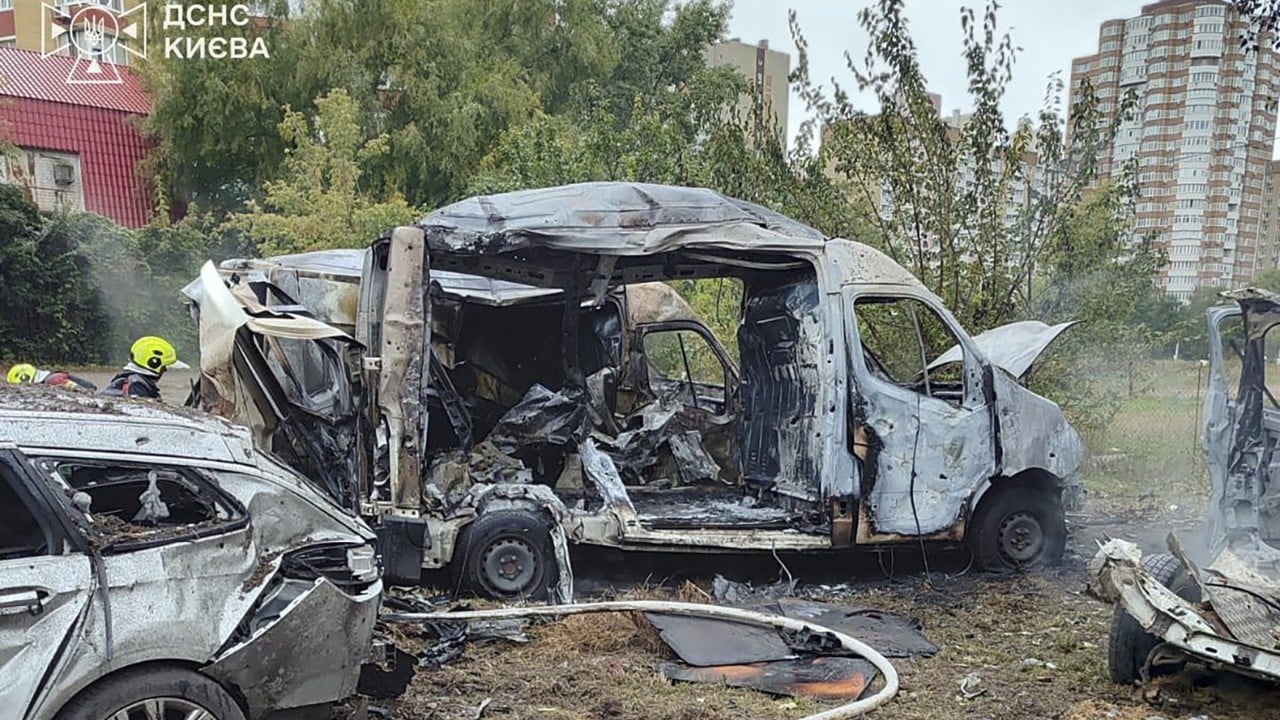
The warning did not arrive in a sealed diplomatic pouch or through a classified intelligence briefing. It bled out across tabloid front pages and cable news chyrons under blaring banners about World War Three and drone armadas targeting British holidaymakers on foreign shores.
The headlines screamed of impending apocalypse across popular Mediterranean resorts. They pointed a trembling finger at Moscow, warning that cheap recreational quadcopters converted into explosive delivery systems would soon plunge the Costa del Sol and Greek islands into chaos. Panic makes for brisk circulation numbers. In other updates, take a look at: Evaluating Precautionary Standby Protocols During Business Jet Mechanical Anomalies.
Yet underneath the sensationalized panic lies a far more unsettling reality. We are witnessing the weaponization of anxiety itself.
Security analysts who spend their days tracking asymmetric threats understand that modern conflict rarely arrives with the cinematic flourish of an ICBM launch. Instead, it seeps through the cracks of everyday infrastructure. European tourism is vulnerable. Not because foreign actors intend to rain high explosives down on crowded resort swimming pools tomorrow, but because the modern tourist economy represents a soft, hyper-connected nerve center. The New York Times has also covered this fascinating subject in great detail.
Disrupting that nerve center costs next to nothing. The psychological return on investment makes low-level sabotage an attractive instrument of statecraft below the threshold of declared war.
To understand why European tourism sits squarely in the crosshairs of hybrid doctrine, look past the theater of the sensational. Examine the mechanics of contemporary grey-zone operations.
For decades, military planners operated on binary states of peace and war. Borders were clear. Uniforms were visible. Deterrence meant massive conventional stockpiles designed to prevent total mobilization.
That framework is dead.
Today's adversarial playbook relies on sub-threshold friction. It involves actions designed to inflict economic damage, degrade institutional trust, and exhaust public morale without triggering a collective defense response.
Consider the geography of the Mediterranean. Millions of British, German, and Scandinavian citizens pack their bags every summer, funneling billions of euros into coastal economies. This ecosystem depends entirely on absolute predictability. Flights must land on schedule. Ferries must depart. Hotels must remain sanctuaries of leisure.
Introduce even a whisper of persistent airborne threat into that equation, and the architecture begins to wobble.
When a commercial airfield shuts down for hours because an unidentified drone loiters near the perimeter fence, the operational friction is immediate. Flights divert. Supply chains stall. Passengers sleep on terminal floors. The financial fallout ripples outward through aviation insurers, tour operators, and municipal budgets.
This is the core objective of modern hybrid disruption. The goal is not necessarily mass casualties. The goal is systemic exhaustion.
The technology driving this vulnerability is democratized and cheap. Walk into any consumer electronics store or order online components from a global supply chain, and you can acquire a capable aerial platform for the price of a weekend getaway. Modifying those consumer electronics to carry a payload requires basic hobbyist skill, not a state-level defense contractor.
Defense ministries across Europe spent billions building multi-layered air defense systems designed to intercept supersonic cruise missiles and tactical jets. Those systems are astonishingly ineffective against a swarm of modified commercial drones buzzing a low altitude near a coastal resort town.
Radar cross-sections are microscopic. Thermal signatures blend into the ambient heat of coastal concrete and sun-baked asphalt. Deploying a multimillion-dollar interceptor missile against a three-hundred-dollar quadcopter is an economic catastrophe for the defender.
This asymmetry defines the current era. It forces open societies to defend every square inch of their civilian infrastructure against cheap, ubiquitous tools of disruption.
Tabloid accounts suggest that foreign intelligence operatives are mapping resort rooftops for imminent strikes. That narrative misunderstands how modern hybrid warfare operates. Direct kinetic attacks on civilian tourist hubs would cross a clear threshold, unifying Western alliances and inviting devastating conventional retaliation.
Strategic competitors prefer the gray zone. They favor plausible deniability.
An unannounced GPS spoofing campaign that scrambles navigational instruments for commercial ferries operating between Greek islands achieves a similar disruptive effect without leaving a ballistic fingerprint. Coordinated cyber intrusions targeting hotel booking databases or airport baggage handling systems paralyze operations while investigators spend weeks chasing digital ghosts.
These incidents happen regularly. They rarely make the front page because they lack the visceral horror of a falling bomb. Yet their cumulative economic and psychological toll steadily erodes public confidence.
The tourism industry has always absorbed shocks. Volcanic ash clouds, pandemic lockdowns, and currency fluctuations test the resilience of travel operators every season.
Yet structural hybrid threats require a fundamental shift in posture. Coastal municipalities cannot simply deploy Patriot missile batteries beside beach umbrellas. Doing so would instantly achieve the adversary's primary goal by transforming sanctuaries of leisure into militarized zones, destroying the economic model from within through self-inflicted panic.
Instead, resilience must be woven into the fabric of the digital and physical infrastructure.
Aviation authorities are quietly testing localized electronic countermeasures designed to disable unauthorized drone navigation without disrupting surrounding civilian communications. Border agencies are investing in acoustic and optical sensor arrays optimized for low-altitude, slow-moving aerial anomalies.
These countermeasures remain imperfect. The democratization of technology ensures that offense will retain an edge over defense in asymmetric skirmishes for the foreseeable future.
Tourists packing bags for Mediterranean escapes this season are unlikely to witness aerial dogfights over their hotels. The threat is more insidious. It lives in the background noise of logistical delays, sudden airspace closures, and the quiet erosion of certainty.
As long as open societies remain uniquely dependent on frictionless movement and unhindered commerce, the gray-zone architects will continue to test the boundaries. The challenge is learning to absorb the friction without surrendering the openness that makes the free world worth defending.