Dusk in Marib does not arrive gently. It falls like a heavy curtain of copper and dust, swallowing the jagged silhouettes of ancient date palms and the mud-brick walls that have stood against the desert winds for centuries. For a brief, suspended moment, the air cools. The chaotic clamor of the afternoon—the rattling generators, the shouts of children playing soccer in the alleys, the distant honking of overloaded pickup trucks—softens into something resembling peace.
People sit on woven mats outside their thresholds. They pour sweet, cardamom-spiced tea from brass pots into tiny glass cups. They talk about the price of flour, the unbearable heat, the weddings postponed, the ordinary rhythms of survival in a place that has long forgotten what normal feels like.
Then comes the scream.
It is not a metaphor. It is an abrupt, tearing shriek that cleaves the evening open, moving faster than sound, followed immediately by a concussive shockwave that rattles teeth and blows dust through closed shutters.
Silence returns, but it is a broken silence. It is filled instantly by the frantic barking of stray dogs, the wail of car alarms, and the rising, collective gasp of a neighborhood holding its breath to see who survived.
When official reports filter out of Yemen’s government regarding the latest Houthi strikes hitting residential areas in Marib, they come packaged in the cold, sterile language of war updates. Numbers. Coordinates. Casualties. Strategic assessments. To read those briefs is to look at a map from thirty thousand feet. It is clean. It is bloodless. It is safe.
It is also a profound lie of omission.
(Note: To understand the human cost behind these official briefings, we must look at how ballistic impacts translate into domestic spaces—a reality illustrated by the hypothetical perspective of a father sitting in his living room when the warning sirens fail.)
Imagine sitting on a threadbare foam mattress in a rented room on the edge of the city. You are thirty-eight years old. You used to teach history in a school four provinces away, before the frontlines redrew the map of your life and drove you into this bustling, overcrowded desert hub that became a sanctuary for hundreds of thousands of displaced families. You are helping your nine-year-old daughter trace her letters in a cheap notebook by the flickering light of a single bulb powered by a failing solar panel.
You smell frying onions from the courtyard. You hear your wife laughing quietly as she washes the evening dishes.
And then, physics intervenes.
A ballistic missile or an explosive drone, launched from ridges miles away, does not care about history books, or nine-year-old girls, or the fragile architecture of civilian life. It follows a ballistic arc dictated by simple math and lethal intent. When it impacts a residential neighborhood, concrete does not merely break; it pulverizes into a blinding, choking fog of gray powder. Steel rebar twists like dry noodles. Glass becomes shrapnel.
In that fraction of a second, the sanctuary becomes a crater.
Why Marib? Why this city, bulging at the seams with people who have already fled violence once, twice, three times?
The answer lies in the grim calculus of modern conflict. Marib is the beating heart of energy and geography in central Yemen. It holds the gas fields, the power stations, the crossroads. To control Marib is to hold a chokehold over the remaining functioning economy of the internationally recognized government. For years, the Houthi movement has sought to break this resistance, launching waves of assaults that repeatedly crash against the city's perimeter.
When military advances stall on the frontlines outside town, the pattern shifts. The war reaches inward. Residential neighborhoods—places like Al-Mil, or the dense quarters crowded with makeshift tents and concrete block homes—become the absorbing medium for kinetic frustration.
We must confront the mechanics of this violence without sanitizing it. A missile strike in a civilian area is not a stray bullet. It is an engineered event requiring launch crews, telemetry, guidance systems, and a conscious decision to fire heavy ordnance toward coordinates known to house families, markets, and schools.
International humanitarian law draws a thick, unyielding line between military targets and civilian populations. Principles of distinction and proportionality are not just bureaucratic jargon dreamed up in Geneva office buildings; they are the thin, fragile barriers keeping total chaos from consuming the remnants of human civilization. When those lines are erased, every kitchen becomes a bunker, and every bed becomes a potential tomb.
Yet, numbers scroll past on news feeds with numbing regularity. Three wounded here. A child killed there. Structural damage reported.
We have become dangerously fluent in tragedy. We consume suffering like weather forecasts, noting the storm and scrolling down to the next headline. We forget that behind every statistic is a domestic universe utterly annihilated. We forget the schoolbooks buried under tons of rubble, stained with dust and blood. We forget the mother searching desperately through the dark for a shoe, a hand, a heartbeat.
The people of Marib know this vulnerability intimately. They live with it in the marrow of their bones. Every dusk brings that familiar tightening in the chest. Every distant rumble makes conversation trail off into uneasy silence as neighbors look at one another, eyes asking the unmentionable question: Is it us this time?
To walk through Marib today is to witness a masterclass in human resilience that borders on the heartbreaking. Markets still open in the morning. Merchants sweep shards of glass from their doorways before laying out tomatoes and onions. Young men push carts laden with plastic jerrycans of water down unpaved streets. Children still kick deflated soccer balls against crumbling walls, their laughter cutting through the heavy air with defiant joy.
They refuse to let fear have the final word. But defiance does not stop shrapnel. Courage does not deflect a falling ceiling.
When government officials issue statements condemning these strikes, they are documenting crimes, yes, but they are also issuing a plea to a largely indifferent world. They are shouting into a digital void, reminding everyone that real human beings are bleeding out in the dust of the Arabian desert while global attention flickers elsewhere.
The conflict in Yemen is frequently described as a forgotten war. That description is convenient, but it is also a moral failure. Wars are not forgotten by accident; they are ignored by choice. We choose to look away because complexity is exhausting and suffering without an immediate, tidy resolution makes us uncomfortable.
We prefer our narratives neat. We prefer heroes and villains neatly separated by borders and ideologies. But reality is messier, crueler, and infinitely more demanding of our attention.
Consider what happens when the world stops watching. Accountability evaporates. Impunity hardens into routine. Every unpunished strike on a civilian home lowers the threshold of what is acceptable, normalizing the unthinkable until the destruction of residential neighborhoods is treated as mere background noise in a protracted stalemate.
We cannot afford to let that happen. Not because we hold the key to ending the war tomorrow with a stroke of a pen, but because bearing witness is the bare minimum requirement of our shared humanity.
The dust settles slowly over Marib.
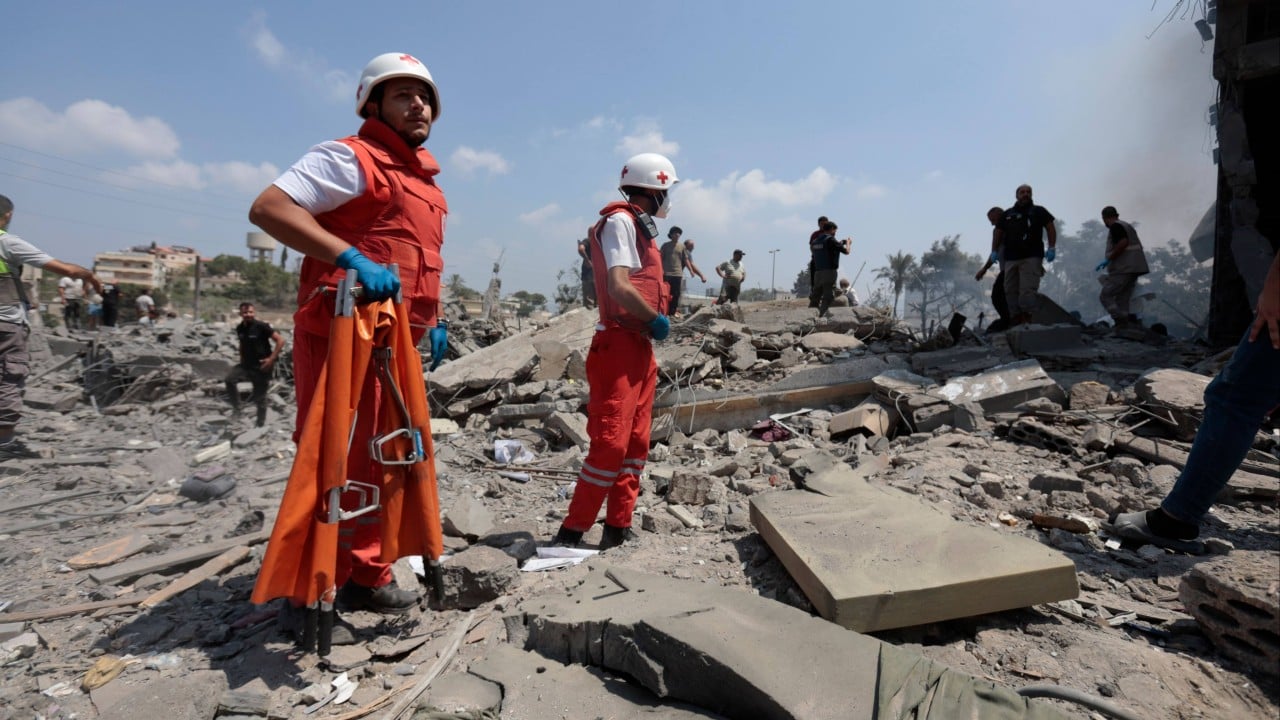
Rescue workers pull glowing embers from the ruins of a home, their hands blackened, their faces streaked with sweat and tears. Down the street, the call to evening prayer begins to echo from a minaret that still stands, its voice vibrating across the wounded rooftops.
The sun slips below the horizon, leaving behind a sky the color of bruised iron. In the darkness, life resumes its fragile, breathtaking march, waiting for the dawn, and hoping against all odds that the night will stay quiet.