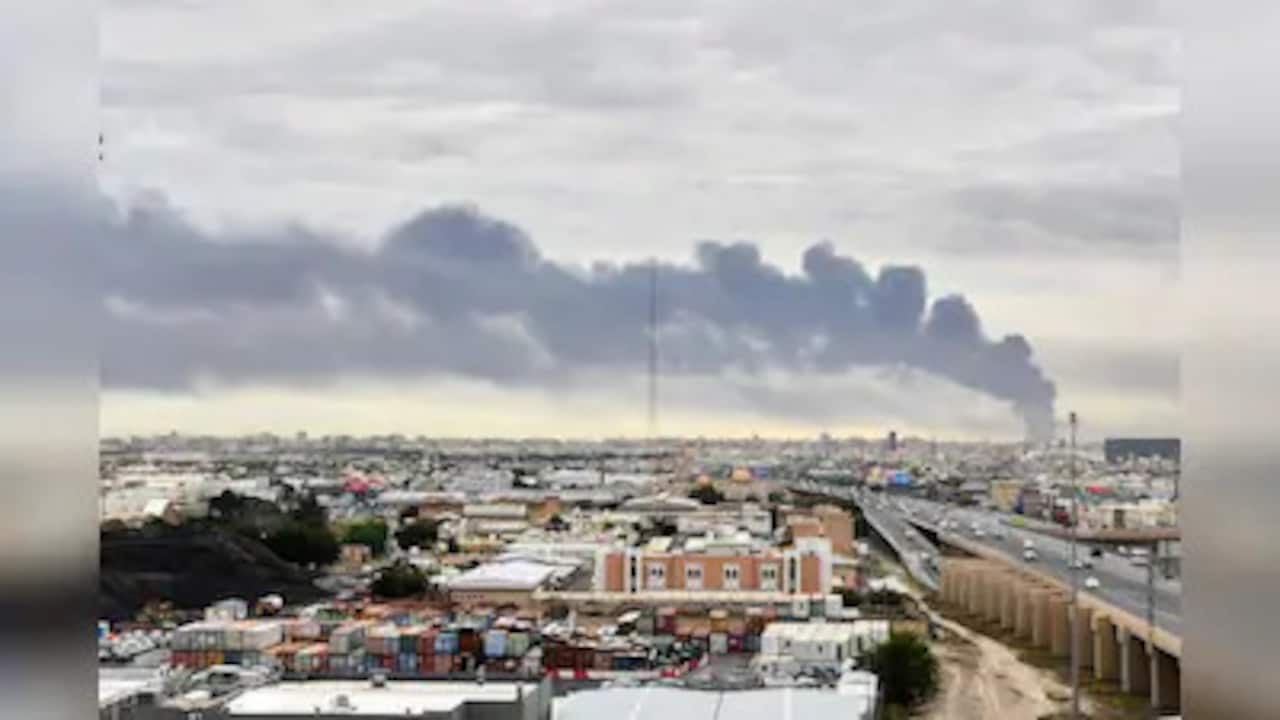
Mainstream defense desks love a tidy press release. An unnamed Pentagon official drops the magic words—"self-defense" and "precision munitions"—and every wire service on earth dutifully copy-pastes the script. American fighter jets hit an Islamic Revolutionary Guard Corps (IRGC) missile launch site on Qeshm Island. Problem solved. Threat neutralized. Move along.
It is lazy journalism. Worse, it is dangerous strategic blindness. Recently making news recently: Inside the US Navy Mental Health Crisis Nobody in Washington Wants to Own.
Treating the November 17 airstrike on Qeshm Island as an isolated, defensive wrist-slap misses the entire chessboard. That strike was not a clean defensive reset after intercepted Iranian drones over Bahrain. It was the latest expensive symptom of a grueling, nine-month attrition trap that Washington is actively losing on the balance sheet—even while winning every single tactical skirmish on the radar screen.
If you want to understand what is actually happening in the Strait of Hormuz right now, stop reading CENTCOM talking points and start looking at munitions economics, geography, and the trap of "limited" escalation. More insights on this are covered by Associated Press.
The "Self-Defense" Illusion
Let’s dismantle the competitor's core premise immediately. When US fighter jets bomb a coastal battery inside sovereign Iranian territory—even an island sitting in the choke point of the Strait of Hormuz—calling it "self-defense" is a legalistic fig leaf, not a military reality.
Here is the actual sequence of events that wire reports sanitize into passive voice:
- The Blockade: Since the broader war erupted on February 28 and flared into an ongoing summer-to-autumn stalemate, Washington has enforced an economic blockade on Iranian ports to choke off oil exports.
- The Probe: Tehran launches cheap, one-way attack drones at US radar and naval facilities in Bahrain—attacks that US and allied air defenses routinely swat out of the sky without a scratch.
- The Escalation: Washington responds by scrambling multi-million-dollar fourth- and fifth-generation strike packages to bomb fixed concrete on Qeshm Island.
- The Retaliation: Within hours, Iranian drones are buzzing Kuwait’s Ali Al Salem Air Base, tankers are dodging mines, and Iranian air defenses are claiming shots at US reconnaissance drones over the exact same island.
Notice what didn't happen? Deterrence.
In classic military doctrine—think Thomas Schelling’s work on coercion and compellence—a punitive strike only works if it alters the adversary’s calculus for the next move. The Qeshm Island strike did the exact opposite. Hormozgan’s deputy governor, Ahmad Nafisi, immediately went on state media to shrug off the damage to commercial and residential infrastructure, while the IRGC simply shifted launch vectors toward Kuwait. You cannot deter a decentralized missile network by blowing up dirt it already evacuated.
Why Qeshm Island Is an Operational Quicksand
Most commentators look at a map, see Qeshm Island hugging the northern throat of the Strait of Hormuz, and assume hitting it secures global shipping lanes. That assumption ignores basic military geography.
Qeshm is not a tiny sandbar with a single radar dish. It is a 1,491-square-kilometer limestone labyrinth—roughly two-and-a-half times the size of Singapore—riddled with natural caves, coastal mangroves, and hardened underground tunnels carved out over three decades specifically to survive US air supremacy.
I have watched defense planners and defense-tech investors burn through billions of dollars over the last decade chasing the fantasy of "surgical counter-force"—the idea that persistent overhead surveillance plus GPS-guided bombs can permanently blind a coastal anti-access network. It never works against an enemy that has spent thirty years digging into karst rock.
When US jets strike a launch site on Qeshm, they are usually hitting:
- Decoy transporter-erector-launchers (TELs) parked near open-air revetments.
- Concrete aprons that Iranian engineering brigades can patch in 48 hours.
- Expendable coastal radar trailers that cost a fraction of the standoff munitions used to vaporize them.
Meanwhile, the real anti-ship cruise missiles and mobile drone launchers stay tucked inside subterranean bunkers until the strike package turns back toward the carrier deck in the Arabian Sea.
The Brutal Math of Attrition Warfare
Here is the question nobody in the mainstream press asks: Who is winning the cost-exchange ratio in the Persian Gulf?
Hint: It isn't the side flying carrier air wings.
| Metric | Iranian Harassment Package | US Defensive & Strike Response |
|---|---|---|
| Primary Hardware | One-way Shahed-series drones, mobile coastal rockets | Carrier-based F/A-18s or F-35s, Patriot/SM-2 interceptors, JDAMs |
| Unit Cost per Engagement | $20,000 – $50,000 per drone | $1M – $4M per interceptor; $30,000+ per flight hour |
| Strategic Objective | Keep insurance premiums high, bleed US readiness, stall diplomacy | Reopen shipping, project deterrence, avoid full-scale ground war |
| Replacement Timeline | Days (distributed domestic workshops) | Months to years (strained Western defense industrial base) |
Every time the IRGC fires a salvo of cheap drones at Bahrain, the US Navy and its Gulf partners burn through high-end surface-to-air interceptors that take Lockheed Martin and RTX years to replace. Then, to "restore deterrence," CENTCOM burns jet fuel, airframe hours, and precision-guided munitions to crater an empty launch pad on Qeshm Island.
Tehran does not need to sink an aircraft carrier to win this exchange. It just needs to keep Washington bleeding treasury and readiness in a low-grade, endless tit-for-tat while Omani and Qatari mediation stalls out.
Answering the Questions You Should Actually Be Asking
When headlines scream about US strikes on Iranian soil, readers rush to Google with the same predictable panic. Let’s strip away the noise and answer what actually matters.
Does the Qeshm Island strike mean World War III is starting?
No. That premise misunderstands how both Washington and Tehran are managing escalation. Both sides have had ample opportunity since February to go all-in, and both have deliberately calibrated their blows to stay below the threshold of total regime survival. Washington wants economic strangulation via blockade without getting bogged down in a ground invasion. Tehran wants to bleed US political will without triggering a carpet-bombing campaign against its remaining domestic energy grid. What you are watching is not the start of World War III—it is a managed, bloody stalemate.
Will oil prices spike because of fighting near the Strait of Hormuz?
Not in the way retail traders expect. CENTCOM has already escorted roughly 1.5 billion barrels of Gulf crude through the Strait since the summer, and main shipping channels have been repeatedly swept for mines. Because global markets have spent months pricing in chronic Gulf friction, isolated strikes on Qeshm produce brief algorithmic spikes followed by rapid mean reversion. The real price shock won't come from a bombed missile pad; it will come only if Iran successfully closes the waterway for more than ten consecutive days—a threshold Tehran knows would trigger existential retaliation.
Are US "precision strikes" actually degrading Iran's missile capability?
Tactically, yes; strategically, barely. Knocking out forward launch rails on Qeshm forces the IRGC to lengthen its supply lines and rely on deeper inland batteries. That buys US radar operators in Bahrain and Kuwait an extra 90 to 120 seconds of warning time. What it does not do is eliminate Iran's capacity to launch harassing salvos at will. You cannot bomb your way out of an asymmetric geography problem.
The Uncomfortable Truth About My Own Argument
To be intellectually honest, the contrarian critique of "limited strikes" carries a massive flaw of its own: doing nothing is politically impossible.
Imagine a scenario where the White House absorbs three Iranian drone salvos against US radar installations in five days and refuses to strike back because the munitions math looks bad on a spreadsheet. Within 48 hours, Tehran interprets restraint as paralysis, doubles the salvo size, and hits a barracks instead of an empty radar apron.
In military strategy, you are rarely choosing between a good option and a bad option. You are choosing between two bad options:
- Option A: Overreact with a massive campaign that spikes global energy prices, shatters regional alliances, and locks the US into the exact "forever war" the administration swore to avoid.
- Option B: Execute calibrated, "self-defense" pinpricks on Qeshm Island that satisfy domestic political optics while leaving the underlying strategic deadlock completely intact.
Washington picked Option B. That makes total political sense inside the Beltway—and almost zero military sense in the Persian Gulf.
How to Read the Next Headline Without Getting Played
If you are an analyst, an investor, or simply someone tired of being spoon-fed Pentagon stenography, stop measuring this conflict by the number of "precision strikes" announced by anonymous officials. That metric is pure theater.
Watch these three indicators instead:
- War-Risk Insurance Premiums in Fujairah: Ignore official press releases claiming the Strait is secure. Watch what Lloyd’s of London underwriters charge tankers transiting Hormuz. Underwriters don't care about political spin; they price actual kinetic risk.
- Interceptor Deployment Rates: Pay attention to emergency Pentagon procurement orders for SM-6, Patriot, and THAAD missiles. When defensive stockpile depletion outpaces manufacturing capacity, the side doing the "defending" is the one running out of time.
- Inland Infrastructure Targeting: Strikes on coastal islands like Qeshm or Sirik are theater. The moment US strike packages bypass the coast to hit deep-inland command bunkers or power substations, the stalemate is over and full-scale war has resumed.
Until one of those three needles moves, every "breaking news" alert about another missile pad cratered on Qeshm Island is just expensive noise—a billion-dollar air force mowing grass that grows back before the jets even land.