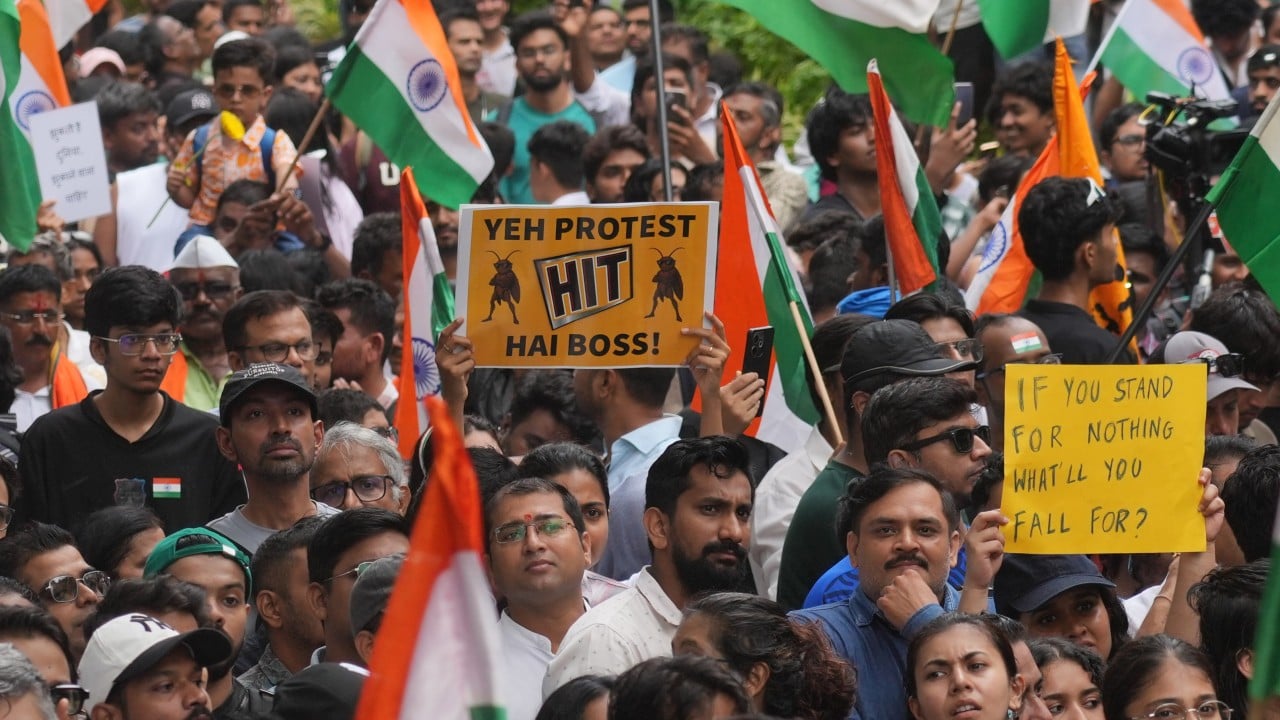
Every pundit with a Wi-Fi connection and a subscription to foreign policy journals is currently choking on the exact same romantic delusion. They look at the youth-led street movements tearing through South Asia—from Dhaka to Colombo—and they nod sagely. They call it a democratic awakening. They write breathless op-eds about digital natives reclaiming the ballot box, fighting tyranny with TikTok, and demanding institutional reform.
It is a comforting bedtime story. It is also completely false.
I have spent the better part of two decades watching political transitions, economic collapses, and urban explosions across emerging markets. I have sat in back rooms with central bankers sweating over foreign exchange reserves and watched street coalitions form overnight not over abstract ideals of civic virtue, but over the price of a liter of diesel and the total absence of a future.
The lazy consensus says South Asia's Gen Z is fighting for institutional integrity. The gritty reality is that they are fighting against structural obsolescence. They are not trying to save the system; they are trying to smash a rigged ticket booth because the ride is closed, the operators are rich, and the line hasn't moved in ten years.
The Myth of the Civic Awakening
Let us look at the standard narrative. A regime gets bloated, nepotism peaks, inflation spikes, youth unemployment hits double digits, and students flood the intersections. The media frames this through a Western lens: a noble crusade for free speech and electoral transparency.
This framing ignores basic mathematics.
When youth unemployment hovers near thirty percent while crony capitalists hoard real estate and state-backed monopolies, you do not have a political crisis. You have a demographic trap. In countries like Bangladesh or Sri Lanka, the median age is under thirty, but the median age of the people running the institutions is past retirement. The state absorbed every educated young person into an inflated credentialist loop—degrees that promise desk jobs that no longer exist because the economy stopped industrializing and started coasting on remittances and retail.
When these kids burn police boxes or occupy palaces, they are not acting out a civics textbook. They are reacting to an economic dead end. The protest is not a vote of confidence in alternative governance; it is an eviction notice served on an entire gerontocracy.
To call this a fight for democracy is to misunderstand the target. Democracy implies a belief in the rules of the game. These movements are born from the exact opposite realization: the rules were written by a cartel, the referees are on the payroll, and the only way to win is to flip the board.
The Economics of Despair
Let us strip away the romantic slogans painted on poster boards and look at the ledger.
South Asia’s demographic dividend was supposed to be the engine of the twenty-first century. Instead, it became a ticking bomb of over-education and under-employment. Millions of young people spent their late teens and twenties memorizing textbooks for civil service exams that offer a fraction of the openings required, only to find that the jobs are sold to the highest bidder or handed down through family trees.
Imagine a scenario where you spend six years studying accounting, graduate at the top of your class, and discover your only viable economic option is driving a ride-share scooter for twelve hours a day to pay off high-interest microloans.
That is not a policy failure. That is a systemic trap.
When the cost of basic staples doubles while political elites parade their wealth on social media, the social contract snaps. The protests are an economic referendum disguised as a political revolution. The youth are demanding liquidity, opportunity, and an end to asset bubbles built on their backs. When they chant against corruption, they mean something very specific: You took our purchasing power, you took our mobility, and now you expect us to clap for you.
Why the Tech Narrative Misses the Point
Another favorite trope of the armchair analyst is the role of technology. We hear endless chatter about how decentralized digital networks, encrypted messaging apps, and viral short-form videos enabled Gen Z to outmaneuver state surveillance.
Of course they did. Technology is a delivery mechanism, not an ideology.
During the Arab Spring, analysts made the exact same mistake, dubbing those events Twitter revolutions. A decade later, many of those same countries fell back into autocracy or civil war because fiber-optic cables do not draft constitutions, fix balance of payments crises, or build manufacturing hubs.
The reliance on digital organizing tools tells us how they mobilized, but it tells us nothing about what happens next. In fact, the decentralized nature of these movements is their greatest vulnerability. When you use social media algorithms to channel raw fury into the streets without a hierarchical political vehicle to capture state power, you create a vacuum.
And history hates a vacuum.
When the dust settles and the barricades come down, the kids go home to the same empty job market. Meanwhile, opportunistic politicians, military factions, or well-funded opposition parties step into the power vacuum. The faces at the top change, but the balance sheets remain identical. That is the tragedy of leaderless uprisings: they burn down the old house only to watch squatters move into the ruins.
Dismantling the Blueprint
If we want to understand what is actually happening in South Asia, we have to stop asking political science questions and start asking economic ones.
People ask: Will these protests lead to sustainable democratic reform?
That is the wrong question entirely. It assumes democracy is the primary variable. The question we should be asking is: How can these nations monetize their youth before demographic aging hits them before they ever reach middle-income status?
South Asia is running out of time. The window to leverage a young population is closing fast, pushed along by automation and global supply chain shifts. If these economies do not pivot toward high-value manufacturing, aggressive deregulation, and meritocratic capital allocation, no amount of street theater will save them.
Here is what actually needs to happen, stripped of diplomatic pleasantries:
- Abolish State Monopolies on Opportunity: Civil service obsession must be killed. Governments must stop acting as the primary employer of the educated elite and start unleashing private capital by cutting red tape for startups and small businesses.
- Tax Reform That Targets Assets, Not Labor: Stop squeezing the tiny formal working class with crushing income taxes while land speculators and political cronies pay pennies.
- Institutionalize Merit: Until access to university slots, bank loans, and government contracts is divorced from political patronage, the youth will keep rioting. And frankly, they will be right to do so.
The Brutal Reality of Power
Here is the downside to my perspective, because I am not here to sell you a utopian alternative: fixing this requires ruthlessness.
Democratizing a corrupt economy is messy, violent, and often stalls out. Dismantling cartels means making powerful enemies who control the guns, the banks, and the courts. Handing power over to street coalitions usually results in economic paralysis before any real reform takes root.
The political class in South Asia understands this. They are betting that the kids will get tired, graduate, emigrate, or compromise. And historically, the political class wins that bet.
Unless the anger driving these movements translates into hard-nosed economic restructuring rather than emotional catharsis, the next decade will look depressingly like the last one. Just with fresher graffiti on the walls.
The street is loud, but the balance sheet is louder. Stop listening to the chants and start looking at the ledgers.