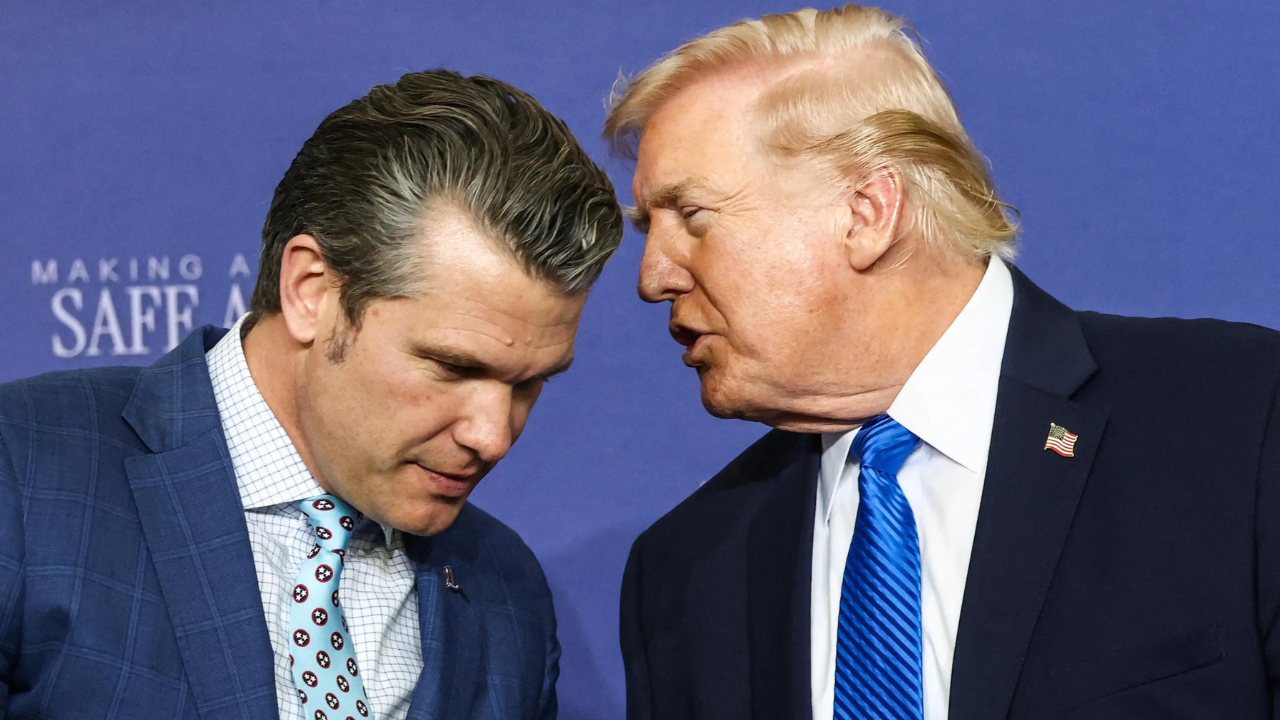
Political communications often rely on deliberate ambiguity to manage public perception, test institutional boundaries, and control news cycles without committing operational capital. When Donald Trump suggested UFC CEO Dana White for the role of White House Press Secretary—only to later characterize the remark as a joke—media coverage largely treated the sequence as an isolated moment of political humor or erratic messaging. That interpretation misses the underlying mechanics of modern executive signaling. Analyzing this episode through the lenses of organizational theory, signaling economics, and crisis communications reveals a calculated deployment of a "trial balloon" combined with retrospective plausible deniability.
The Architecture of the Political Trial Balloon
In high-stakes executive leadership, formal announcements carry immediate transaction costs. Nominating an unconventional candidate for a senior communications post triggers immediate vetting, legislative friction, market reactions, and internal bureaucratic resistance. To bypass these upfront costs, principals frequently use informal remarks to gather real-time sentiment data before committing resources.
The suggestion of Dana White operates across three distinct functional layers:
- Audience Segmentation and Base Signaling: Naming a high-profile combat sports executive signals alignment with an anti-establishment, combative media posture. To a core political base that views traditional press corps interactions as adversarial theater rather than information exchange, White represents operational dominance. The message requires no policy white paper; the persona itself serves as the heuristic.
- Institutional Disruption: The White House Press Secretary traditionally functions as an institutional buffer, translating executive policy into standardized, defensible narratives for accredited journalists. Introducing an executive whose public brand is built on unfiltered confrontation challenges the foundational norms of the briefing room. Even as a hypothetical, the suggestion forces media institutions to price in the possibility of a radical departure from standard press relations.
- Asymmetric Attention Capture: Media ecosystems operate on novelty and conflict. Pairing a polarizing political figure with an outsider from sports entertainment guarantees disproportionate algorithmic amplification. For the duration of that news cycle, competitor narratives, policy critiques, and substantive opposition messaging are crowded out of the primary information channels.
The Mechanics of Plausible Deniability
Once a trial balloon extracts its maximum attention value or encounters structural friction, the principal must execute an exit strategy that preserves authority. Declaring the initial statement a joke—"only kidding"—is a classic application of strategic retreat via reframing.
This mechanism relies on three cognitive and organizational dynamics:
- Retroactive Intent Recalibration: By redefining a public statement as humor after the fact, the speaker shifts the burden of interpretation onto the audience and the press. If media outlets analyzed the prospect seriously, they are framed as lacking humor or failing to grasp rhetorical hyperbole. If supporters cheered the prospect, they still retain the emotional validation of the initial signal.
- Zero-Cost Option Preservation: In financial terms, floating an unverified personnel idea acts as a call option with near-zero premium. If public and internal reception is overwhelmingly positive, the principal retains the option to formalize the offer. If reception indicates excessive friction—such as White's existing fiduciary duties to TKO Group Holdings or the administrative realities of federal ethics disclosures—the principal lets the option expire worthless by labeling it a jest.
- Loyalty and Alignment Testing: Informal personnel suggestions also function as internal diagnostic tools. Observing which advisors, allies, or media surrogates immediately endorse the idea versus those who leak concerns provides leadership with an unvarnished map of internal loyalty and ideological alignment.
Organizational Friction and Role Mismatch
Evaluating the literal feasibility of Dana White assuming the Press Secretary role exposes sharp structural incompatibilities between private-sector combat sports promotion and federal executive communications. Standard media commentary often stops at surface-level personality comparisons, overlooking the hard operational constraints that make such an appointment functionally improbable.
Fiduciary and Governance Constraints
As the chief executive of UFC under the publicly traded umbrella of TKO Group Holdings, White is bound by corporate governance standards, shareholder expectations, and complex commercial contracts. Transitioning into a federal government role requires divestiture, blind trusts, or recusal protocols under the Ethics in Government Act to prevent conflicts of interest. Given the financial scale of global sports broadcasting rights and live-event partnerships, the opportunity cost of leaving a private-sector CEO role for a mid-level White House staff salary is prohibitive.
Operational Cadence and Information Control
A sports promoter operates in an environment where narrative control is centralized, commercial outcomes are paramount, and media access can be revoked unilaterally without constitutional challenge. Conversely, the White House Press Secretary operates within a rigid legal and procedural framework. Every statement issued from the podium carries official weight, potentially impacting financial markets, diplomatic negotiations, and ongoing litigation. Furthermore, access to the briefing room is governed by established press association norms and First Amendment protections that prevent the arbitrary exclusion of credentialed outlets.
The Principal-Agent Problem in Executive Messaging
In agency theory, the Press Secretary is an agent tasked with representing the principal's (the President's) policy positions accurately across disparate government departments—State, Defense, Treasury, and Justice. This requires continuous interagency coordination and mastery of granular legislative details. A principal who prefers to act as their own primary communicator diminishes the traditional policy-translation function of the Press Secretary, reducing the role to tactical media management.
The Cost Function of Iterative Ambiguity
While strategic ambiguity yields immediate tactical advantages in attention capture and base mobilization, repeated reliance on "just kidding" reframing introduces measurable long-term costs to an organization's credibility.
The primary degradation occurs in signal-to-noise ratios. When external stakeholders—including foreign governments, financial markets, legislative allies, and civil servants—cannot reliably distinguish between actionable policy intent and rhetorical entertainment, they must expend additional resources verifying every public utterance. Over time, this forces rational actors to discount official statements until corroborated by formal administrative action, such as executive orders or Senate-confirmed nominations.
The second limitation involves internal operational paralysis. Bureaucracies rely on clear directional signals to allocate staff, draft briefings, and prepare contingencies. If staff members must constantly pause execution to determine whether an executive's public remark was a genuine directive or an offhand joke, organizational velocity drops. Resources spent gaming out phantom personnel changes or unvetted policy shifts represent pure deadweight loss.
Strategic Framework for Decoding Executive Signals
Analysts, journalists, and institutional decision-makers can avoid reactive miscalculation by filtering unconventional political announcements through a four-step verification protocol before allocating analytical or operational bandwidth:
- Assess Structural Opportunity Costs: Calculate what the named individual must surrender to accept the role. When a candidate holds high-equity, high-autonomy private-sector leadership positions, treat informal political job offers as low-probability signaling rather than actionable recruitment.
- Track Paper Over Rhetoric: Separate spoken remarks from administrative mechanics. Until Office of Government Ethics filings, formal vetting questionnaires, or transition team announcements appear, classify all personnel mentions as non-binding trial balloons.
- Identify the Distraction Delta: Audit the broader news environment at the exact timestamp of the remark. Unconventional personnel suggestions frequently coincide with unfavorable economic data, legal developments, or legislative setbacks, functioning as deliberate attention-diversion mechanisms.
- Price In the Retraction Loop: Build the retrospective "joke" framing into initial assessments. Rather than treating a subsequent walk-back as a reversal or an admission of error, recognize it as the planned closing phase of a zero-cost signaling cycle.
Organizations and media analysts that shift from reacting to the literal content of rhetorical trial balloons to measuring their underlying structural incentives will eliminate wasted coverage, maintain analytical precision, and accurately forecast actual executive appointments.