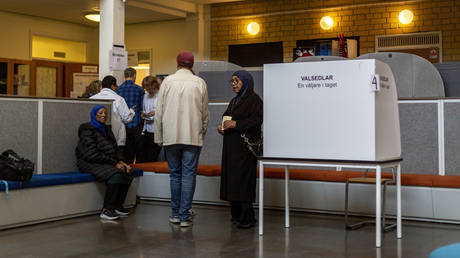
The September 2026 general election in Sweden concluded with a razor-thin parliamentary majority for the centre-left opposition led by Magdalena Andersson, abruptly cutting short Ulf Kristersson’s tenure and plunging Stockholm into an unprecedented political deadlock. Behind the initial headlines of a left-wing comeback lies a far more fragile reality. The numbers tell a story of a nation split down the middle, where a margin of merely a few thousand votes handed power to a coalition whose internal contradictions threaten to paralyze the Swedish parliament before a single major bill can be drafted.
Foreign observers often misinterpret Swedish elections through a traditional left-right binary. That analytical laziness ignores the complex mechanics of the Riksdag. Power in Sweden has not simply shifted from one cohesive camp to another. Instead, the election exposed structural fractures across both political blocs, leaving the country with a government-formation process that resembles a high-stakes puzzle with missing pieces. To understand why this victory is more curse than blessing for the Social Democrats, one must look past the aggregate seat counts and examine the deep ideological fault lines dividing the winning parties.
The Anatomy Of A Precarious Victory
Voter turnout remained remarkably high at nearly eighty-five percent, proving that civic engagement in the Nordic region is far from dormant. Citizens rushed to the polls under the weight of mounting economic anxieties, rising healthcare costs, and years of intense debate over public security. Yet this high participation produced a fragmented legislature where the anti-immigration Sweden Democrats suffered their first major electoral setback in decades, dropping to seventeen and a half percent, while the Left Party surged.
For Magdalena Andersson, securing the most votes was the easy part. The arithmetic of governance is where the crisis begins. The four parties comprising the opposition bloc—the Social Democrats, the Green Party, the Left Party, and the Centre Party—share little beyond an initial desire to oust the previous administration. Their agreement ends the moment they step into a negotiation room.
Consider the fundamental economic divide between the Centre Party and the Left Party. The Left Party campaigned on expanding public services through significant tax increases on corporations and high earners. The Centre Party, traditionally rooted in agrarian liberalism and fiscal conservatism, advocates for tax cuts and flexible labor markets. Bridging this chasm requires compromises that risk alienating the core bases of both factions. When an electoral victory relies on a microscopic margin of seats, every single backbench lawmaker holds veto power over the executive branch.
Coalitions Built On Contradictions
Modern Swedish politics is trapped in a structural trap of its own making. For years, parties drew strict red lines regarding who they would never work with. Those red lines have now calcified into barriers that prevent stable governance.
During the campaign, the Centre Party maintained its total refusal to cooperate with the Left Party, demanding that any government exclude radical elements. Simultaneously, the Left Party announced it would refuse to act as a passive support party from the outside, demanding formal cabinet positions as the price for its loyalty. An immovable object met an irresistible force on election night.
This friction manifested immediately when parliamentary votes commenced. Rather than presenting a unified front, the fractured opposition began stumbling over procedural hurdles. The Left Party's decision to break ranks during early parliamentary votes demonstrated just how fragile Andersson's mandate truly is. Trust between these allies is virtually non-existent, replaced by a calculating transactionalism where each faction fears being swallowed by its partners.
Veteran insiders in Stockholm recognize this pattern. When minority coalitions are stitched together out of sheer necessity rather than shared vision, policy output grinds to a halt. Important reforms addressing structural unemployment and green energy transitions are pushed aside to manage internal party rebellions.
The Far Right Aftermath And Structural Shifts
The decline of the Sweden Democrats has been widely heralded in international media as a turning point for European populism. That interpretation misses the underlying reality. While the party lost electoral ground for the first time since entering the national conversation, the issues they injected into the mainstream over the past decade have permanently altered Swedish political discourse.
No major party is proposing a return to the open-border migration policies of the early twenty-first century. Tough stances on crime, integration, and border enforcement have been internalized across the political spectrum. The Sweden Democrats may have been excluded from direct executive power during this cycle, but their ideological footprint remains stamped on every piece of legislation moving through the Riksdag.
Furthermore, the right-wing bloc led by the Moderates spent years building the Tidö Agreement framework, closely binding traditional conservatives with populist forces. Even in defeat, that infrastructure remains intact. The right did not evaporate; it regrouped. They are waiting for the inevitable fractures within the incoming centre-left coalition to exploit public fatigue.
Economic Pressures And Policy Deadlocks
Sweden enters this political uncertainty at a delicate macroeconomic moment. Inflationary pressures, sluggish growth across key manufacturing sectors, and high household debt loads create a narrow corridor for fiscal policy.
The incoming administration faces immediate demands to inject capital into public healthcare and education systems that show visible signs of strain. Yet, funding these initiatives requires either increasing the tax burden on a population already feeling the squeeze of higher living costs or cutting expenditures elsewhere—moves guaranteed to trigger immediate backlash from coalition partners.
When political energy is entirely consumed by internal survival, long-term strategic planning suffers. Infrastructure projects stall. Defense modernization, accelerated significantly following Sweden's recent entry into NATO, requires steady bipartisan consensus that current factional warfare threatens to undermine.
Inside The Riksdag Power Struggle
The daily reality inside the parliamentary chambers is far removed from the optimistic press conferences held after election night. Bureaucrats and legislative aides describe an atmosphere of profound exhaustion. Every vote is a cliffhanger. Every committee assignment requires hours of tense mediation to prevent a backbench revolt.
Speaker Andreas Norlén faces the unenviable task of guiding a legislature that seems structurally engineered for gridlock. Attempts to form traditional majority governments have repeatedly collapsed under the weight of incompatible demands. What remains are weak minority arrangements dependent on shifting alliances and tactical abstentions.
History suggests that governments born under such intense friction rarely survive a full four-year term without severe crises. The opposition won the election, but they inherited a fractured house built on sand. As the reality of governing sets in, the initial euphoria of victory has given way to the grim realization that managing Sweden's decline may be the only achievement this parliament can manage.
The underlying tensions will not resolve themselves through routine diplomacy. Parties are already positioning themselves for an early return to the ballot box, prioritizing partisan survival over national stability.
Swedish Centre Left Election Victory Coverage
This report provides a direct look at the historic election night when Magdalena Andersson's bloc secured its narrow parliamentary majority.