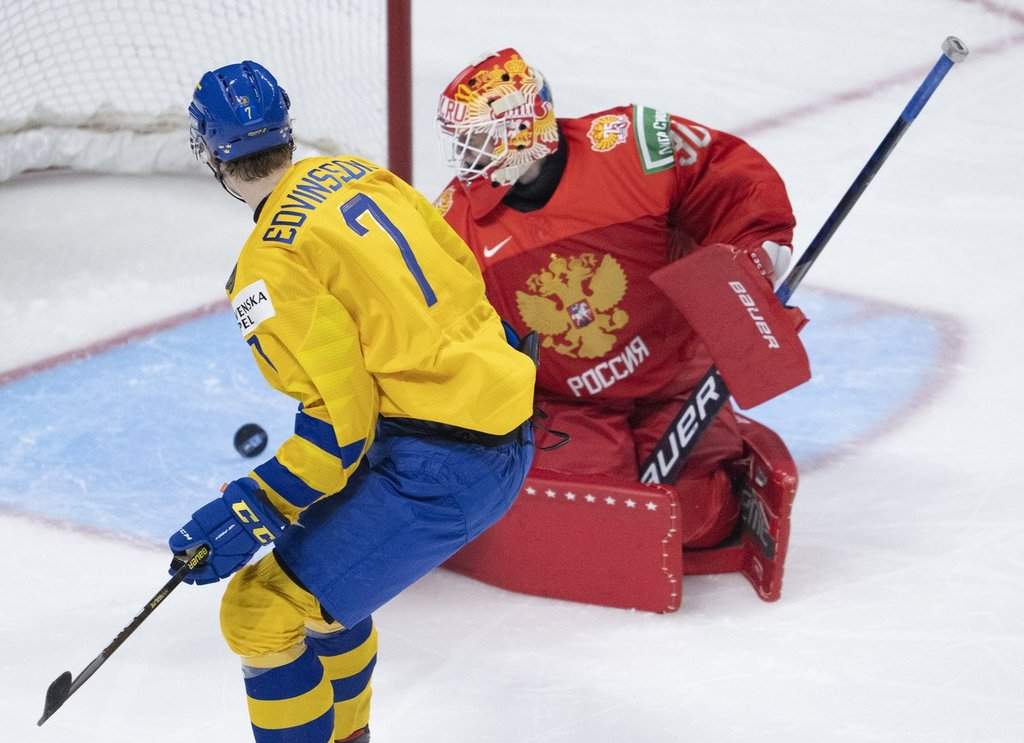
International hockey has a massive problem on its hands, and it's blowing up right before the World Junior Championship. Sweden just drew a hard line in the sand by refusing to play against Russia, creating a messy domino effect that threatens to boot Norway right out of the top division.
It's a brutal situation for young athletes who have zero control over geopolitics. Yet here we are. When the International Ice Hockey Federation (IIHF) opens the door for Russian teams to return, Nordic hockey federations aren't just grumbling—they're threatening outright boycotts. And if Russia comes back into the top-tier bracket, someone has to lose their spot to make room. Right now, that unlucky team is Norway.
Let's break down what's actually happening behind closed doors, why Sweden's stance matters so much, and how Norway became the collateral damage in a fight they didn't start.
The Standoff Over Russia's IIHF Return
Since Russia's full-scale invasion of Ukraine in February 2022, the IIHF has kept both Russia and Belarus suspended from all international competitions. That ban has held firm through multiple World Championships and World Junior tournaments. Every year, the IIHF Council meets to review the safety and security risks of reintegrating them.
Recently, whispers of a potential return started getting louder. Whenever the IIHF even hints at lifting the suspension for youth or junior tournaments, the backlash from Northern Europe is immediate.
Sweden isn't playing around. Representatives from the Swedish Ice Hockey Association have made their position crystal clear. They won't share the ice with Russian teams while the war in Ukraine continues.
This isn't an empty threat. Sweden is one of the "Big Six" hockey nations. You can't run a credible World Junior Championship without Tre Kronor. They bring massive television ratings, huge sponsorship dollars, and fierce competition. If Sweden walks, Finland almost certainly walks with them. Czechia and Latvia wouldn't be far behind.
The IIHF knows this. They're trapped between pressure from the International Olympic Committee (IOC) to find pathways back for neutral athletes and the cold reality that European hockey powers will blow up the tournament if Russia steps onto the rink.
How Norway Gets Caught in the Crossfire
You might be wondering how a diplomatic standoff between Sweden and Russia ends up ruining Norway's tournament. It comes down to basic math and IIHF tournament structure.
The top division of the IIHF World Junior Championship features ten teams. That's it. There's no room for eleven.
When Russia and Belarus were booted from the competition in 2022, their absence created an opening. Over the subsequent promotion and relegation cycles, smaller hockey nations fought tooth and nail to climb up from Division I Group A into the elite group. Norway earned their place through grit, development, and winning when it mattered on the ice.
If the IIHF decides to reinstate Russia directly into the top division—which is how they've historically handled powerhouse nations returning from abnormal absences—someone gets bumped down. Because Norway sits at the bottom of the top-division seeding, they are the first ones on the chopping block.
Think about how unfair that is. Imagine spending your entire teenage life training for the biggest stage in junior hockey, helping your country earn promotion legitimately, and then losing your spot because a suspended country gets a free pass back in.
Norwegian hockey officials are understandably furious. They've invested heavily in their youth programs to bridge the gap with Sweden and Finland. Getting relegated via a boardroom vote rather than a relegation game on the ice is a gut punch to the entire program.
Why Sweden's Boycott Threat Carries So Much Weight
In international sports, plenty of federations issue strongly worded statements that amount to nothing when the puck drops. Sweden is different.
Hockey isn't just a pastime in Sweden; it's ingrained in the national identity. The Swedish Ice Hockey Association answers to clubs, players, and fans who overwhelmingly support Ukraine. If Swedish officials agreed to let their U20 squad play Russia, the domestic outrage would be nuclear. Sponsors would pull out overnight.
There's also a massive logistical nightmare the IIHF keeps citing, though everyone knows it's half-truth and half-diplomacy. The IIHF officially bases its ban on "safety and security" concerns rather than pure politics. Honestly, they aren't wrong about the security risk.
Hosting a Russian national team in cities like Gothenburg, Ottawa, or Minneapolis requires astronomical security budgets. Protests are guaranteed. Travel visas are a bureaucratic mess, especially in European Union countries that have strictly limited entry for Russian citizens. Sweden, having recently joined NATO, isn't exactly rolling out the welcome mat for Russian state-sponsored sports teams.
When Sweden says they won't play, they're reminding the IIHF that forcing Russia back into the bracket won't magically restore normalcy. Instead, it will fracture international hockey permanently.
The Myth of "Neutral" Team Sports
A lot of people point to tennis or swimming and ask why hockey can't just let Russian kids play under a neutral flag. That argument falls apart the second you look at how team sports actually work.
You can put an individual swimmer in a lane without a flag on their cap. You can't take twenty-five players from the KHL and MHL—leagues deeply tied to Russian state corporations and oligarchs—put them in blank jerseys, and pretend nobody knows who they are.
Everyone watching knows it's Team Russia. The media calls them Russia. The fans chant for Russia. Worse, Russian state media immediately uses any international appearance as a propaganda victory, regardless of whether an anthem plays before the game.
Sweden sees right through the neutral-athlete workaround. To them, playing a "neutral" Russian junior squad is functionally identical to playing the official national team. They want zero part of it.
What Happens to the Tournament Format If Sweden Walks?
Let's play out the worst-case scenario. Suppose the IIHF caves to pressure, reinstates Russia, relegates Norway, and Sweden makes good on its promise to boycott. What does that tournament even look like?
It becomes a glorified exhibition series.
Without Sweden—and likely Finland—the World Juniors loses two of its premier medal contenders. Canada and the United States would still be there, sure, assuming Hockey Canada and USA Hockey don't face massive political pressure at home to join the boycott. Suddenly, a gold medal won in that tournament carries a giant asterisk forever.
The financial fallout would crush the IIHF. Broadcast rights in Scandinavia are worth millions. TSN in Canada drives massive viewership based on high-stakes rivalries like Canada vs. Sweden and Finland vs. Russia. If the European powerhouses pull out, advertisers bail, host cities lose tourism revenue, and the IIHF bleeds cash they desperately need to fund lower-division tournaments around the world.
This is why Sweden holds all the cards. The IIHF can't afford to call their bluff because it's not a bluff.
The Devastating Impact on Young Players
Lost in all the federation politics and television contracts are the actual eighteen- and nineteen-year-old kids caught in the middle.
For a Norwegian prospect, playing in the top division of the World Juniors is the ultimate audition. NHL scouts pack the arenas. General managers watch every shift. Performing well against Canada, Sweden, or the US can bump a kid up two rounds in the NHL Draft or secure him a pro contract in North America.
If Norway gets pushed back down to Division I Group A to make room for Russia, those kids lose that showcase. Scouts still watch Division I, obviously, but it's not the same. You don't get to prove you can skate with future NHL superstars when you're playing against Austria, Hungary, and Kazakhstan.
At the same time, it's tough not to feel a shred of sympathy for the Russian teenagers who were fourteen or fifteen when the war started. They didn't invade anyone. Yet, elite sports have never existed in a vacuum, and countries don't get to separate their international prestige from their geopolitical actions.
Where International Hockey Goes From Here
The IIHF Council has boxed itself into a corner, and there's no painless way out. Every single option makes somebody furious.
If they keep Russia banned, they face ongoing legal challenges, anger from the IOC, and accusations of letting politics dictate sports. If they bring Russia back, they trigger a Nordic boycott that destroys the integrity of their flagship youth tournament and screws over a smaller hockey nation like Norway that earned its spot fairly.
Look at how other sports federations have handled this. World Athletics held firm on its ban despite massive pushback. Meanwhile, organizations that tried to half-step their way through "neutrality" rules ended up with endless controversies, handshake refusals, and PR disasters at every major event.
For hockey fans, the smartest move right now is to keep a close eye on the upcoming IIHF Congress meetings and official statements from the Swedish and Norwegian federations rather than relying on rumors from Russian sports media. Watch how Hockey Canada and USA Hockey position themselves, too—if North America stays quiet, the European bloc will continue carrying the entire weight of the resistance. Pay attention to the official tournament group announcements, because once the IIHF locks in the ten-team roster for the top division, the battle over Norway's spot will be decided before a single skate hits the ice.