When headlines flash about an attack on Saudi Arabia's East-West pipeline in the Madinah region, oil traders reflexively reach for the buy button. They shouldn't. Every single time a drone or projectile targets this vital artery, the immediate market panic completely misses how Saudi Aramco actually engineered the system to survive hits.
Here is the reality on the ground. Even when projectiles strike pumping stations or nearby infrastructure in the Madinah province, crude oil keeps flowing to the Red Sea. Operations remain unaffected because the Petroline—the official name for this 1,200-kilometer (746-mile) steel highway—was built specifically as a wartime bypass, not a fragile peacetime shortcut. Meanwhile, you can find related events here: The Mechanics of Civil Rights Precedent Erosion and Institutional Risk.
If you're tracking Middle Eastern energy security or trying to understand why crude prices shrug off these incidents within hours, you need to look past the initial breaking news alerts. Let's break down what actually happens inside the Madinah corridor when security threats hit, why the physical engineering prevents supply blackouts, and what real supply disruption looks like.
The Real Purpose Behind the Petroline
Most people think pipelines exist simply to save money on tanker fuel. That's only half true here. To explore the complete picture, check out the detailed report by USA Today.
Back in the late 1970s and early 1980s, watching the Iran-Iraq War threaten shipping lanes in the Persian Gulf, Riyadh realized its entire economy depended on a single narrow chokepoint. Every drop of Saudi crude exported to global markets had to pass through the Strait of Hormuz. If Iran or any regional actor mined that waterway, Saudi Arabia's cash flow would vanish overnight.
So Saudi Aramco built the East-West pipeline. Running straight across the Arabian Peninsula from the massive Abqaiq processing facility in the Eastern Province to the Red Sea port of Yanbu in the Madinah region, it gave the kingdom an immediate escape hatch.
When an incident occurs near Madinah, attackers are hitting the western terminus of that escape hatch. It's a high-profile target. Yanbu houses massive export terminals, refineries, and petrochemical complexes. Hitting infrastructure in the Madinah region sends a loud geopolitical message, which is precisely why militant groups aim there.
Sending a message and halting five million barrels a day of crude oil are two entirely different things.
Why Operations Stay Unaffected After a Strike
When Saudi officials or Aramco statements confirm that operations remain unaffected after a Madinah region incident, skeptics often assume it's corporate spin. Having analyzed pipeline hydraulics and Middle Eastern energy infrastructure for years, I can tell you it's usually literal truth.
Three specific engineering realities explain why a strike doesn't equal a shutdown.
Massive Parallel Redundancy
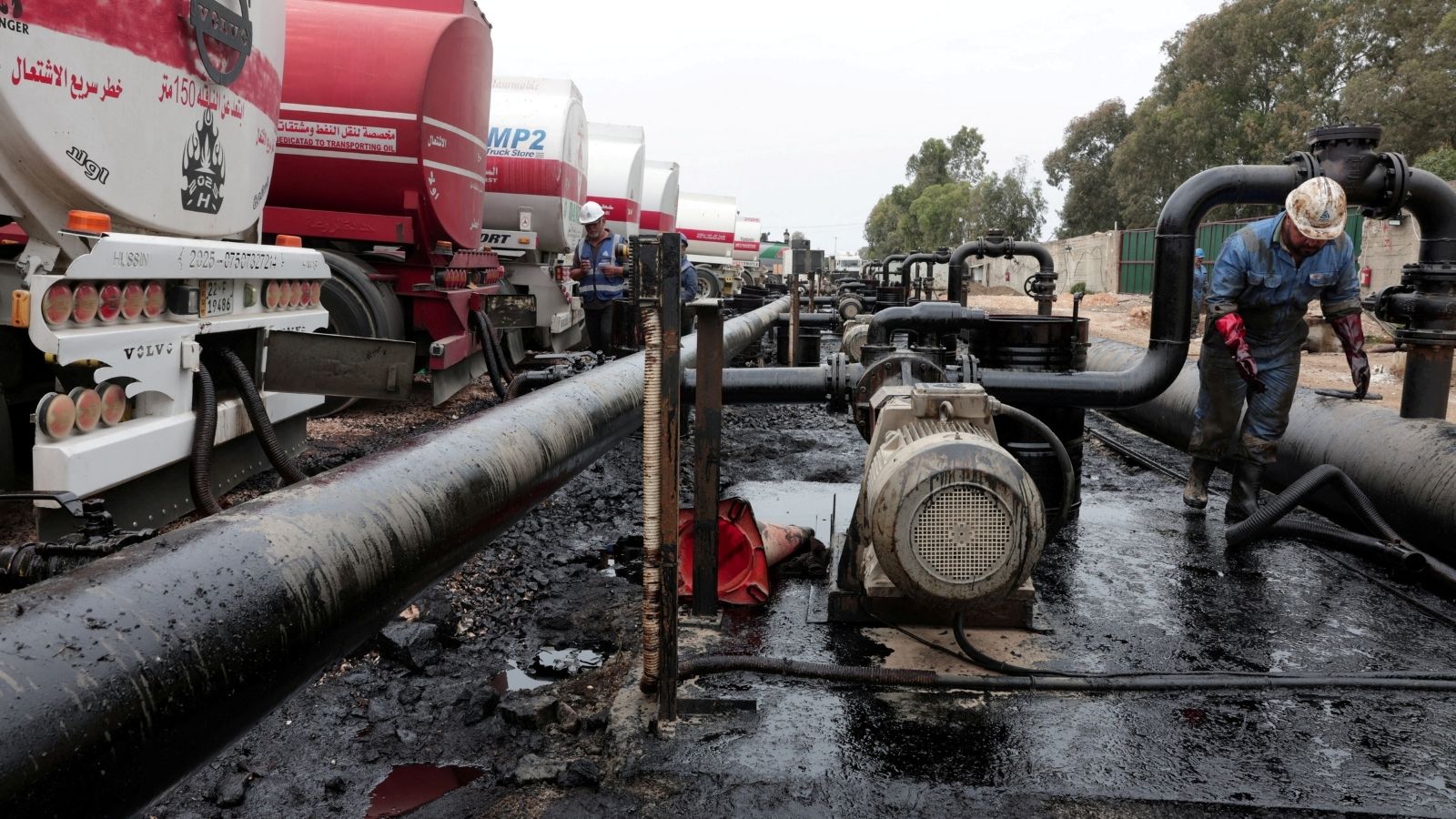
The East-West pipeline isn't one single pipe sitting exposed in the desert sand. It's actually a corridor containing multiple parallel lines of varying diameters—primarily 48-inch and 56-inch steel conduits—buried underground for vast stretches of their route.
In 2019, Aramco completed a major expansion project that temporarily converted natural gas liquids (NGL) pipelines to carry crude, boosting the corridor's total nameplate capacity to roughly 5 million barrels per day. When you have parallel lines running side by side, isolating a damaged section takes minutes, not weeks. Automated block valves slam shut, pressure reroutes through adjacent pipes, and the terminals at Yanbu barely register a hiccup.
Pumping Station Bypass Loops
Attackers rarely target the buried pipe itself because hitting a buried steel tube in the middle of a vast desert requires absurdly precise munitions. Instead, they aim at the above-ground pumping stations—specifically Station 8 and Station 9, which sit along the central and western stretches leading into Madinah.
These stations are massive, sprawling industrial sites packed with turbines, transformers, and manifolds. Yet Aramco designed them with hard bypass loops. If a drone damages a turbine housing or sparks a localized fire at a pumping station, control room operators in Dhahran can bypass that entire station remotely. Line pressure drops slightly, flow rates adjust, and crude continues moving westward using the momentum generated by upstream stations.
Strategic Storage Buffers at Yanbu
Even if the pipeline completely stopped pumping for 48 hours, tankers loading at Yanbu wouldn't run dry.
The Yanbu terminal complex holds tens of millions of barrels of crude oil in fortified tank farms right on the Red Sea coast. When an alert triggers in the Madinah region, terminal operators immediately draw from onshore storage to fulfill scheduled tanker loadings while maintenance crews inspect the pipeline corridor. By the time those storage tanks drop even ten percent, any minor fire is extinguished and normal line pressure is restored.
What Most Analysts Get Wrong About Madinah Security
Whenever news breaks about intercepted drones or localized fires in western Saudi Arabia, commentary immediately splits into two bad takes.
The first camp claims Saudi air defenses failed because something got through. That misunderstands modern air defense physics. Saudi Arabia spans over two million square kilometers. No air defense network on earth—not the US Patriot batteries, not THAAD, not short-range point defenses—can build an impenetrable dome over 1,200 kilometers of empty desert. Air defenses prioritize high-value population centers, royal palaces, and core processing plants like Abqaiq. A remote valve station in the Madinah desert simply doesn't get a dedicated billion-dollar missile battery sitting next to it.
The second camp assumes any strike in Madinah means global oil supplies are about to crash. This ignores spare capacity math.
Even during peak export months, the East-West pipeline rarely runs at 100 percent of its 5-million-barrel capacity. Typically, it moves between 2 million and 3.5 million barrels per day, depending on European and Mediterranean buyer demand. Because the line operates with built-in slack, Aramco can absorb localized disruptions without cutting a single customer's monthly allocation.
The History of Attacks Along the Corridor
To understand why markets react the way they do, look at the track record. This isn't the first time the East-West pipeline has been in the crosshairs, and the pattern of outcomes tells a clear story.
In May 2019, armed drones struck Pumping Stations 8 and 9 in the Riyadh and Madinah provinces. Fires broke out at Station 8, forcing Aramco to temporarily halt pumping as a precaution. Within hours, crews contained the blaze, bypassed the damaged unit, and resumed full flows. Zero export cargoes were canceled.
In March 2022, a wave of drone and missile attacks targeted multiple Saudi energy facilities, including a fuel distribution terminal in Jeddah and infrastructure near Yanbu in the Madinah region. Smoke billowed over storage tanks, creating dramatic television footage. Once again, crude export operations continued uninterrupted, and Aramco dipped into global stockpiles to guarantee customer deliveries.
The pattern is unmistakable. Attackers aim for maximum visual impact—black smoke, sirens, emergency response—while Aramco engineers focus purely on hydraulic continuity.
How to Read Future Pipeline Headlines
If you manage energy exposure, trade commodities, or simply follow geopolitical risk, don't let breaking news alerts trick you into bad decisions. Next time you see reports of an incident targeting Saudi infrastructure in the Madinah region, run through a quick three-step verification before reacting.
First, check AIS tanker tracking data at the Yanbu terminals via platforms like MarineTraffic or TankerTrackers. Ships don't lie. If Very Large Crude Carriers (VLCCs) are still mooring, drafting lower in the water, and departing on schedule, the pipeline is working fine regardless of what rumors circulate on social media.
Second, look for specific facility names in official Ministry of Energy statements. A hit on a localized petroleum products distribution tank—which supplies domestic gasoline and diesel to western Saudi cities—has zero impact on international crude oil exports. Markets constantly confuse domestic fuel depots with international export terminals.
Third, watch the Brent crude calendar spreads, specifically the difference between the front-month contract and contracts six months out. Speculative retail traders buy the flat price on scary headlines, causing a brief 15-minute spike. Institutional physical oil traders trade the spreads. If the front-month spread doesn't blow out into steep backwardation, physical buyers know full well that barrels are still loading on time.
Stop treating every desert drone strike like a repeat of the 1973 oil embargo. Watch the tankers at Yanbu, ignore the initial panic, and let the engineering reality guide your next move.