Washington policy analysts love a clean narrative. According to the standard Beltway framing, the battle for global technological supremacy comes down to a simple binary: either the White House builds a regulatory wall around Silicon Valley, or Beijing steals the blueprints and wins the century.
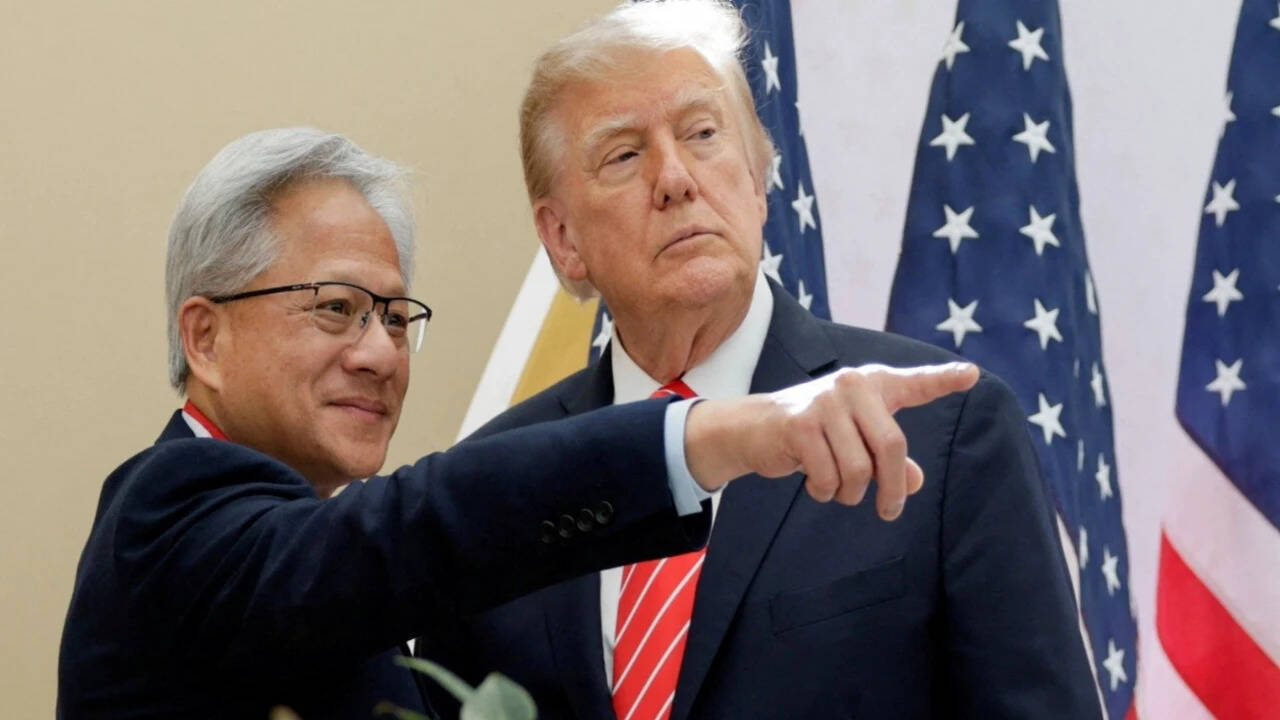
The headline "Trump puts his chips on Huang as China spy storm gathers force" captures that conventional wisdom perfectly. It paints a picture of a transactional president aligning with Nvidia CEO Jensen Huang—betting that American corporate dominance in artificial intelligence hardware can outrun Chinese espionage and industrial policy. Read more on a related issue: this related article.
That framing is comfortable. It is also dangerously incomplete.
Having spent years watching semiconductor supply chains bend under the weight of export controls, corporate lobbying, and geopolitical theater, I can tell you that the real vulnerability isn't a spy walking out of Santa Clara with a thumb drive. The vulnerability is structural, architectural, and baked into the very business model Washington thinks is saving it. More reporting by The Next Web explores related perspectives on the subject.
The Illusion of the Silicon Chokepoint
The dominant narrative in Washington—shared across both Democratic and Republican administrations—relies on the "chokepoint theory" popularized by historians like Chris Miller in Chip War. The premise is straightforward: the United States and its allies control the critical bottlenecks of advanced computing, from Dutch extreme ultraviolet (EUV) lithography machines to Nvidia’s proprietary CUDA software ecosystem. As long as Washington restricts access to top-tier processors, China’s AI ambitions hit a hardware ceiling.
When commentators note that Donald Trump is "putting his chips on Huang," they are pointing to a pragmatic realization in conservative circles: heavy-handed export bans hurt American revenue without necessarily stopping foreign innovation. By backing Nvidia’s market dominance—and potentially favoring deregulation, energy expansion for data centers, and looser domestic guardrails over blunt-force trade restrictions—the strategy assumes that an unshackled American champion will naturally maintain an insurmountable lead.
Here is what that consensus misses.
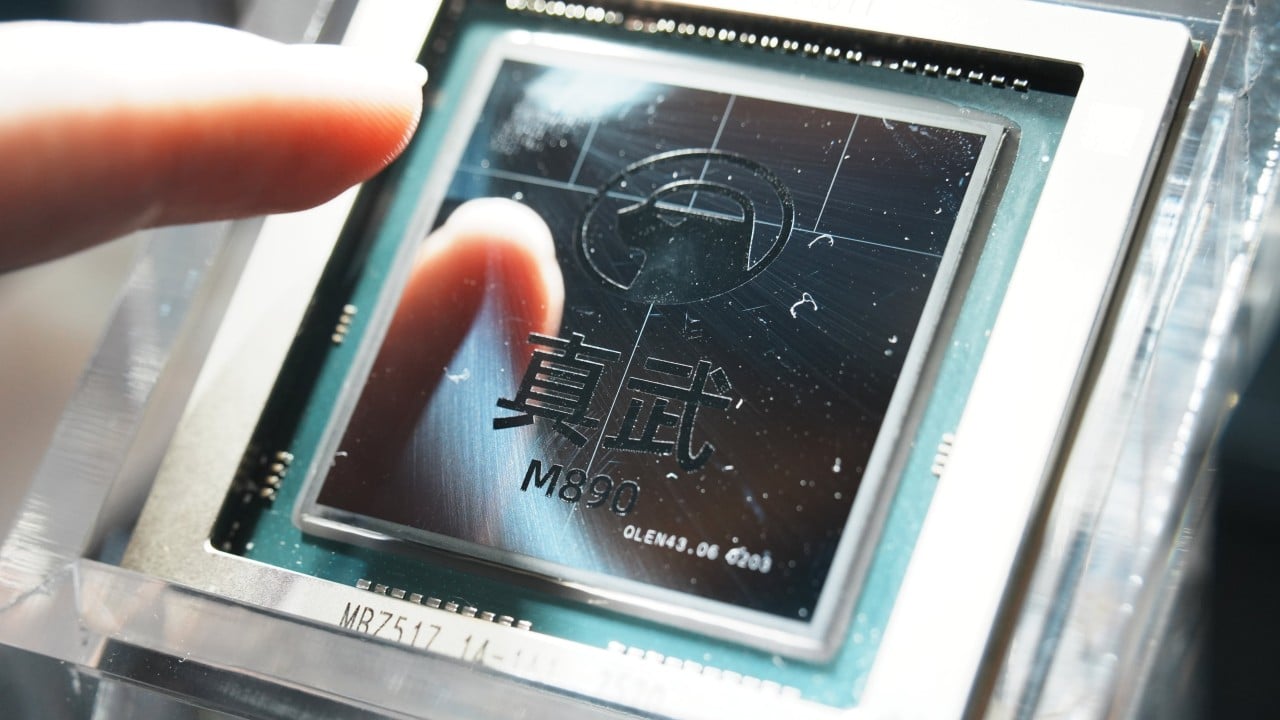
First, escrow and export controls do not freeze a competitor in time; they force vertical integration. Every time the U.S. Commerce Department tightens restrictions on Nvidia’s flagship architectures (moving from the A100 and H100 to degraded variants like the H20), it hands domestic Chinese competitors like Huawei a captive market. When Chinese cloud providers cannot buy Nvidia silicon legally, they have no choice but to fund Huawei’s Ascend chips and build alternative software stacks. Washington’s restrictions didn't kill China's AI sector; they acted as the greatest state-sponsored venture capital subsidy in history for Beijing's domestic chipmakers.
Second, the "spy storm" narrative misunderstands how modern AI capability transfers. Espionage certainly exists. Federal prosecutors have documented numerous cases of intellectual property theft involving trade secrets, lithography software, and proprietary chip designs. However, you cannot steal a fabrication plant. Modern semiconductor manufacturing requires tacit institutional knowledge—thousands of calibrated chemical, optical, and mechanical processes perfected over decades by TSMC, ASML, and their suppliers. Focusing on spies distracts from a much simpler reality: compute is fungible, and models can be trained across distributed clusters, rented through offshore cloud intermediaries, or distilled from open-weight Western models without a single blueprint ever crossing a border illegally.
The Structural Vulnerability Inside Nvidia’s Dominance
If you look closely at the alliance between Washington policymakers and Nvidia, there is an obvious tension that few financial analysts want to price in.
Nvidia is a fabless chip designer. It designs the architecture, writes the CUDA software libraries, and orchestrates the interconnect systems (like NVLink). It does not manufacture a single wafer. Nearly 100% of Nvidia’s most advanced GPUs—and the advanced packaging technologies like CoWoS (Chip-on-Wafer-on-Substrate) required to bind high-bandwidth memory to the processor—are manufactured in Taiwan by TSMC.
Think about the strategic contradiction in "betting on Huang" to counter China:
- Supply Chain Concentration: The entire American AI hardware advantage sits roughly 100 miles off the coast of mainland China. No amount of domestic deregulation in Washington or trade negotiation in Mar-a-Lago changes the geography of Hsinchu and Tainan.
- Commercial Incentives vs. National Security: Jensen Huang’s fiduciary duty is to Nvidia’s shareholders, not the Pentagon. Historically, mainland China and Hong Kong have accounted for roughly 15% to 25% of Nvidia’s data center revenue. Whenever Washington draws a new performance threshold for export bans, Nvidia’s engineering teams immediately design a compliant chip sitting just below that threshold to preserve market share. That isn't disloyalty; it is rational capitalism. Expecting a multinational corporation to voluntarily amputate a multi-billion-dollar revenue stream out of patriotism is naive.
- The Open-Weight Leak: Even if Nvidia keeps every piece of physical silicon inside U.S. borders, American AI labs—and Nvidia itself, through its Nemotron model family—regularly publish research papers, architectural breakthroughs, and open-weight models. Once an algorithmic efficiency gain is published on arXiv, it belongs to the world. Chinese labs like DeepSeek have repeatedly demonstrated that algorithmic optimization and mixture-of-experts architectures can achieve frontier-level performance using a fraction of the compute Western analysts assumed was necessary.
What the "People Also Ask" Crowds Get Wrong
When investors and policy watchers search for answers on U.S.-China tech friction, they usually ask the wrong questions. They ask: "Can Nvidia survive a total China ban?" or "Will Trump lift chip export controls?"
Both questions miss the real mechanism driving the market.
1. "Will easing export controls stop China from building its own chips?"
No. That ship sailed in October 2022 when the initial sweeping export controls proved to Beijing that reliance on Western silicon was an existential vulnerability. Even if Washington reversed every restriction tomorrow, Chinese state-backed enterprises and tech giants like ByteDance, Alibaba, and Tencent would continue funding domestic alternatives. Once a sovereign buyer realizes its supply chain can be weaponized with the stroke of a pen, it never goes back to 100% dependency.
2. "Does American hardware dominance guarantee AI supremacy?"
Hardware is only one layer of the stack. During the 1990s and 2000s, Japan and Europe dominated critical telecommunications hardware (think Nokia, Ericsson, and NEC), yet American software and platform companies captured nearly all the economic value of the mobile internet. Compute is rapidly becoming a utility. If the U.S. focuses exclusively on protecting GPU monopolies while failing to solve domestic power grid bottlenecks, permitting delays, and electricity generation capacity, all the Blackwell and Rubin chips in the world will sit idle waiting for substation interconnects.
3. "Is corporate espionage the primary way Beijing closes the gap?"
According to assessments from the Center for Strategic and International Studies (CSIS) and former national security officials, illicit technology transfer is only one vector alongside legal talent recruitment, open-source software adoption, and third-country cloud access. Treating the problem purely as a counterintelligence policing issue leads to paralyzing security theater—vetting university researchers and blocking visa applicants—while ignoring the industrial fundamentals that actually determine who scales faster: cheap baseload power, high-voltage transformers, and manufacturing execution.
The Counter-Intuitive Reality for Investors and Policymakers
If you are building a business, allocating capital, or analyzing geopolitical risk around the Trump-Huang dynamic, relying on the mainstream press narrative will leave you exposed.
Here is what actually matters:
Power Generation Is the Real Compute Bottleneck
Silicon is no longer the binding constraint on AI deployment in the United States; gigawatts are. Data centers require continuous, high-density baseload power. While Washington debates export licenses for chips, utility interconnection queues in northern Virginia, Texas, and the Midwest stretch out five to seven years. An administration that clears permitting bottlenecks for natural gas, nuclear, and grid transmission delivers far more material advantage to Nvidia and its hyperscale customers than any tariff or trade restriction ever could.
Sovereign AI Is the True Hedge
Jensen Huang recognized years ago that relying solely on U.S. hyperscalers (Microsoft, Google, Meta, Amazon) and Chinese tech giants was a concentration trap. His aggressive push into "Sovereign AI"—convincing nations from France and Japan to Saudi Arabia and India to build state-funded domestic compute clusters—is the real strategic play. For policymakers, encouraging allied nations to standardize on American hardware and software stacks creates a global coalition that dilutes China’s market leverage without requiring direct confrontation.
The Downside of the "National Champion" Bet
There is a serious risk to putting all policy chips on a single dominant vendor, and any honest analysis has to acknowledge it. When government policy explicitly or implicitly shields a market leader—whether through tailored export rules, defense contracts, or regulatory favoritism—it ossifies the ecosystem. Nvidia’s moat is built on CUDA, but the long-term health of American computing depends on challengers like AMD, Cerebras, custom hyperscaler ASICs (like Google’s TPUs and Amazon’s Trainium), and open-source software alternatives. A policy framework optimized around one CEO’s worldview risks suffocating the domestic competition that forced Nvidia to innovate in the first place.
Stop Watching the Headlines, Watch the Grid
The media loves personalities. Putting Donald Trump and Jensen Huang in the same headline generates clicks because it turns a complex industrial supply chain into a clash of titans.
Ignore the theatrics. Geopolitical dominance in artificial intelligence will not be won by a handshake in Washington, nor will it be lost because a spy slipped past corporate security. It will be decided by mundane, unglamorous realities: how fast the United States can build domestic semiconductor packaging capacity so it isn't hostage to a single strait in East Asia, how rapidly it can expand electrical grid capacity to power next-generation data centers, and whether American software ecosystems remain open enough to attract the world's best engineers.
Betting on a single company isn't a strategy. Building the infrastructure that makes that company's products usable at scale is.