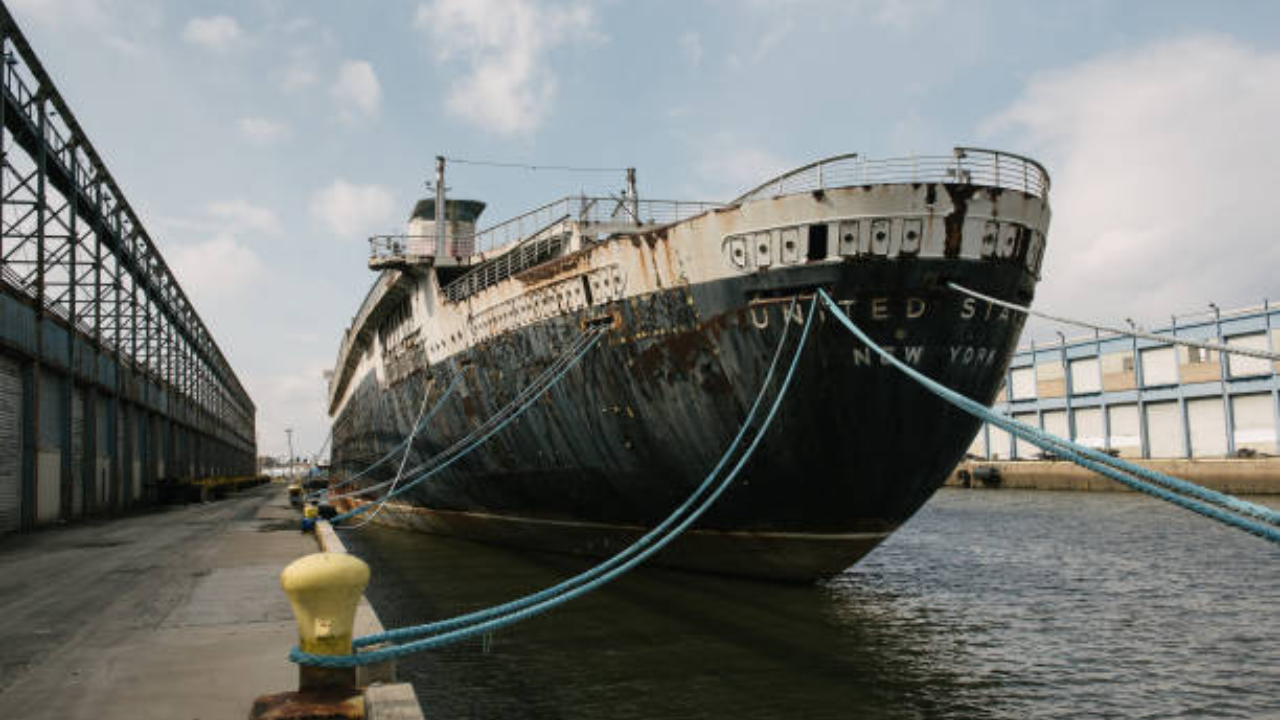
Sinking the SS United States is not ocean conservation. It is a maritime eulogy dressed up as marine science.
Read the standard press coverage and you get the same warm, nostalgic script. Once the fastest passenger liner in American history, crossing the Atlantic in three days and ten hours with a top speed that still makes naval architects blink. Decades of rust, lawsuits, and dock fees. Now a grand finale on the seabed as the largest artificial reef ever deployed.
Sounds poetic. Feels noble. Ignores almost everything that actually happens underwater.
I have watched coastal municipalities, shipping operators, and tourism boards burn millions chasing "ship-to-reef" glory while ignoring basic marine ecology and steel-hull physics. People hear "world's largest artificial reef" and picture a vibrant, self-sustaining coral metropolis rising out of barren sand. Reality is messier, colder, and far less romantic.
The Lazy Consensus Around Ship Reefs
Conventional coverage treats sinking a giant ocean liner as a win-win: a stranded hulk gets a purpose, and marine life gets an instant condo. That framing confuses biomass aggregation with net biological production.
Putting hard structure on a flat, sandy seafloor attracts fish. Anyone who has spent time on a charter boat near a wreck knows that. Groupers, snappers, amberjacks, and baitfish show up around vertical relief because fish seek shelter, current breaks, and visual reference points.
Attracting fish is not the same as creating new fish. Marine ecologists—including researchers like Jonathan G. Smith and Milton Love who have studied oil platforms and artificial reefs extensively—have spent years pointing out that a reef can pull fish away from natural hard-bottom habitats or concentrate them for anglers without increasing total regional population over time. If a wreck acts like a magnet that makes fish easier to catch, calling the project an ecological triumph takes serious creative license.
Size makes the hype worse, not better. Bigger does not automatically mean smarter or healthier. A massive hull creates huge internal compartments, uneven current shading, and complex degradation timelines. Marine life colonizes surfaces where water flow, light, and oxygen cooperate—not inside dark, stagnant steel boxes.
What Naval Architecture Actually Built
To understand why the SS United States sparks such fierce debate, you have to look at how William Francis Gibbs designed her in the early 1950s. She was built with Cold War defense priorities in mind, engineered to convert rapidly into a troop transport capable of carrying 15,000 soldiers without refueling.
Gibbs made aggressive use of aluminum in the superstructure to save top weight and boost speed. Aluminum and steel do not age the same way in saltwater. Pair dissimilar metals with decades of exposure to humid air, salt spray, and standing water, and corrosion chemistry becomes an engineering puzzle rather than a simple scrap job.
Before any vessel goes down, contractors must strip hazardous materials: asbestos, lead paint, polychlorinated biphenyls, fuel residues, oils, and loose debris that could entangle divers or release toxins. That remediation work is expensive, slow, and unglamorous. Nobody puts "millions spent scraping toxic coatings off a rusting hull" on a souvenir t-shirt, yet that prep work determines whether a reef helps or harms local waters.
Imagine a scenario where a coastal county celebrates a record-breaking sinking while underfunding long-term monitoring. Five years later, storm surges shift sediment around the base, top-side structures collapse faster than lower decks, and diver visibility drops because silt plumes hang over the site. The headline happened on day one; the real engineering test runs for decades.
The Questions Nobody Wants to Ask
Search engines fill up with predictable follow-up questions whenever a historic ship heads toward a reefing plan. Most answers dodge the uncomfortable trade-offs.
Is sinking a historic ship better than scrapping or preserving it?
Neither option is free, and pretending preservation was just a matter of "not trying hard enough" is lazy revisionism. Keeping a 990-foot ocean liner afloat and seaworthy requires dry-docking, hull plating repairs, machinery maintenance, and continuous pier space. Maritime preservation foundations across the world have learned the hard way that sentimental attachment does not pay for steel replacement.
Scrapping recovers metal and removes risk, though dismantling large vessels carries its own labor, environmental, and economic costs. Reefing sits in between: it avoids scrapping costs while transferring long-term liability to the marine environment and local managers. Calling reefing "saving" the ship is a contradiction in terms. Once she goes under, the liner as an architectural and engineering artifact is gone.
Does an artificial reef actually help endangered corals and fish stocks?
Sometimes locally, rarely as a silver bullet. Corals need stable substrates, clean water, appropriate temperatures, and sunlight. A deep offshore wreck in colder or murkier water may host sponges, hydroids, soft growth, and reef-associated fish rather than classic shallow tropical coral gardens.
Even where reef fish thrive, overfishing outside the reef zone can wipe out any local gains. A sunken ship is not a magic force field against commercial or recreational harvest. Without smart fisheries management, a famous wreck can turn into a concentrated fishing target faster than an ecosystem can rebuild.
Why do cities keep paying to sink massive vessels?
Follow the incentives. Tourism and dive operators love marquee wreck sites because novelty drives bookings, charter trips, and media attention. Politicians like ribbon-cutting spectacles that look bold and environmental without requiring years of policy reform.
There is a real downside to my own contrarian view here, and I will state it plainly: dismissing artificial reefs out of hand misses genuine value. Well-sited, thoroughly cleaned reefs can give divers safe, structured exploration sites, relieve pressure on fragile natural reefs when managed properly, and support local marine businesses. The mistake is treating a sunken liner as a cure-all instead of a narrow tool with clear limits.
A Better Way to Judge Any Reef Project
If you care about oceans or maritime history—or you run a project trying to get one across the finish line—stop judging success by tonnage and press releases. Use a harder checklist:
- Audit the net biology, not just the fish count. Demand baseline surveys and multi-year comparisons with natural habitats, not cherry-picked photos of a school of jacks circling a mast.
- Verify thorough remediation before celebrating. Insist on transparent environmental clearance for coatings, insulation, oils, and trapped debris—not just speed to deployment.
- Match depth and design to marine reality. Cut access holes and open interior spaces where needed so water circulates and marine life—and divers—aren't trapped in dead zones.
- Pair deployment with enforcement and science. Fund post-sinking monitoring and clear fishing rules upfront, when budgets exist, rather than hoping grants appear later.
- Be honest about what is being lost. Honor the SS United States for what she actually was—a triumph of mid-century American naval engineering—without inventing fake conservation halos around her final resting place.
Nostalgia is a great fuel for stories. It is a terrible substitute for marine ecology.