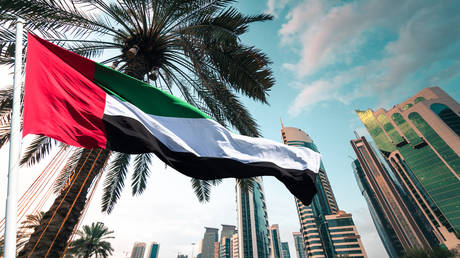
The United Arab Emirates just signaled another massive shift in how it handles its energy wealth. By walking away from another group of oil exporters, the UAE isn't just making a administrative change. It’s making a statement about its future. For decades, the Gulf power played the role of the loyal team player within various international energy organizations. Those days are over. Abu Dhabi is now playing for itself, and the ripples of this decision will be felt from Houston to Beijing.
You might think this is about a simple disagreement over production numbers. It isn't. This is a fundamental rewrite of the Middle Eastern economic playbook. The UAE is tired of having its growth capped by groups that don't share its aggressive timeline for economic diversification. They've spent billions to increase their daily oil production capacity to 5 million barrels. They didn't spend that money to let it sit idle because of a committee vote in Vienna or elsewhere.
The UAE Exits Another Oil Exporters Group to Chase Growth
When news broke that the UAE decided to leave the latest group of oil-producing nations, market analysts weren't actually that shocked. We’ve seen this movie before. A few years ago, Qatar left OPEC. Since then, the UAE has been the most vocal member within various energy alliances about wanting more freedom. The "group-think" of traditional oil blocs often prioritizes keeping prices high by cutting supply. That works for countries with dying infrastructure or massive debts. It doesn't work for a country like the UAE that wants to sell as much as possible right now to fund a future that doesn't depend on crude.
Abu Dhabi's strategy is simple. Sell the oil while the world still wants it. They know the energy transition is real. They aren't climate deniers. They’re realists. They see a window of maybe 20 or 30 years where oil remains the dominant global fuel. If they stay in restrictive groups, they leave money in the ground. If they leave, they can pump, sell, and reinvest that cash into AI, tourism, and renewable energy. It’s a race against time.
Why Domestic Interests Now Outweigh Regional Solidarity
For a long time, the UAE followed the lead of its larger neighbors. That dynamic has soured. There is a growing rivalry between Abu Dhabi and Riyadh for the title of the region's top economic hub. Saudi Arabia’s Vision 2030 is in direct competition with the UAE’s own diversification goals. When you're competing for the same multi-national corporations and the same foreign investment, you stop being so polite at the negotiating table.
Staying in these oil groups often meant the UAE had to take the "biggest hit" relative to its capacity. Imagine you have a factory capable of making 1,000 cars a day, but your trade association tells you that you can only make 600 so your neighbor can sell his cars for more. You’d get frustrated. Eventually, you’d leave the association. That is exactly what is happening here. The UAE has the tech, the infrastructure, and the coastal access to be a global energy powerhouse on its own terms.
The Problem With Production Quotas
Production quotas are the bane of the UAE’s existence right now. ADNOC (Abu Dhabi National Oil Company) has been on a spending spree. They’ve brought in partners like Eni, TotalEnergies, and various Indian and Chinese firms. These partners expect a return on their investment. You can’t tell a global energy giant that their new multi-billion dollar project has to stay offline because an exporter group wants to manipulate the global Brent price by $2.
The UAE’s internal math is clear. They’d rather sell 5 million barrels at $70 than 3 million barrels at $80. The volume makes up for the price dip, and it keeps their market share secure. They don't want to lose customers to US shale or Brazilian offshore projects while they sit on their hands to please a bloc.
Market Reactions and the New Global Energy Map
The immediate aftermath of these exits usually involves a bit of market volatility. Traders get nervous. They wonder if this is the first crack in a total collapse of energy cooperation. Honestly, the collapse isn't coming tomorrow, but the foundation is definitely shaky. When a heavy hitter like the UAE walks, it gives permission for smaller nations to rethink their own memberships.
What we're seeing is the "Balkanization" of energy policy. Instead of one or two big groups deciding the world's oil price, we’re moving toward a system of bilateral deals. The UAE is increasingly signing direct long-term supply contracts with Asian refineries. They don't need a middleman group to help them find buyers. They have the world beating a path to their door.
The Role of Technology in the Split
The UAE isn't just pumping old-school crude. They’re investing heavily in "blue" and "green" hydrogen and carbon capture. Most of the traditional oil groups are slow to adapt to these technologies. By stepping outside these circles, the UAE can brand itself as a "progressive" energy provider. They want to be the last oil producer standing—the one with the lowest carbon footprint per barrel and the most reliable delivery.
You can't do that when you're tied to countries that haven't maintained their wells in decades. The UAE's infrastructure is some of the most advanced on the planet. They use AI to monitor flow rates and drones for leak detection. They are decades ahead of some of their "peers" in these exporter groups. The technical gap has become an ideological chasm.
What This Means for Global Oil Prices
If you're worried about your gas prices, this move is actually a good thing in the long run. More supply generally means lower prices. The UAE wants to pump. When they aren't held back by quotas, they add liquidity to the market. It makes it harder for any single group to hold the global economy hostage with supply cuts.
However, don't expect a price crash overnight. The UAE is savvy. They won't flood the market and destroy their own profit margins. They’ll be surgical. They'll increase production just enough to take market share from less efficient producers without cratering the price. It’s a delicate balancing act that requires the kind of independent control they can only get by leaving these groups.
Impact on Regional Geopolitics
This isn't just about business. It's about power. By exiting these groups, the UAE is telling the world that it’s a sovereign middle power that doesn't take orders. This independence extends to their foreign policy, their stance on global conflicts, and their trade deals with both the West and the East. They are positioned as the ultimate "neutral" ground where business gets done regardless of the noise in the background.
Moving Forward With an Independent Energy Strategy
The UAE is clearly betting on itself. The move to exit another oil exporters' group is the final piece of a puzzle they've been building for a decade. They've built the ports, they've expanded the refineries, and they've secured the buyers. They no longer need the "protection" of a bloc.
For investors and global watchers, the takeaway is clear. Watch ADNOC's production numbers rather than the press releases from energy groups. The real action is happening in Abu Dhabi's boardrooms, not in group summits. If you're looking to understand where the energy market is headed, look at the countries that are brave enough to go solo. The UAE just proved it’s at the top of that list.
Stop waiting for a return to the old ways of energy cooperation. The world has changed. The UAE's exit is just the most visible sign that the era of the "oil monolith" is dead. The future belongs to the agile, the technologically advanced, and the fiercely independent.
Check the latest ADNOC production capacity reports. Compare them to the historical quotas they were assigned. The gap between those two numbers tells you everything you need to know about why they had to leave. Follow the money, follow the barrels, and ignore the diplomatic fluff. The UAE is officially an independent agent in the global energy game, and they aren't looking back.