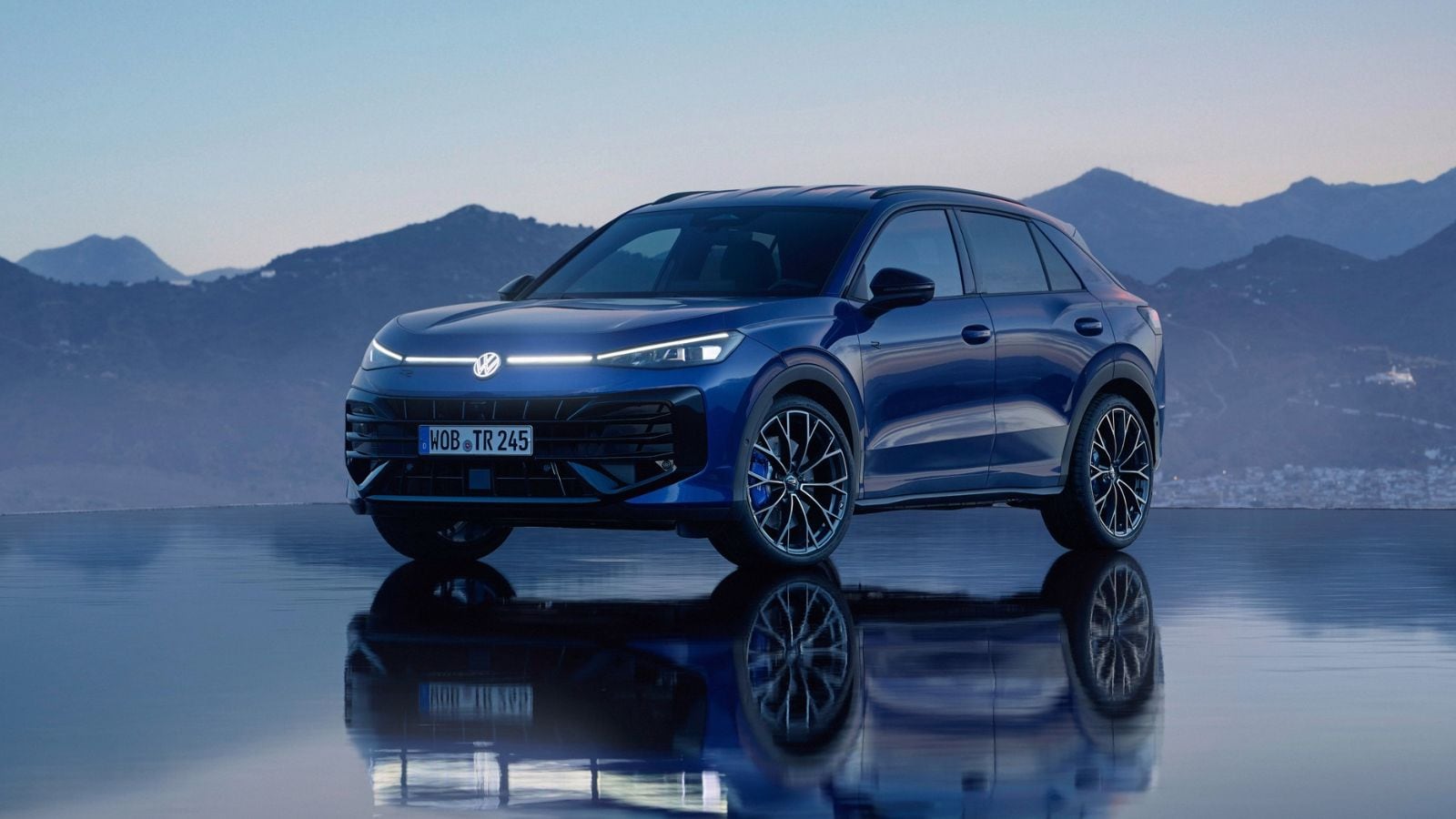
Putting a dedicated Drift mode on a compact family crossover sounds completely ridiculous on paper. Yet Volkswagen just went ahead and did it with the latest T-Roc R, pairing rear-axle torque-vectoring hooliganism with sensible 48-volt mild-hybrid efficiency.
Most performance SUVs suffer from an identity crisis. They ride too stiffly for daily commuting, burn fuel like a freight train, and understeer heavily the moment you push them into a tight corner. Volkswagen's R division decided to attack both extremes of that problem at once by borrowing the trick rear differential from the Golf R and bolting mild-hybrid hardware onto the powertrain.
If you're shopping for a fast compact SUV or just trying to understand where European hot-hatch engineering is heading under strict emissions rules, this specific combination tells you everything you need to know about modern performance cars.
How the New T-Roc R Hardware Actually Works
Let's clear up the biggest misconception first. A mild-hybrid system isn't going to let you creep silently through your neighborhood on battery power alone, and it certainly won't turn a turbocharged crossover into a Prius.
Instead, the 48-volt architecture uses a belt-driven starter-generator and a compact lithium-ion battery to assist the turbocharged four-cylinder engine during low-end acceleration. Turbo lag has always been the Achilles' heel of high-output 2.0-liter engines like Volkswagen's EA888 unit. When you stomp the throttle at 1,800 rpm while merging onto a highway, you usually wait a beat for exhaust gases to spool the turbine. That small electric motor fills in the torque gap instantly before boost pressure arrives.
It also smooths out the start-stop system so the engine shuts off while coasting to a red light and restarts without shaking the cabin. You save fuel in stop-and-go traffic without sacrificing throttle response when the light turns green.
What Drift Mode Changes Behind the Scenes
All-wheel drive in standard compact crossovers is reactive. The front wheels slip on wet pavement, a computer notices the speed difference, and a multi-plate clutch sends a fraction of power to the rear axle to keep you out of a ditch. It's safe, predictable, and deeply boring.
The T-Roc R ditches that basic setup for an active torque-vectoring rear differential—the same basic mechanical concept Volkswagen introduced on the Mk8 Golf R. Instead of a single clutch distributing power evenly between the left and right rear wheels, two electronically controlled multi-plate clutches sit on either side of the rear axle.
Engage Drift mode on a closed track, and the system routes up to 100 percent of the rear axle's available torque directly to the outside rear wheel.
Think about what happens physically when you turn into a corner and get on the gas. The outside rear tire pushes harder than the inside one, rotating the rear end of the SUV outward and helping you hold a controlled slide. Stability control relaxes its electronic leash, letting you balance the angle with your right foot rather than cutting engine power the millisecond the tires lose grip.
Why Crossover Buyers Rarely Use Track Modes
Here's the honest truth after spending years driving performance cars equipped with exotic drive modes. Almost nobody uses Drift mode on public roads, and very few T-Roc R owners will ever take a high-riding crossover to a lapping day.
So why bother engineering it into the car?
Because the hardware required to make Drift mode work transforms how the vehicle behaves during normal, spirited driving. That dual-clutch rear differential doesn't sleep when you leave the car in Comfort or Sport mode. Even at four-tenths pace on a wet mountain road, routing extra torque to the outside rear wheel eliminates the nose-heavy understeer that plagues almost every front-drive-based crossover on the market.
You turn the steering wheel, and the car actually pivots around its center axis instead of scrubbing the front tires wide. That mechanical agility makes the vehicle feel 500 pounds lighter than it really is.
The Real Reason Mild-Hybrid Tech Is Mandatory Now
Enthusiasts love to complain whenever automakers add electrical components to performance vehicles. Extra wiring, small battery packs, and regenerative braking systems add weight and complexity. Nobody wakes up wishing their hot crossover had an extra 48-volt circuit diagram to troubleshoot ten years down the road.
Volkswagen didn't add mild-hybrid assistance just to win green awards. European fleet emissions regulations—specifically Euro 7 standards and strict CO2 fleet averages—penalize manufacturers heavily for every gram of carbon dioxide emitted across their lineup. High-output turbocharged petrol engines sit right in the crosshairs of regulators.
Without 48-volt electrification to trim fuel consumption during urban driving cycles and coasting phases, selling a 300-plus horsepower petrol crossover in Europe becomes financially unsustainable. Mild-hybrid tech is the tax Volkswagen pays to keep a proper four-cylinder turbo engine alive in the T-Roc R instead of downsizing to a strained three-cylinder or forcing buyers into a heavy plug-in hybrid.
Mild-Hybrid vs Plug-In Hybrid Performance
Plenty of rival manufacturers have gone the plug-in hybrid route for their fast compact SUVs. On paper, plug-in hybrids boast huge combined horsepower figures and impressive electric-only range numbers.
In practice, carrying a 15-to-20 kWh battery pack ruins handling dynamics. You end up hauling an extra 600 to 800 pounds of dead weight high up in the chassis. Once that battery depletes during a hard canyon run, you're left dragging a heavy SUV with a smaller petrol engine working overtime.
Sticking with a 48-volt mild-hybrid system keeps curb weight close to a traditional petrol vehicle. You get cleaner emissions, crisper off-the-line response, and zero range anxiety or charging cables cluttering your garage. For a driver's car, mild-hybrid beats plug-in hybrid every single day of the week.
Comparing the T-Roc R Against Its Closest Rivals
If you're cross-shopping compact performance crossovers right now, the field has narrowed considerably as brands pivot toward pure electric vehicles. The T-Roc R sits in a very specific sweet spot between mainstream practical SUVs and pricey luxury badges.
Take the BMW X1 M35i. It brings comparable turbocharged four-cylinder punch, sharp steering, and a slick dual-clutch transmission, yet it relies on a traditional front-biased all-wheel-drive setup without an active torque-vectoring rear differential. It feels fast and planted, though it won't rotate on throttle the way the Volkswagen can.
Then there's the Mercedes-AMG GLA 35, which adds mild-hybrid assistance to its 2.0-liter turbo engine as well. The AMG offers a flashier interior and strong straight-line speed, but optioning one up pushes the price tag dangerously close to mid-size luxury SUV territory.
Within Volkswagen Group's own family, the Cupra Formentor VZ shares the same underlying MQB Evo platform architecture and torque-splitting rear differential hardware. The Cupra leans harder into aggressive styling and slightly firmer suspension tuning, while the T-Roc R wears cleaner, understated bodywork that doesn't scream for attention in the office parking lot.
Common Mistakes Buyers Make With Performance Crossovers
Spending big money on an R-badged crossover is easy, yet buyers routinely ruin the ownership experience by ticking the wrong option boxes or misunderstanding how these vehicles live day to day.
- Specifying the largest wheel package without adaptive dampers: Huge 20-inch wheels wrapped in ultra-low-profile summer tires look great in showroom photos. On broken city pavement, they transmit every pothole straight into your spine and bend easily on sharp edges. Always prioritize Dynamic Chassis Control adaptive dampers if you live anywhere with rough roads.
- Ignoring tire rotations on torque-vectoring setups: Because the rear differential actively overdrives the outside wheel during hard cornering, rear tire wear happens faster than on a normal all-wheel-drive SUV. Check tread depths every 5,000 miles and keep tire pressures strictly matched so you don't upset the differential's electronic clutches.
- Skipping winter rubber: High-performance crossovers come factory-fitted with sticky summer compound tires that turn into hard plastic below 45 degrees Fahrenheit. Having all-wheel drive and Drift mode won't help you stop on slush if you're running summer tires.
- Assuming mild-hybrid components are maintenance-free forever: While 48-volt systems don't require the intensive cooling loops of full EVs, keeping the starter-generator belt system inspected at regular intervals prevents annoying electrical fault codes down the line.
What to Look for Before Placing an Order
If the combination of mild-hybrid efficiency and rear-biased handling puts the new T-Roc R on your shortlist, approach the test drive strategically rather than just flooring it on a straight stretch of highway.
Start the drive in Comfort mode over the worst patch of road near the dealership. Pay attention to how quickly the adaptive suspension settles after hitting a speed bump and whether the 48-volt start-stop transitions feel invisible in slow traffic. Next, switch into Sport or Race mode on a sweeping on-ramp to feel how the rear axle helps tuck the nose toward the apex when you apply steady throttle mid-corner.
Check the exact build sheet for the Performance Pack or optional Akrapovic titanium exhaust if offered in your market, as those factory upgrades hold resale value far better than cosmetic trim packages. Measure your actual cargo needs with the rear seats up too—sloping crossover rooflines look sleek, though bulky strollers or large dog crates fit very differently than they do in a boxy Tiguan.