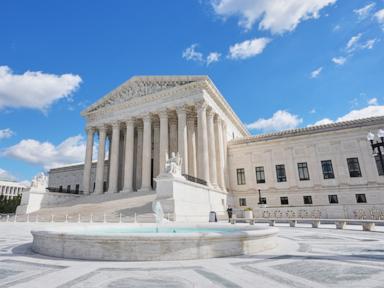
Everyone is arguing about VHS tapes. That is the whole problem.
Read the standard coverage of Salazar v. Paramount Global and you get the exact same recycled script. A 1988 law passed after a reporter published Supreme Court nominee Robert Bork's video rental history. A Blockbuster era relic. A clash between old statutory text and modern adtech pixels. You might also find this similar article interesting: The Quiet Price of Self-Reliance in Tunisia.
Lazy. Predictable. Completely blind to what actually breaks companies in court.
The conventional wisdom frames the fight before the Supreme Court as a tug-of-war over whether an 80s statute can police today's internet. Plaintiffs point to consumer privacy. Media companies warn that plaintiffs are trying to twist a rental statute into a ban on digital advertising. Reporters write neat little explainers about a circuit split over who counts as a "consumer". As extensively documented in latest coverage by Harvard Business Review, the results are significant.
They are staring at the decoy while the trapdoor opens under their feet.
The Lazy Consensus Misses the Real Threat
Here is the lazy consensus: if the Supreme Court narrows the definition of "consumer" under the Video Privacy Protection Act (VPPA) to people who subscribe to audiovisual goods or services, publishers with free newsletters and embedded videos can breathe easy. If the Court goes broad, class-action lawyers get a wider runway.
That framing assumes the "consumer" label is the main bottleneck in VPPA litigation. It is not.
Under 18 U.S.C. § 2710, a "video tape service provider" cannot knowingly disclose "personally identifiable information concerning any consumer" without informed written consent. And the statute carries $2,500 per violation in statutory damages—math that turns routine ad-pixel configurations into existential class-action exposure.
In Salazar v. Paramount Global (argued in October 2026), the specific question is whether signing up for a free newsletter—like the one on 247Sports—makes someone a "consumer" of a video provider even when the newsletter itself is not audiovisual content. The Second and Seventh Circuits have read "consumer" more expansively. The Sixth and D.C. Circuits have tied it closer to audiovisual offerings.
Watch what happens even if Paramount wins a narrow reading of "consumer."
A narrow ruling does not save a streaming service, a paid media bundle, or a sports app that charges for video access or bundles video into a paid membership. Those users are already paying or subscribing to audiovisual offerings. A narrow ruling simply shifts the battleground to every other element of the statute:
- What counts as "personally identifiable information" (PII) when a tracking pixel fires an identifier alongside a video URL or title?
- How courts evaluate whether a disclosure was made "knowingly" rather than through standard third-party tag behavior?
- Whether a generic consent banner or buried terms of service meet the VPPA's strict standard for informed, standalone written consent?
Legal scholars like Eric Goldman at Santa Clara University's High Tech Law Institute have spent years pointing out how messy it gets when courts try to map 1988 statutory terms onto dynamic web architectures. When a law written for physical rental slips meets client-side scripts, deterministic identifiers, and single-sign-on cookies, litigants fight over every single word in the chain.
Fighting only over the "consumer" hook is like reinforcing the front door while leaving the side windows unlocked.
Are You Even Asking the Right Question?
Most executives asking how the Supreme Court will rule on the VPPA are asking the wrong question.
They ask: "Will the Court gut the VPPA for publishers?"
They should be asking: "Why are we letting third-party marketing tags exfiltrate user identifiers and content metadata without a server-side gate we control?"
Let's tackle the questions people usually type into search bars around this fight.
Does the VPPA really apply to websites that aren't Netflix?
Yes, when the facts line up with the statutory text. Congress did not limit the law to brick-and-mortar stores with late fees. Any business engaged in the business of rental, sale, or delivery of prerecorded video cassette tapes or "similar audio visual materials" can fall inside the statutory orbit. Pretending a modern web player or app is immune just because nobody handed over a plastic clamshell case is wishful thinking that has cost companies millions in settlements and defense fees.
If I don't charge for video, am I safe?
Not automatically. Free tiers, ad-supported portals, and newsletter-gated sites have still been pulled into litigation depending on the circuit and the exact relationship between the user, the video, and the identifier. "Free" does not mean "invisible" to a plaintiff's lawyer hunting for a logged-in social identifier paired with a video watch event.
Can a standard cookie banner fix VPPA exposure?
A generic footer banner rarely satisfies a statute that specifies distinct requirements for informed, written consent separate from other obligations. Treating a 1988 federal privacy statute like a routine European cookie notice is a classic compliance shortcut that fails under scrutiny.
Imagine a scenario where a mid-sized media company runs an editorial site with embedded video clips, a free daily briefing, and a standard marketing tag manager. A visitor reads the briefing, clicks a video clip while logged into a major social platform, and a third-party pixel sends a user identifier and page/video metadata back to the ad network. Even if the Supreme Court narrows who qualifies as a "consumer" based on a non-video newsletter, the company still has to answer for every other user path—registered accounts, app users, subscribers—and every tag firing on those pages.
Battle Scars From the Pixel Trenches
I have watched organizations spend eye-watering sums on outside counsel, discovery, and settlement funds over tag configurations that a junior engineer could have audited in an afternoon.
The usual failure mode is predictable. Marketing wants attribution and retargeting data. Product wants frictionless sign-ups and autoplay video. Legal gets brought in after a demand letter arrives—long after dozens of pixels, SDKs, and analytics scripts have been stacked inside a tag container like drywall over old wiring.
Nobody on the team actually knows which network call fires when a logged-in user hits play on a video page. Half the time, an acquired subdomain or an old campaign landing page still has legacy code running untouched.
Here is the precision point people blur together: identifiers and viewing history are two separate pieces of data, and privacy litigation lives at their intersection. A generic analytics count is one thing. Pairing a persistent user or social ID with specific video content request or watch data—without compliant consent—is what turns a routine marketing setup into a federal statutory claim.
And let's be honest about the trade-off if you take a hardline stance against leaky client-side tracking. If you strip out third-party pixels on video pages or block them until explicit consent is captured, your ad targeting gets fuzzier. Attribution models lose some precision. Conversion lift measurements become less immediate.
That is the real cost. A contrarian compliance posture is not "free." You trade frictionless third-party ad signals for lower litigation risk and cleaner data governance. Pretending you can keep every legacy pixel firing wide open and rely on a Supreme Court opinion to bail you out is gambling with company cash.
What to Do Instead of Waiting for the Court
Waiting on a Supreme Court ruling that may not land until later in the Court's term—and might still leave open questions on PII, knowledge, or consent—is bad risk management. Do this instead:
- Map every video surface and every outbound call. Do not guess what your site sends. Inspect network traffic on video pages for logged-in and logged-out states. List every pixel, SDK, and analytics endpoint that receives a user identifier, email hash, cookie ID, or video URL/title.
- Separate content telemetry from third-party ad identifiers. Stop letting raw client-side third-party scripts automatically pair user-level identifiers with specific video watch events unless you have a verified legal mechanism and clear consent flow in place.
- Audit your consent flow against the statutory text, not industry habit. Check whether your consent mechanism is actually compliant with VPPA written-consent rules—including standalone presentation, clear timing, and withdrawal paths—rather than assuming a generic site notice covers everything.
- Segment your user states. Treat subscribers, authenticated account holders, newsletter readers, and anonymous visitors differently in your data and legal review, because their legal standing and relationship to your video offerings are not identical.
The Supreme Court can argue over 1988 statutory words all day. Your exposure lives in the code running on your pages right now.