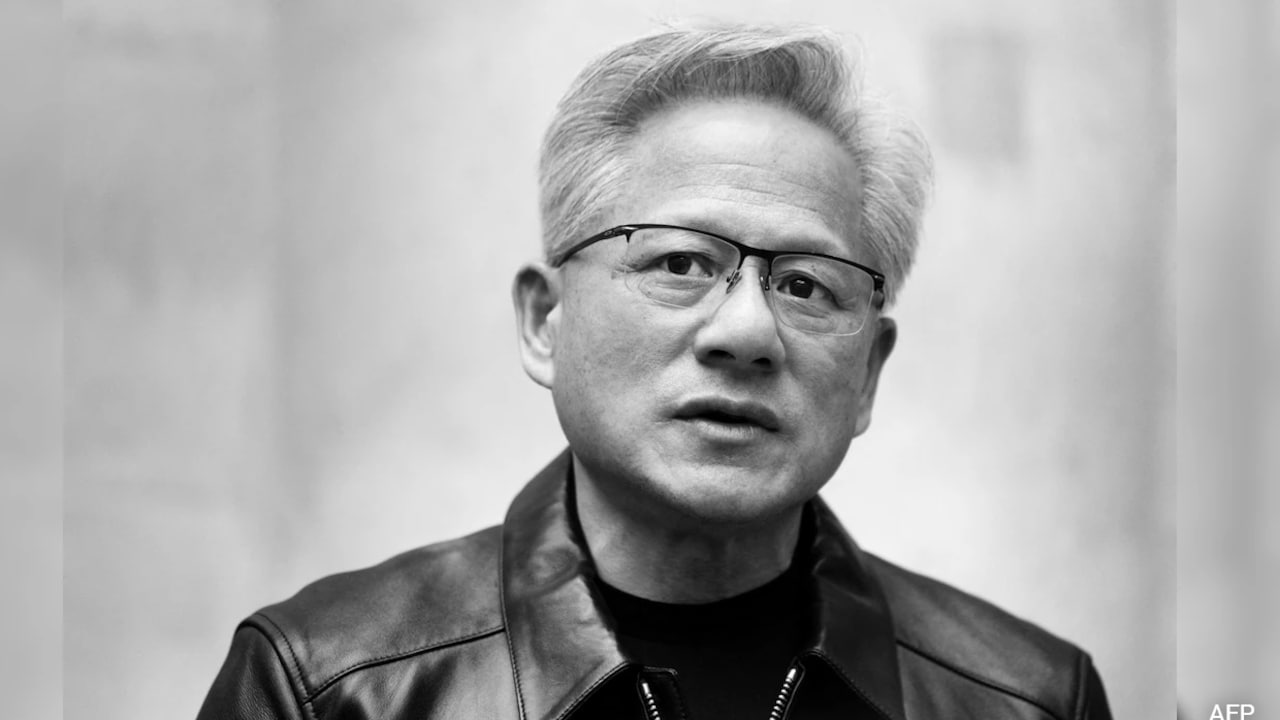
Retail traders are dumping shares in a blind panic over a sensational headline. Institutional algorithms are scraping breaking news feeds for keywords like "board probe" and "affair," triggering automated sell orders before a single human analyst reads past the subhead.
It is the most predictable, surface-level knee-jerk reaction in modern market history. For a deeper dive into similar topics, we recommend: this related article.
Every financial outlet on the internet is running the exact same lazy script. They see a founder-CEO embroiled in a governance scandal, dust off their standard corporate crisis playbook, and declare the end of an era. They point to historical cautionary tales—Mark Hurd at Hewlett-Packard, Brian Krzanich at Intel, Steve Easterbrook at McDonald's—and assume the dominoes will fall in the exact same sequence.
They are wrong. Completely, fundamentally wrong. For broader context on this topic, extensive coverage is available on Forbes.
When you treat a generational infrastructure monopoly like a replaceable consumer brand or a legacy hardware vendor, you misprice the asset. You confuse moral outrage with structural fragility. And if you are selling stock because of a boardroom soap opera, you are handing discounted equity to the exact sharks who understand the difference between a PR nightmare and an existential threat.
The Fallacy of the Replaceable Chief Executive
Mainstream financial commentary relies on a comfortable fiction: that corporate governance rules apply equally to every company on the S&P 500.
They do not.
When Brian Krzanich was ousted from Intel in 2018 over a consensual relationship with an employee, the board acted swiftly because Intel was already rotting from the inside. Manufacturing delays on the 10-nanometer node had crippled their product roadmap. Krzanich was replaceable because he was failing at the core operational mandate. The governance violation was simply the cleanest exit ramp for an exhausted board of directors.
Look at McDonald's. When Steve Easterbrook was fired for violating company policy, the stock wobbled for forty-eight hours and then resumed its march upward. Why? Because selling hamburgers is a solved operational problem. You can swap out the chief executive of a fast-food giant, install a seasoned internal operator like Chris Kempczinski, and the fryers keep bubbling without interruption.
Now look at the architecture of modern artificial intelligence compute.
Jensen Huang is not managing a franchise network or babysitting a legacy x86 chip fab. For over three decades, he has acted as the sole architect of a full-stack computing empire. We are talking about a leader who recognized the parallel processing potential of graphics cards in the mid-2000s, burned billions of dollars building CUDA before a single hyperscaler cared about deep learning, and maintained a flat organizational structure with dozens of direct reports specifically to eliminate middle-management bloat.
Imagine a scenario where a board of directors actually decides to remove a founder with that level of architectural integration. You do not just lose a figurehead. You sever the central nervous system of the company's product roadmap. Every major cloud provider—Microsoft, Google, Amazon, Meta—builds its multi-year capital expenditure plans around the cadence of the Blackwell and Rubin architectures. Those roadmaps exist in the mind and daily operational cadence of one man.
Boards of directors are not suicidal. Their fiduciary duty is to maximize shareholder value, not to win trophies for performative morality. When a scandal hits a company with an irreplicable founder, the investigation is rarely a prelude to an execution. It is a containment exercise.
Decoding the Corporate Governance Theater
I have sat in war rooms during executive crises where billions in market cap evaporated in an afternoon. I have watched general counsels and outside crisis consultants charge five thousand dollars an hour to draft press releases designed to pacify institutional investors while changing nothing underneath the hood.
When a board announces an internal probe into executive conduct, amateur investors read it as an indictment. Seasoned operators read it as an insurance policy.
Here is the actual mechanic behind a board probe at a mega-cap tech company:
- Neutralizing Derivative Lawsuits: The moment an allegation surfaces, plaintiff law firms begin drafting shareholder derivative suits claiming the board failed in its oversight duties. Launching an independent investigation immediately establishes a legal shield under the business judgment rule.
- Controlling the Narrative Timeline: A probe buys time. It moves the conversation out of the daily news cycle and into a closed legal process that takes months to conclude. By the time findings are released, the market has usually moved on to the next quarterly earnings report.
- Calibrating the Punishment to Protect the Asset: Unless the conduct involves outright financial fraud, embezzlement, or severe criminal liability that destroys the company's ability to operate, boards will bend over backward to retain a high-performing founder. They will strip bonuses. They will issue formal reprimands. They will mandate executive coaching and rewrite HR reporting lines. They will do anything except pull the plug on the engine generating tens of billions in free cash flow.
Look at the precedent set across Silicon Valley over the last twenty years. Boards routinely tolerate erratic behavior, toxic workplace allegations, and personal scandals from founders as long as the revenue curve goes up and to the right. The tolerance threshold of a corporate board is directly proportional to the company's gross margins. When your gross margins sit north of seventy percent, your board's capacity for forgiveness is practically infinite.
The Moat Does Not Care About Headlines
The loudest voices screaming about governance risk completely ignore the physical reality of the semiconductor supply chain.
Let us strip away the gossip and look at the hardware. Right now, the global economy is locked in an arms race for compute capacity. Hyperscalers are spending hundreds of billions of dollars building out data centers. They are not buying chips because they like the CEO's leather jacket or admire his personal life. They are buying them because they have no viable alternative at scale.
Let us define what a true technical moat actually looks like, because financial journalists throw the word around without understanding the engineering behind it:
- The Software Lock-In: CUDA is not just a driver; it is a massive ecosystem of domain-specific libraries, compilers, and developer tools refined over nearly twenty years. Millions of developers write code natively for this environment. Switching to a competitor's silicon requires rewriting codebases, debugging unfamiliar compilers, and accepting performance bottlenecks that cost millions in wasted compute time.
- The Networking Chokehold: Modern AI clusters do not run on single chips; they run on tens of thousands of GPUs networked together to act as a single giant brain. Through the acquisition of Mellanox and the development of NVLink and InfiniBand, the company controls the high-speed interconnects that prevent data bottlenecks between processors. Even if a rival builds a faster standalone chip, they cannot match the cluster-level efficiency.
- The Supply Chain Allocation: TSMC's advanced packaging capacity—specifically CoWoS—is the tightest bottleneck in global manufacturing. The incumbent has already locked up the lion's share of this capacity through 2026 and beyond. Competitors are fighting over scraps.
Does an executive scandal alter the physics of silicon lithography? Does a board probe suddenly teach four million developers how to optimize kernels on rival hardware? Does a sensational headline free up CoWoS packaging lines in Taiwan?
No.
When a stock drops five or ten percent on a non-operational scandal while its underlying monopoly remains untouched, the market is offering you a mispriced bet. The fundamentals have not degraded by a single basis point. Only the sentiment has shifted.
Why "People Also Ask" Questions Miss the Point
Whenever a high-profile executive hits the front page for the wrong reasons, search engines flood with the exact same predictable queries from anxious retail investors. Every single one of these questions is built on a flawed premise.
Will the CEO be forced to resign?
You are asking the wrong question. Resignations happen when the cost of keeping an executive exceeds the cost of firing them. In a standard Fortune 500 company, keeping a compromised CEO damages brand equity and alienates customers. In an enterprise infrastructure monopoly, your customers are desperate for your supply. Microsoft and Meta are not canceling their GPU allocations because of a boardroom scandal. Therefore, the financial cost of firing the founder is catastrophic, while the cost of keeping him is merely reputational. Unless criminal fraud or direct coercion involving company funds is uncovered, a forced resignation is a low-probability event.
Should I sell my shares before the investigation concludes?
Selling into a headline-driven dip is how retail investors systematically transfer wealth to institutional desks. By the time you read the news on your phone, high-frequency trading firms have already priced in the initial shock. Selling after the drop locks in a loss on an asset whose cash-flow generation hasn't changed. The only rational reason to exit a position on governance news is if your original investment thesis relied on the company maintaining pristine ESG ratings for institutional fund inclusion. If you bought the stock for its technological dominance, selling now is pure emotional reaction.
How will this impact upcoming product launches?
Hardware architecture is locked in years before a chip ever reaches a data center. The silicon tape-outs, foundry allocations, and software stack updates for the next twenty-four months are already in motion across thousands of engineers. A board investigation occupies the legal department and the boardroom; it does not stop verification engineers in Santa Clara or fabrication lines in Hsinchu.
The Real Risk Nobody Is Talking About
To pretend there is zero downside here would be dishonest. Contrarian thinking requires intellectual rigor, not blind cheerleading. There are legitimate, structural risks tied to this kind of scandal—they just aren't the ones plastered across cable news chyrons.
The first real danger is regulatory weaponization.
Antitrust regulators in Washington and Brussels are already looking for any excuse to clip the wings of dominant tech monopolies. The Department of Justice does not need a governance scandal to launch an investigation into anti-competitive bundling practices, but a weakened, distracted executive team makes a much easier target. When a company loses its halo of invincibility in the press, politicians suddenly find the courage to haul executives in front of Senate subcommittees. A board probe creates political vulnerability at the exact moment the company needs regulatory breathing room.
The second real danger is executive distraction and key-man paralysis.
Building and maintaining a multi-trillion-dollar hardware empire requires maniacal focus. Every hour a founder spends sitting across from outside legal counsel, reviewing emails from three years ago, and preparing statements for an audit committee is an hour not spent reviewing architectural specs or negotiating wafer supply with TSMC. At the bleeding edge of semiconductor design, a six-month slip in execution can open the door for custom ASICs built by Google, Amazon, and Broadcom to steal market share. Competitors cannot beat the incumbent at full strength, so they pray for self-inflicted wounds that slow down the product cadence.
The third risk is succession vacuum.
Because the company was built around a singular, dominant founder, there is no obvious, battle-tested heir apparent waiting in the wings. If the probe uncovers something truly indefensible—something that legally forces the board's hand regardless of the financial consequences—the market will face a genuine key-man crisis. There is no Tim Cook quietly running operations behind the scenes ready to step up without missing a beat. That concentration of power is the company's greatest competitive advantage during peacetime, and its single greatest structural vulnerability during a crisis.
How to Play the Panic Like an Insider
Stop watching financial television. Turn off the push notifications from outlets that make their money selling outrage clicks to retail traders. When a high-performing monopoly gets hit with a scandal-driven selloff, you need a cold, mechanical framework to exploit the volatility.
- Audit the Nature of the Allegation: Separate personal conduct from financial malfeasance. History shows that markets forgive personal failings within weeks, while accounting fraud destroys companies permanently. As long as the revenue numbers are real and the balance sheet is clean, treat the drop as noise.
- Watch the Hyperscaler CapEx, Not the Stock Price: Your true north star is the capital expenditure guidance of the top four cloud providers. If Amazon, Microsoft, Google, and Meta maintain or raise their AI infrastructure spending forecasts on their next earnings calls, the demand curve is intact. Nothing else matters.
- Sell Volatility to the Panicked: When headlines hit, implied volatility on options spikes violently as retail traders scramble to buy protective puts. Instead of joining the herd, look at selling cash-secured puts at strike prices twenty percent below the current market value. You either collect massive premiums from fearful traders, or you acquire shares in a generational monopoly at a steep discount.
- Ignore ESG Downgrades: Governance scandals inevitably trigger automated downgrades from third-party ESG rating agencies, forcing certain passive funds to trim their positions. This creates artificial selling pressure completely divorced from business fundamentals. Let those funds finish their forced liquidations before stepping in to absorb the supply.
Wall Street loves a morality play because drama is easier to analyze than semiconductor physics. Let the pundits debate corporate ethics and boardroom etiquette while the ticker flashes red. While they are busy clutching their pearls over a scandal, the data centers are still being built, the orders are still backlogged for over a year, and the monopoly is still printing cash.
Buy the fear, ignore the noise, and let the amateurs sell you their shares.