The mountains of the borderlands do not forget. They are ancient, jagged teeth of rock that have chewed up empires and spat out the remains for centuries. To a politician in a climate-controlled room in Washington, a shipment of rifles is a line item on a spreadsheet, a strategic maneuver, or a bargaining chip. To the person holding that rifle in the freezing rain of the Zagros Mountains, it is the difference between a legacy and a shallow grave.
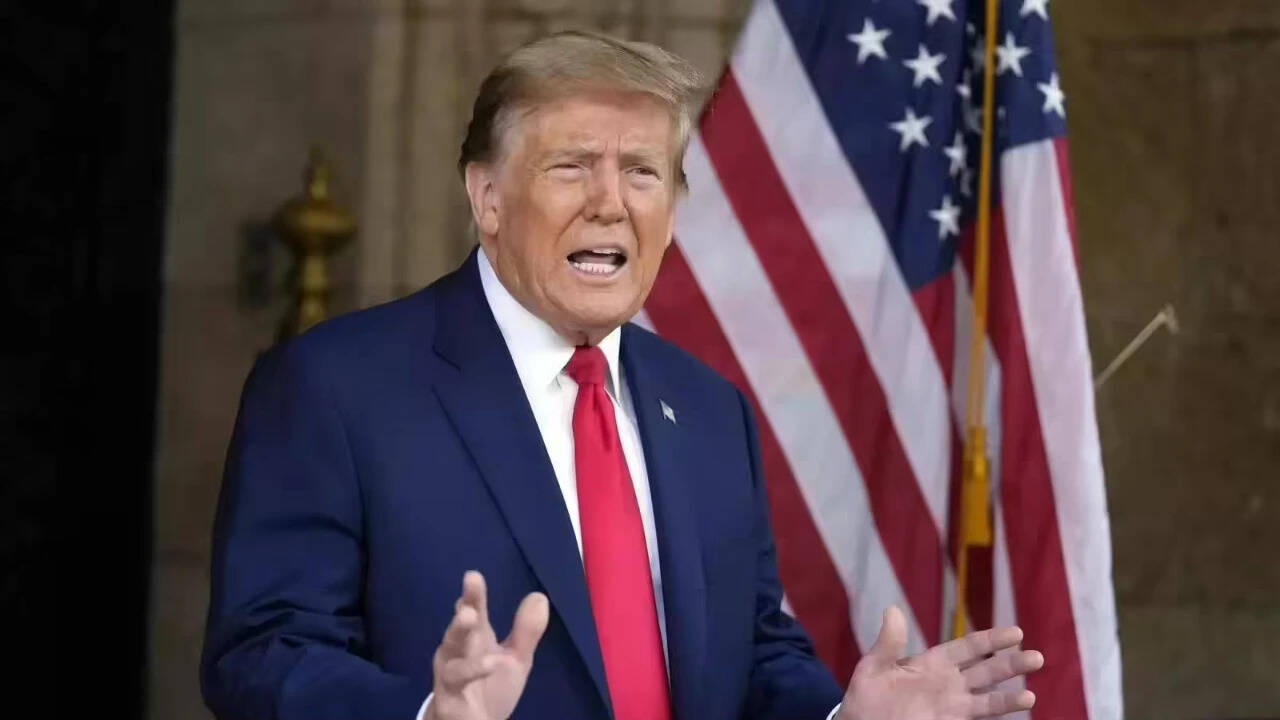
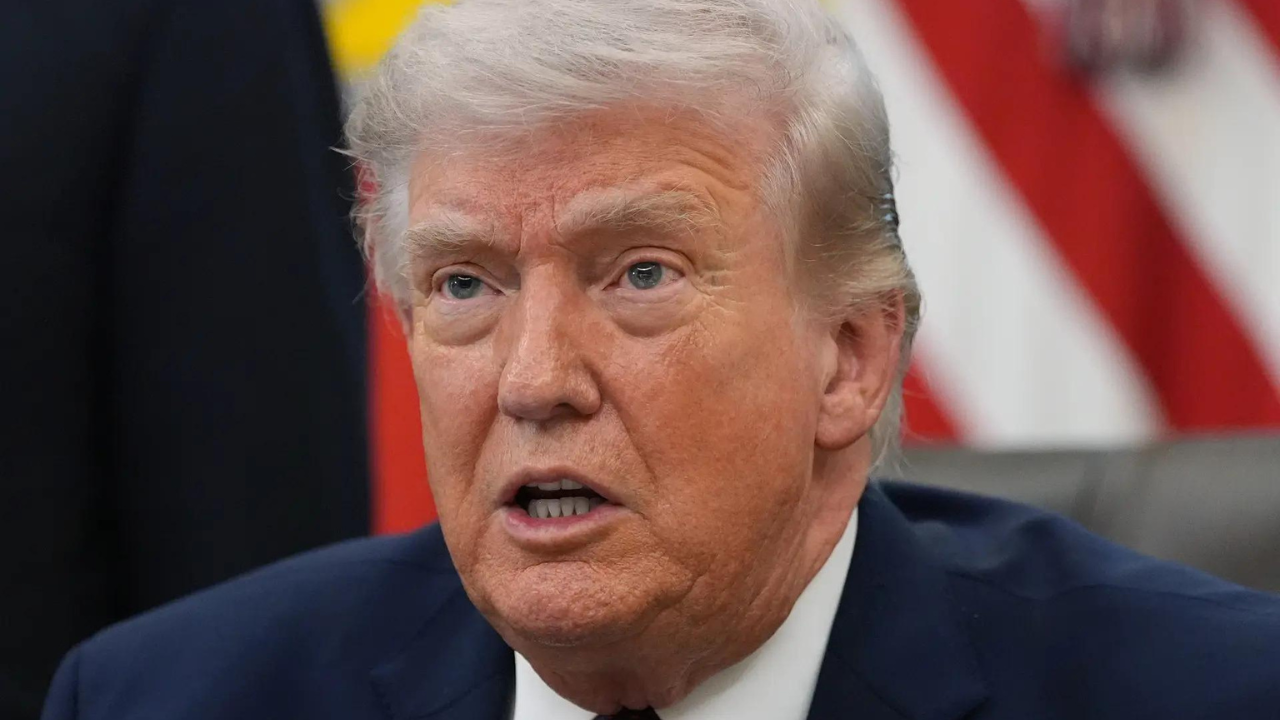
Dust swirled around the tarmac as the former president spoke, his words landing like heavy stones. He claimed the Kurds—those perennial allies of convenience—had intercepted weapons. Specifically, weapons the United States had intended for the men and women currently bleeding in the streets of Iran. It was a staggering accusation. If true, it suggests a betrayal within a betrayal. If false, it is a spark thrown into a powder keg of regional paranoia. For another look, see: this related article.
Consider a woman in Tehran. Let’s call her Elnaz. She isn’t a soldier. She’s a teacher who decided one morning that she could no longer live in a world where her hair was a crime. She stands on a street corner, her heart hammering against her ribs like a trapped bird. She hears the roar of motorcycles—the morality police approaching. She has no weapon. She has only a smartphone and a hope that the world beyond the border sees her.
Elnaz represents the "protesters" the weapons were supposedly meant for. But the logistics of revolution are never as clean as the rhetoric. Sending hardware to a decentralized, civilian-led uprising is a feat of intelligence and smuggling that defies standard military logic. It requires shadows. It requires intermediaries. Similar insight on the subject has been published by BBC News.
The Middleman’s Dilemma
The Kurds have long been the world’s most effective middlemen. They occupy the spaces where four nations collide, a people without a country who have mastered the art of survival in the gaps between giants. When the U.S. sends crates of equipment into this region, they pass through a labyrinth of hands.
The accusation is simple: The Kurds kept the gear for themselves.
In the brutal reality of the Middle East, "keeping" is often a synonym for "surviving." If you are a Kurdish fighter watching the political winds shift in D.C., you know that today’s patron is tomorrow’s absentee landlord. You hold onto the iron. You oil the bolts. You wait for the day the helicopters stop coming and you are left alone with your neighbors, most of whom want you gone.
But this isn't just about stolen crates. It’s about a deal.
The former president hinted at a breakthrough. He spoke of a "good chance" for a resolution by Monday. In the high-stakes theater of international diplomacy, Monday is a lifetime away. Deals of this magnitude usually involve the quiet exchange of things that cannot be spoken aloud in press conferences. They involve the lifting of sanctions, the release of frozen assets, and the unspoken agreement to look the other way while certain borders are redrawn.
The Ghost in the Machine
Behind the headlines lies a cold, mathematical truth. The United States has a history of arming the "enemy of my enemy," only to find that the weapons eventually turn their barrels toward the original sender. We saw it in the mountains of Afghanistan in the eighties. We saw it in the deserts of Iraq a decade ago.
When a shipment vanishes, it creates a vacuum. That vacuum is quickly filled by whispers.
To the Iranian government, the claim that the U.S. is actively arming protesters is a gift. It allows them to paint Elnaz not as a teacher seeking freedom, but as a foreign asset, a pawn of the "Great Satan." The human element—the raw, visceral desire for a better life—gets buried under the weight of geopolitical maneuvering.
The stakes for the average American might feel distant. A gas price fluctuation here, a headline there. But the invisible stakes are the erosion of trust. When we promise support to a movement, then claim that support was hijacked by our other allies, we create a narrative of incompetence or duplicity. Either we can’t control our supply lines, or we aren't being honest about where the iron is actually going.
The Monday Deadline
Time is a weapon. By setting a deadline—Monday—the former president creates a sense of frantic urgency. It’s a classic negotiation tactic. It forces the other side to move, to blink, to react.
But what does a "deal" look like for the people on the ground?
For the Kurdish commander in a hidden outpost, a deal might mean another year of tenuous peace. For the regime in Tehran, it might mean the survival of their power structure. For Elnaz, it likely means nothing at all. Revolutions aren't usually invited to the negotiating table. They happen in the silence between the words of the powerful.
The weapons in question—rifles, perhaps, or communication gear—are symbols. They represent the intent of a superpower. If they ended up in Kurdish hands instead of Iranian streets, it suggests a profound disconnect between the policy goals of the State Department and the reality of the black market. You cannot drop freedom from a cargo plane and expect it to land exactly where you planned. The wind always blows.
The Mechanics of Betrayal
Trust is the only currency that matters in the borderlands. You trust your brother. You trust your rifle. You rarely trust the man in the suit who promises you the world from ten thousand miles away.
If the Kurds did indeed divert these shipments, it wasn't a random act of theft. It was a calculation. They have been promised states, protection, and partnership before, only to be abandoned when the strategic value of their blood dried up. If you are offered a gun today, you take it. You don't pass it on to a stranger across the border because a document in Washington says you should.
This is the friction of history. It is the sound of gears grinding as two different worlds attempt to mesh. One world operates on four-year election cycles and cable news ratings. The other operates on centuries of tribal memory and the immediate need for ammunition.
The former president’s claims tap into a deep-seated frustration within the American electorate: the feeling that we are being "played" by the very people we help. It is a potent narrative. It simplifies a chaotic, multi-dimensional chess match into a story of a simple heist. It gives the public a villain (the Kurds) and a victim (the American taxpayer and the "foiled" Iranian revolution).
The Echo in the Valley
Imagine the silence after the cameras are turned off. In the halls of power, the phones are ringing. Diplomats are scrambling to verify the claims, or to bury them. In the mountains, the Kurdish fighters are likely cleaning those same rifles, indifferent to the storm of words brewing across the ocean.
And in Tehran, the sun sets.
The lights of the city flicker on, and the air smells of exhaust and tension. Elnaz goes home, her feet aching, her mind racing. She doesn't know about the "Monday deal." She doesn't know about the crates of weapons that may or may not have been meant for her. She only knows that tomorrow, she will go back to the street corner. She will stand there again.
The tragedy of the "deal" is that it often ignores the very people it claims to serve. We speak of weapons and Kurdish intercepts and Monday deadlines as if they are the primary drivers of history. They aren't. They are the debris left behind by the real movement—the slow, agonizing, and often violent struggle of individuals to reclaim their own lives from the grip of ideology.
The iron is heavy. The silence is heavier.
As Monday approaches, the world waits for a signature on a piece of paper. We wait for a victory lap or a pivot to a new crisis. But the mountains will remain. The weapons, wherever they are, will remain. And the people who were promised a new dawn will continue to wait in the dark, wondering if the help they were told was coming was ever actually real, or if it was just another ghost lost in the thin air of the borderlands.
The rifles are clean. The oil is fresh. The mountains are watching.