Strip away the righteous press releases, the emergency briefs drafted by high-priced constitutional lawyers, and the solemn chyrons on cable news. What you are actually looking at is a marketing campaign disguised as a civil rights crusade.
When CNN, Politico, and MS NOW announced their coordinated legal assault against the Trump administration over White House press access restrictions, the mainstream media echo chamber erupted in predictable applause. Editorial boards framed it as a heroic defense of the First Amendment, a constitutional showdown between the untamed guardians of truth and an authoritarian executive branch. Also making headlines in this space: Subsidized Daycare Wont Fix the Birthrate Crisis and Politicians Know It.
It is a comforting narrative. It is also entirely detached from legal reality, economic incentives, and the actual mechanics of modern information flow.
These lawsuits are not about the public right to know. They are about protecting a dying corporate business model that relies on constant conflict with the executive branch to drive subscriptions, clicks, and ad revenue. By dressing up a corporate real estate dispute as a battle for the soul of American democracy, media executives have pulled off a brilliant PR stunt. They get to play the victim while securing the exact kind of high-octane drama that cures a sagging quarterly balance sheet. Additional insights on this are covered by The Washington Post.
Let us dismantle the lazy consensus and look at what is actually happening beneath the veneer of constitutional outrage.
The Legal Fantasy of the Press Pass
To listen to the pundits tell it, the First Amendment guarantees every accredited journalist a front-row seat in the James S. Brady Press Briefing Room, complete with a microphone and guaranteed eye contact from the press secretary.
The law says otherwise.
For decades, federal courts have maintained a sharp distinction between general speech rights and the government's obligation to grant special access to its own property. The White House is not a public park, a town square, or a taxpayer-funded museum. It is an executive office, a secure workplace, and the private residence of the President of the United States.
Precedent established in cases like Sherrill v. Knight recognized that while the government cannot arbitrarily yank press credentials without due process, the executive branch maintains broad administrative discretion over who enters the building based on security, space limitations, and logistical necessity. A physical press pass is a credential of convenience issued by the property owner, not a constitutional title deed.
When media outlets sue over credential revocations or seating rearrangements, they are fighting a battle over property management rights, not free speech. The administration is not banning these organizations from publishing stories, investigating policies, or broadcasting reports. They are simply revoking a specialized VIP parking pass to a specific building.
If a private corporation revoked the media credentials of a journalist for breaking internal rules or being disruptive, the press would call it standard corporate governance. When the government does it to manage its own workspace, suddenly it is tyranny. The legal theory underpinning these lawsuits stretches the First Amendment past its breaking point, banking on sympathetic judges to invent new rights that have no basis in constitutional text or historical practice.
The Economics of Outrage
Why are legacy media giants spending millions on litigation that has a dubious constitutional foundation? Follow the money.
Traditional news organizations are facing an existential financial squeeze. Advertising revenues have migrated to tech platforms. Subscription growth has plateaued. Audiences are fragmenting into niche digital spaces, podcasts, and independent video channels. In this brutal economic climate, conflict is currency.
Peaceful, boring governance is toxic for cable news ratings and digital subscription conversions. When an administration is cooperative, accessible, and mundane, engagement plummets. Viewers switch channels. Readers close browser tabs.
Conflict, however, generates immediate monetization.
A high-profile lawsuit against the White House creates a perpetual content engine. Every court filing, every emergency hearing, and every indignant anchor monologue becomes a promotional tool. It brands the news organization as the heroic resistance, which triggers an emotional response from partisan audiences. Subscribers open their wallets not because the journalism is breaking ground, but because they want to support the team fighting the political enemy of the week.
I have seen media executives panic over flat engagement metrics, only to watch a manufactured feud with a political figure send traffic graphs skyrocketing. The lawsuit against the administration is a calculated investment. The cost of legal fees is a drop in the bucket compared to the value of the earned media, brand loyalty, and subscription spikes generated by positioning themselves as martyrs for the press corps.
They are monetizing their own exclusion.
The Dirty Little Secret of the Briefing Room
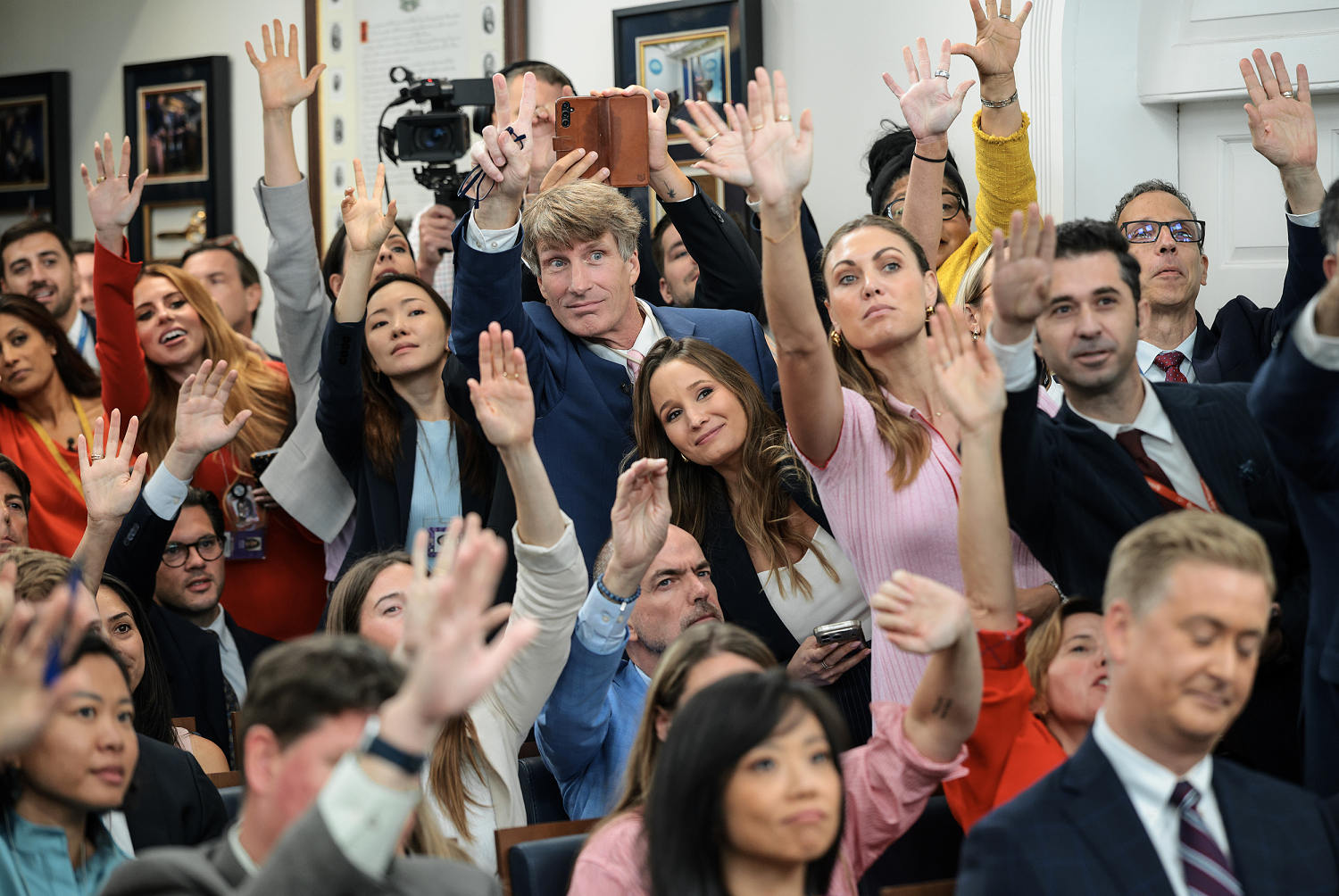
Let us address the elephant in the room that media elites refuse to acknowledge. The daily White House press briefing has become a theatrical circus that produces almost zero hard news.
For years, the briefing room has devolved into a performance space where reporters battle for viral clip moments on social media. Journalists pose loaded, multipart questions designed not to elicit information, but to trap the press secretary into a soundbite that will dominate evening commentary shows. It is gotcha journalism at its finest, wrapped in the guise of accountability.
Very few substantive policy breakthroughs happen under the glare of the briefing room cameras. Real reporting happens through deep investigative work, whistleblowers, document requests, agency tracking, and sources scattered across the vast bureaucracy of the federal government.
When a media outlet wringing its hands over being banned from the briefing room claims that democracy is dying in the dark, ask a simple question: What crucial piece of investigative journalism was broken inside that specific room over the last five years that could not have been uncovered anywhere else?
The answer is almost nothing. The briefing room is a stage for political combat, not an indispensable engine of transparency. Losing access to it is a blow to corporate prestige and convenience, but it is hardly a crippling blow to watchdog journalism. In fact, being forced out of the briefing room might actually compel reporters to stop acting like stenographers and performance artists, and start doing actual reporting outside the beltway.
The Irrelevance of the Gatekeepers
There is a deeper panic driving these lawsuits, and it has nothing to do with the current administration. It is the realization that the traditional White House press corps is losing its monopoly on access.
For generations, a small club of elite legacy networks and prestige newspapers acted as the exclusive gatekeepers between the executive branch and the American public. They controlled the microphones, set the agenda, and decided which questions deserved answers.
That monopoly is dead.
Today, the executive branch communicates directly with the public through digital platforms, independent commentators, podcasters, and decentralized media networks. The White House no longer needs CNN or Politico to reach millions of citizens. They can bypass the legacy gatekeepers entirely with a single digital broadcast or direct interview with non-traditional media figures.
This disintermediation terrifies legacy media executives. Their entire business model rests on being the indispensable middleman. If the government can communicate effectively without them, and if alternative voices can cover the White House with equal or greater reach, then the traditional press corps loses its privileged status as the fourth estate incarnate.
The lawsuits are an attempt to use the courts to enshrine their monopoly by force of law. They are demanding that the government maintain their special status as the default interlocutors of power, even as the media landscape shifts beneath their feet.
The Hypocrisy of Access Politics
The outrage over restricted access also suffers from a severe case of historical amnesia.
Every modern administration, regardless of party, has managed, restricted, and occasionally frozen out reporters who crossed invisible lines. Administrations routinely shift seating charts, alter credentialing rules, restrict off-the-record access, and favor friendly outlets while freezing out hostile ones.
The Obama administration used aggressive leak investigations and digital self-publishing strategies to bypass traditional reporters, earning fierce rebukes from journalism watchdogs at the time. The Clinton and Bush administrations tightly controlled access to military embeds and press pools during times of crisis.
The tools change, but the impulse to manage the message is constant. Yet, when previous administrations exercised executive control over access, the legal establishments of major media networks grumbled, wrote stern editorials, and adapted. They did not launch coordinated antitrust-style litigation blitzes because the political alignment of those administrations made the friction feel less existential.
Now, facing an administration that treats institutional media with open hostility and rejects the rules of engagement altogether, the press corps has abandoned measured skepticism in favor of all-out legal warfare. By doing so, they abandon any claim to neutral observation and cement themselves as active political combatants.
What Actually Happens Next
So, how does this legal crusade end?
Do not expect a landmark Supreme Court ruling establishing a constitutional right to a front-row seat at the podium. The courts are likely to view this through the lens of executive authority and property management. If judges intervene at all, it will likely be on narrow procedural grounds that leave the core administrative power of the executive branch intact.
Meanwhile, the media companies will harvest the headlines. They will run banner investigations into executive overreach, secure fundraising bumps, and feed the polarization machine that keeps their lights on.
The public watches this high-stakes poker game and mistakes it for a struggle over freedom. It is nothing of the sort. It is two entrenched power structures—the executive branch and corporate media—battling over control of the narrative, using the Constitution as a prop in a drama written for ratings.
The real casualty in all of this is not freedom of the press. It is the public's ability to get honest, unvarnished information from institutions that care more about winning a PR war than doing their jobs. Stop buying the ticket for the show, and the theater closes down overnight.