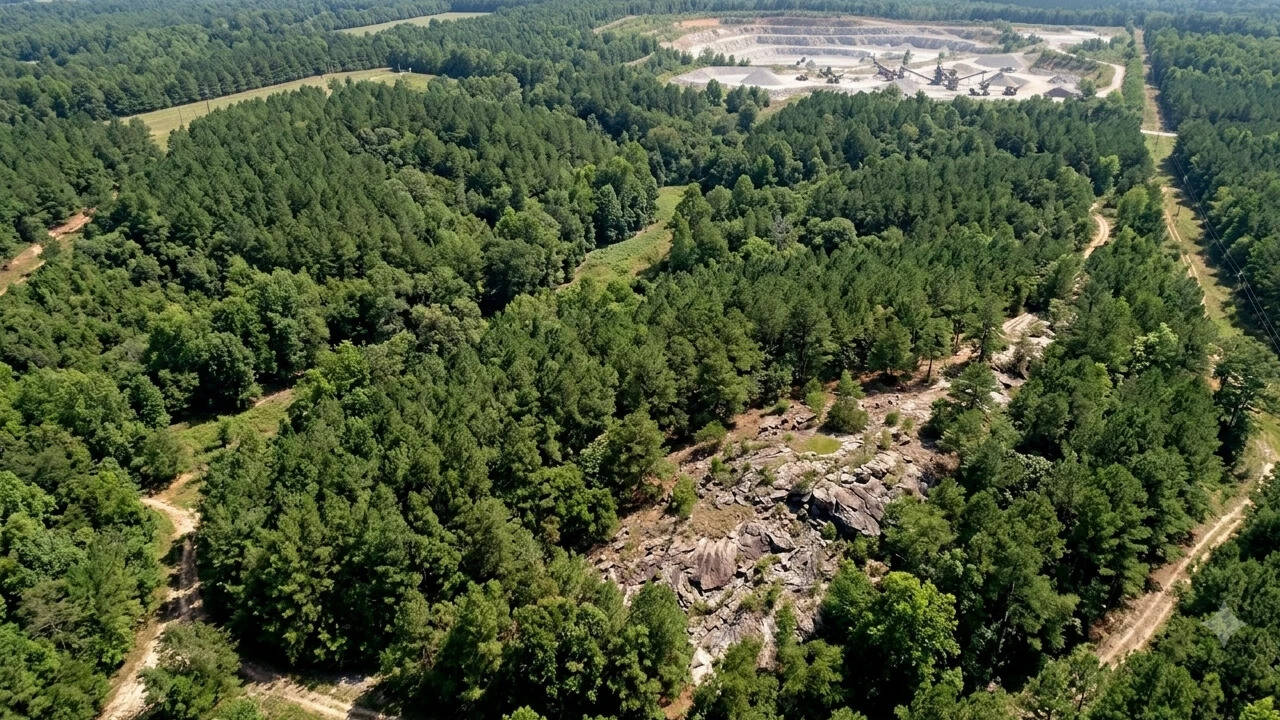
When a Georgia investment entity claimed a jaw-dropping $23 million charitable deduction for placing a conservation easement on 103 rural acres, it looked like a classic masterclass in real estate tax strategy. But the federal courts just sent a brutal warning shot to anyone trying to inflate land values through creative appraisal fiction. The Eleventh Circuit Court of Appeals firmly backed a lower court ruling that slashed that multi-million dollar write-off down to a modest $480,000, while slapping the taxpayers with a severe 40% gross valuation misstatement penalty.
If you think aggressive conservation easement valuations are a victimless tax loophole, this ruling proves the IRS and federal judges are done playing games.
The Core Mirage Behind the 23 Million Dollar Figure
To understand how a 103-acre tract of land in rural Hart County, Georgia, managed to generate a headline-grabbing twenty-three million dollar valuation, you have to look at the appraisal theory used. Savannah Shoals, LLC didn't value the land based on what it was actually being used for or what similar local dirt was selling for. Instead, they argued that the property's "highest and best use" was an aggregate granite quarry.
By hiring mining experts to run a discounted cash flow analysis on subsurface rock samples, the organizers argued the property held millions of tons of mineable aggregate. On paper, turning quiet acreage into an industrial rock pit let them project massive future profits, driving the pre-easement fair market value of the property straight up to $23.1 million.
It sounds clever until reality hits. Federal courts demand that any proposed commercial use be grounded in actual market feasibility rather than pure fantasy.
Why the Courts Dismantled the Quarry Defense
Both the U.S. Tax Court and the Eleventh Circuit picked apart the quarry argument piece by piece. Real estate valuation requires looking at cold, hard market realities—not just whether a piece of land contains a marketable material.
The court discovered major flaws in the taxpayer's economic logic:
- Overestimated Demand: The experts completely misread local market competition, ignoring at least seven other functioning aggregate quarries located much closer to major population hubs like Athens and Greenville.
- Financial Feasibility Gaps: The judges rejected the notion that a project is financially viable simply because it might theoretically return some positive number on a spreadsheet. Real markets require actual demand, logistics, and competitive positioning.
- The Real Value: Once the courts threw out the industrial quarry illusion, the property's true value came into focus. The pre-easement value was pegged at a realistic $580,000, and the post-easement value sat at $100,000.
That left the true allowable deduction at $480,000—a far cry from the original $23 million claim.
The Heavy Price of Gross Misstatement
Getting caught overvaluing property by millions of dollars isn't just a matter of the IRS saying "nice try, pay the difference." When the discrepancy crosses certain legal thresholds, the penalties get aggressive.
Because the claimed deduction was vastly higher than 200% of the correct valuation, the IRS triggered a 40% gross valuation misstatement penalty. The Eleventh Circuit upheld both the adjusted valuation and the heavy penalty. When syndication and conservation strategies rely on speculative development theories that crumble under cross-examination, investors are left holding a massive tax bill and steep penalties.
What This Means Moving Forward
Tax agencies and federal judges have zero patience for inflated syndicated conservation easements. If you are looking at land deals or evaluating charitable contribution deductions, the rules are stricter than ever. Expert testimony must survive intense scrutiny, and hypothetical commercial uses need legitimate, defensible market data behind them.
Always work with independent, objective appraisers who base their numbers on actual local transactions rather than best-case scenario spreadsheets. Real estate tax strategies should protect your capital, not invite federal audits and severe penalties.