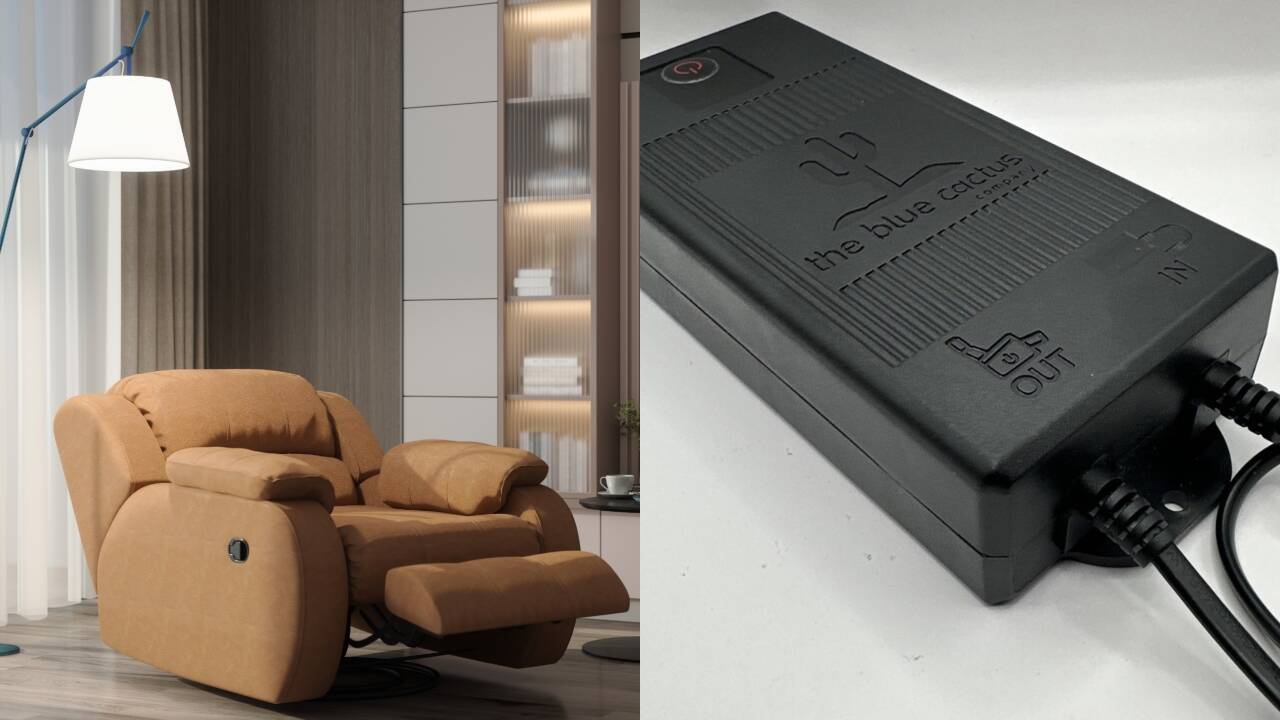
About 51,000 lithium-ion battery packs sold on Amazon by The Blue Cactus Company for approximately $105 between May 2023 and July 2026 have been officially recalled by the Consumer Product Safety Commission (CPSC) due to severe fire and burn hazards. Model number RWX-RBP02, featuring black outer casings and specific brand markings, can internally overheat, smoke, or ignite during normal residential use. While federal regulators have logged four explicit incidents involving thermal runaway, this localized action exposes a wider, systemic vulnerability in how unverified energy storage accessories quietly infiltrate modern living spaces.
The Convenience Trap
We plug everything in. Or worse, we unplug things from the wall to grant ourselves total spatial freedom, expecting modern chemistry to quietly tolerate the burden. The modern living room is an energy ecosystem. It relies on high-density lithium-ion cells to power motion furniture, motorized headrests, USB charging hubs, and lumbar supports without an unsightly cord running across the rug.
That freedom comes at a structural cost. A reclining chair is not a smartphone. It does not live on a desk or inside a pocket where thermal anomalies are immediately felt against the palm. It sits tucked away in a corner, draped in heavy upholstery, flanked by foam padding, wood framing, and synthetic textiles. When a cheap energy pack experiences internal short-circuiting, the user does not see a warning light on a dashboard. They smell acrid smoke from an unvented cavity beneath the seat cushion.
The Marketplace Blind Spot
The distribution channel here tells a story all its own. Imported by Go North Rocket 28 AB out of Sweden and sold predominantly through online marketplace infrastructure, these third-party aftermarket accessories bypass the rigorous safety validation typical of tier-one furniture manufacturers. Traditional furniture makers spend millions engineering custom internal wiring harnesses and thermal cutoff switches. Third-party aftermarket add-ons, conversely, target the retrofit market. They promise universal compatibility with any brand of reclining sofa for a nominal hundred-dollar bill.
This is where regulatory oversight historically lags behind digital commerce. A storefront listing can aggregate thousands of positive reviews based on fast shipping and initial utility long before a single batch of cells demonstrates chemical degradation. Lithium-ion chemistry does not forgive manufacturing shortcuts. Impurities in the separator film, inconsistent cathode application, or substandard management circuitry will manifest failures months or years down the line, often long after the initial algorithmic boost has buried the product deep in search results.
The Mechanics of Thermal Failure
When a lithium-ion cell fails catastrophically, it enters a state known as thermal runaway. An internal short circuit triggers an exothermic reaction, generating heat that accelerates the breakdown of adjacent cell components.
In a confined furniture environment, that localized heat has nowhere to dissipate. Upholstery acts as an excellent insulator. Once a battery pack begins to smoke or ignite, the transition from a localized electronic glitch to a structural room fire happens with terrifying speed. Four reported incidents sound statistically negligible on a spreadsheet containing 51,000 units. To a fire investigator, however, four thermal runaway events in consumer-grade furniture represent a severe hazard profile because the consequences of a single midnight failure are catastrophic.
What Owners Must Do Now
The federal remedy is unambiguous. Consumers possessing the affected Blue Cactus units must immediately disconnect the hardware, cease all charging operations, and initiate replacement protocols directly through the supplier.
Do not toss these power units into a standard household waste bin. Damaged or recalled lithium cells demand specialized handling through local hazardous waste facilities to prevent secondary ignition in municipal sanitation trucks. Check your historical online purchase logs, verify the alphanumeric identifiers on the back of the black plastic housing, and strip the hazard out of your living space before convenience turns into a crisis.