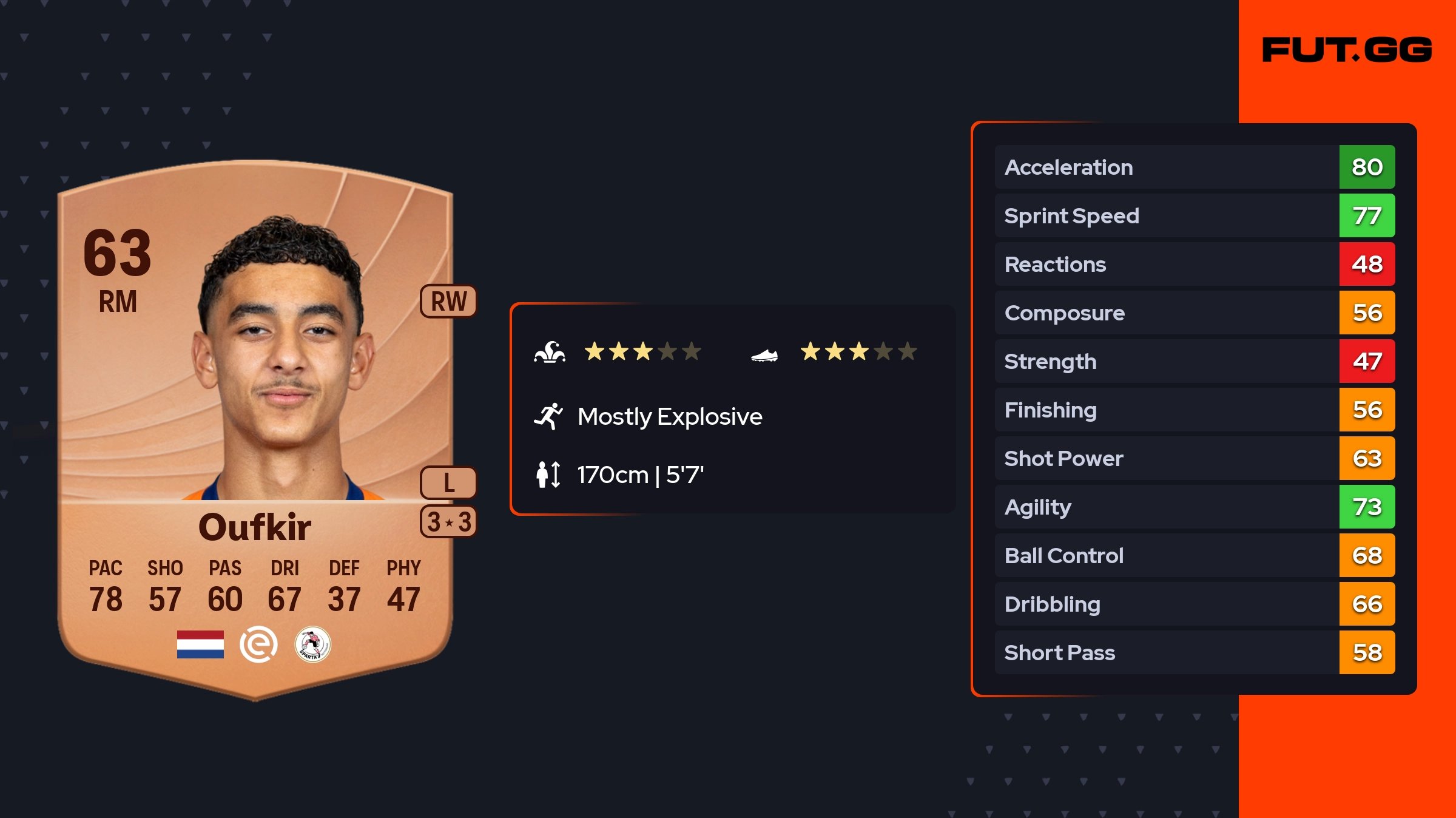
The Royal Dutch Football Association (KNVB) is currently facing a silent, structural crisis that threatens the long-term quality of the national team. While the public focus often drifts toward tactical shifts or coaching appointments, a much more consequential struggle is happening in the hearts and minds of dual-national youngsters. The latest flashpoint is Ayoub Oufkir. The Sparta Rotterdam sensation has become the focal point of a tug-of-war between the Netherlands and Morocco, a situation that exposes the widening gap between Dutch scouting loyalty and the aggressive, emotional recruitment tactics of the Moroccan Football Federation (FRMF).
Oufkir is not just another winger with a high ceiling. He represents a specific archetype of player—creative, fearless, and technically proficient—that the Dutch system has struggled to produce consistently in recent years. If the KNVB loses Oufkir, it isn't just losing a player; it is losing a battle of influence that it once dominated. The days when a call-up to the Oranje youth ranks was the undisputed pinnacle for every kid in Rotterdam or Amsterdam are over.
The Moroccan Recruitment Machine
The FRMF has transformed its recruitment strategy into a high-precision operation. They no longer wait for players to be "discarded" by European giants. Instead, they identify talent as early as ages 13 and 14, building relationships with families long before a professional contract is even signed. They offer a sense of belonging and a clear pathway to the world stage that often feels more personal than the bureaucratic, performance-metric-driven approach of the KNVB.
In the case of Oufkir, the pressure is mounting. Morocco has seen the success of their 2022 World Cup run as a proof of concept. They are selling a dream of national heroism that resonates deeply. When Oufkir weighs his options, he isn't just looking at a jersey. He is looking at a federation that makes him feel like a priority versus a Dutch system that often treats players as interchangeable parts in a massive machine.
The "why" behind this shift is simple. Morocco has invested heavily in its infrastructure, specifically the Mohammed VI Football Academy, and has stationed scouts across Europe who act more like mentors than observers. They know what Oufkir eats for breakfast, they know his parents, and they know his frustrations. The KNVB, by contrast, relies on the prestige of the orange shirt. Prestige is a depreciating asset when your competitors are offering a bespoke career plan.
The Sparta Rotterdam Production Line
Sparta Rotterdam has quietly become one of the most vital talent hubs in Europe. Their ability to integrate youth into the first team is a lesson in patience. Oufkir is the crown jewel of this current cycle. His ability to operate in tight spaces and his explosive first step have drawn comparisons to the greats, but his real value lies in his decision-making under pressure.
Professional football is littered with fast players who cannot think. Oufkir can do both. This is exactly why the KNVB cannot afford to let him slip away. In a domestic league that is increasingly becoming a developmental "selling league," losing top-tier talent to rival national teams further weakens the local football identity. Every time a player like Oufkir chooses Morocco, it reinforces a narrative that the Netherlands is a place to train, but not necessarily a place to stay.
The Identity Conflict and the Modern Athlete
We have to stop treating these decisions as "betrayals" or "lack of loyalty." That is an outdated view of the modern athlete. A player like Oufkir is making a professional decision based on where he is most valued and where his career has the highest ceiling. The emotional pull of heritage is significant, but it is backed by a Moroccan federation that is currently outworking the Dutch at every level of engagement.
The KNVB’s traditional stance has been one of "wait and see." They want players to prove themselves in the Eredivisie before committing. Morocco has flipped the script. They commit to the player before the player even proves he can handle a full 90 minutes of professional football. By the time the KNVB decides they want Oufkir for the senior squad, the emotional ties to Morocco may already be unbreakable.
This is a failure of scouting imagination. The Dutch system is excellent at teaching the "how" of football—the positioning, the passing, the tactical discipline. However, it is failing at the "who." It is failing to understand the individuals who make up the team.
A Systemic Vulnerability
The Dutch national team is currently top-heavy with defensive talent but remarkably thin on the wings and in creative midfield roles. Oufkir fills a desperate need. If you look at the current Oranje roster, the lack of "street-smart" players—those who can break down a low block through individual brilliance rather than just tactical rotations—is glaring.
Losing Oufkir would be a compounding error. It would follow a trend where the Netherlands develops the talent, pays for the coaching, provides the facilities, and then watches the finished product celebrate victories in a different kit. It is an unsustainable model for a nation that prides itself on being a footballing superpower.
The KNVB needs to move beyond the letter they send to a player's home. They need presence. They need former internationals involved in the recruitment process who understand the nuances of dual-identity. If they don't change their engagement model, the "Oufkir situation" will simply become the new standard.
The Role of the Eredivisie
The league itself plays a part in this. While the Eredivisie is a fantastic springboard, it lacks the financial muscle to keep stars for long. This means players are often looking for the next big move by age 20. If their international future is also in flux, the instability can affect their market value and their focus.
Clubs like Sparta Rotterdam find themselves in a difficult position. They want their players to represent the Netherlands because it typically boosts their transfer fee in the European market. However, they cannot dictate a player's heart. The pressure on Oufkir is immense, and it is coming from all sides—agents, family, fans, and two competing federations.
What Happens if Oufkir Chooses Morocco?
If Oufkir follows the path of players like Hakim Ziyech or Noussair Mazraoui, the outcry in the Dutch media will be predictable. There will be talk of "investing in players who don't choose us." This is a toxic and reductive way to look at the problem. The real question should be: why is the Dutch project less appealing than the Moroccan one?
The answer lies in the visibility of the pathway. Morocco has shown that they will play their youngsters in major tournaments. They have shown that they can compete with the best in the world. The Netherlands, meanwhile, has been in a state of perpetual transition, struggling to find a consistent identity since 2014. For a 19-year-old, the Moroccan project currently looks more stable and more exciting.
The Need for a New Strategy
The KNVB must abandon its passivity. The "honor of the shirt" is no longer a strong enough recruitment pitch on its own. They need to provide a roadmap that shows a player exactly how they get from the U-17s to the senior World Cup squad. This isn't about giving away spots; it's about clear communication and mentorship.
Oufkir's hesitation is a loud signal. It tells us that the current Dutch approach is failing to connect with its most talented youngsters. This isn't a problem that can be solved with a better social media campaign. It requires a fundamental shift in how the federation views and interacts with its diverse talent pool.
The clock is ticking for the KNVB. Every impressive performance Oufkir puts in for Sparta Rotterdam increases his value and the intensity of the pursuit from Rabat. If the Dutch officials don't get in a room with him and show him a future where he is the centerpiece of the Oranje attack, they will be watching him from the stands in a different color.
The Dutch system is at a crossroads. They can either adapt to the new reality of international recruitment or continue to act as a free academy for the rest of the world. Ayoub Oufkir is the test case. If they lose him, it's not a one-off disappointment; it's a systemic failure. The KNVB needs to stop assuming that being Dutch is enough. They have to prove that playing for the Netherlands is the best move for the player's career, not just an expectation based on their residence.
The next time Oufkir steps onto the pitch, the scouts from both nations will be there. One side is offering a history books' worth of prestige; the other is offering a future where he is the hero of a rising footballing power. The KNVB's move must be swift and it must be personal.
Would you like me to analyze the specific contract structures that Eredivisie clubs use to protect their youth assets during international tug-of-wars?