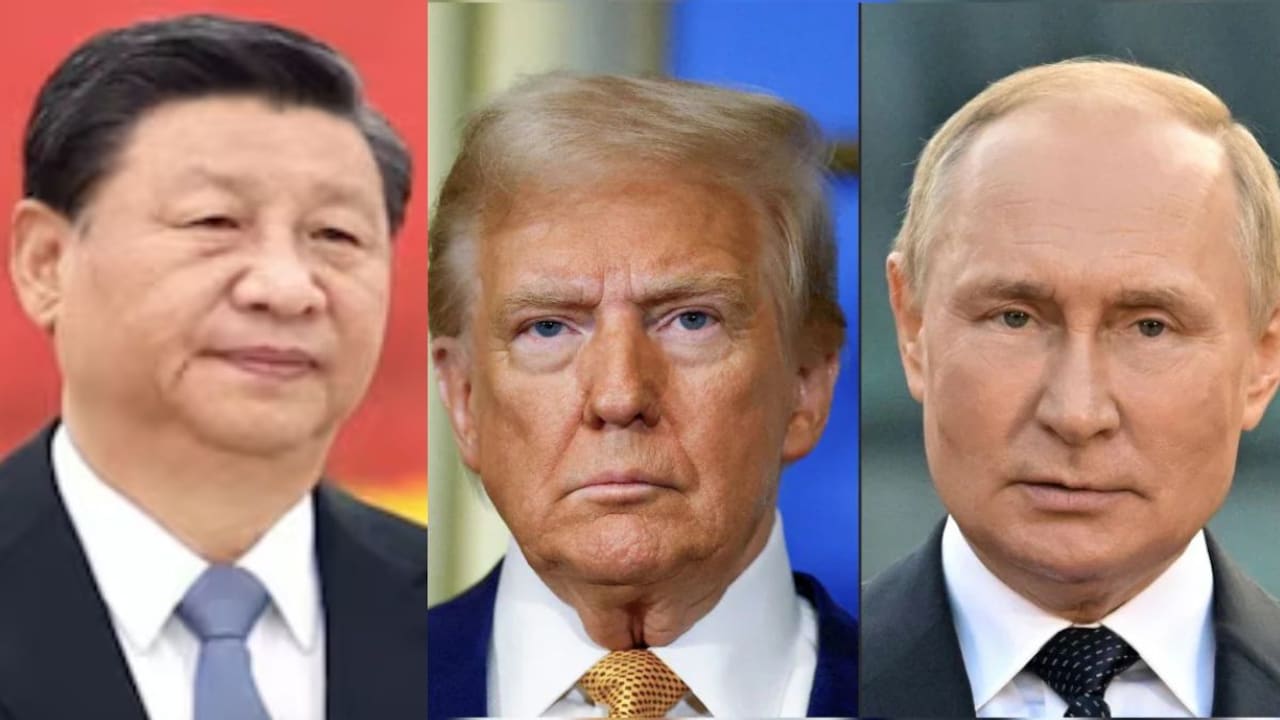
Washington loves a good diplomatic rumor, especially when it involves three nuclear superpowers sitting in the same room. When Donald Trump floated the idea that he might meet both Xi Jinping and Vladimir Putin during China's turn hosting the Asia-Pacific Economic Cooperation summit, cable news panels practically combusted.
Most coverage treats this potential three-way encounter like a Hollywood blockbuster where the world's fate gets decided over dinner. That's completely backwards. If you've spent any time tracking how multilateral summits actually work, you know the real story isn't about dramatic handshakes or surprise peace treaties. It's about leverage, optics, and why getting these three men into Shenzhen or Beijing at the same time is an absolute logistical nightmare.
Let's strip away the sensational headlines and look at what Trump actually said, why China hosting APEC in 2026 changes the diplomatic math, and what happens behind closed doors when Washington, Beijing, and Moscow share a venue.
Why China Hosting APEC Changes the Entire Dynamic
China took over the APEC host role for 2026, following Peru in 2024 and South Korea in 2025. That single scheduling fact matters more than any off-the-cuff remark from Air Force One.
When a U.S. president travels to an APEC summit in Lima or Gyeongju, the diplomatic terrain is relatively neutral. When the summit happens on Chinese soil, Xi Jinping controls the cameras, the seating charts, the security perimeter, and the schedule. Every hallway walk and every bilateral room assignment becomes a deliberate piece of statecraft managed by the Chinese Ministry of Foreign Affairs.
Trump knows this. He's obsessed with stagecraft and visual dominance. By casually telling reporters he might meet with both Xi and Putin at the China APEC summit, he wasn't announcing a finalized diplomatic calendar. He was testing the waters and immediately seizing narrative control before Beijing could even issue formal invitations.
Think about how Trump operates in foreign policy. He treats diplomatic attendance like a high-stakes business negotiation where walking away—or threatening not to show up—is your strongest opening move. If he commits early, he loses leverage. If he keeps everyone guessing whether he'll fly to China at all, both Beijing and Moscow have to adjust their preparations around his unpredictability.
The Reality of a Trump Xi and Putin Encounter
People hear "Trump might meet Xi and Putin" and immediately picture a modern Yalta Conference. Three leaders huddled around a mahogany table, redrawing global spheres of influence while the rest of the world watches nervously.
Forget that image. It's not going to happen that way.
First, APEC isn't a security forum. Founded in 1989, the Asia-Pacific Economic Cooperation focuses on trade liberalization, supply chains, digital commerce, and regional economic integration across 21 member economies. Russia and the United States are both APEC members, as is China, along with economies like Japan, Australia, Canada, and Taiwan (which participates under the name Chinese Taipei).
Because all three countries are formal members, Putin and Trump both have technical standing to attend the Economic Leaders' Meeting. Whether Putin actually travels to China for an APEC gathering is a separate headache altogether.
The International Criminal Court Problem
You can't talk about Putin traveling abroad without addressing the elephant in the room. In March 2023, the International Criminal Court issued an arrest warrant for Vladimir Putin over the unlawful deportation of Ukrainian children.
Does China recognize the ICC? No. Beijing isn't a party to the Rome Statute, which means Chinese authorities have zero legal obligation to arrest Putin if he lands in Beijing or Shenzhen. In fact, Putin has already visited China since the warrant was issued, meeting Xi in Beijing in October 2023 and again in May 2024.
The friction doesn't come from China. It comes from the other 18 APEC economies.
Imagine the diplomatic meltdown if Australia, Japan, Canada, New Zealand, and South Korea—all staunch U.S. allies and ICC members or supporters—have to decide whether to sit at the same plenary table with Putin. At the 2023 APEC summit in San Francisco, Moscow sidestepped the issue by sending Deputy Prime Minister Alexei Overchuk instead of Putin. At the 2024 summit in Peru, Putin also skipped, sending Overchuk again to avoid triggering a diplomatic crisis for Lima, which is an ICC member state.
China doesn't care about Western arrest warrants. Xi would gladly welcome Putin to showcase the "no limits" partnership Moscow and Beijing declared in February 2022. If Putin shows up in person because China guarantees his red-carpet treatment, Trump suddenly faces a choice that no modern U.S. president has dealt with on Chinese soil.
Bilateral Pull-Asides vs. A Trilateral Summit
Here is where the pundits get sloppy with their terminology. There is a massive difference between a formal trilateral summit and two separate bilateral "pull-asides" happening on the margins of the same conference.
In diplomatic practice, an APEC summit is essentially a 48-hour speed-dating marathon for heads of state. Leaders attend a couple of formal plenary sessions, pose for the infamous "family photo" wearing matching host-country outfits, and spend the rest of their time ducking into private rooms for 45-minute bilateral meetings.
When Trump mentions the possibility of meeting Xi and Putin at APEC, he's almost certainly talking about separate bilateral meetings—or even brief, informal conversations on the sidelines—rather than a joint three-way negotiation.
Why? Because their agendas don't align neatly enough for a three-way deal.
- What Trump wants from Xi: He wants massive trade concessions, tighter controls on fentanyl precursor chemicals, and leverage over tariffs. Trump views the U.S.-China relationship primarily through an economic and industrial lens, even when national security hawks in Washington push for a broader Cold War framing.
- What Trump wants from Putin: He wants an end to the war in Ukraine on terms he can sell at home as a personal diplomatic triumph, alongside potential discussions on strategic arms control now that the New START treaty framework has collapsed.
- What Xi wants from both: Xi wants stability while China manages domestic economic headwinds, property sector debt, and youth unemployment. He wants Trump to back off sweeping tariffs and tech export controls, and he wants Putin to keep Russia aligned with Beijing without dragging China into secondary Western sanctions that cripple Chinese banks.
Put all three in one room, and those competing agendas collide immediately. Putin has every incentive to drive a wedge between Washington and Beijing. Xi has every incentive to position himself as the indispensable mediator who brought the American president and the Russian president together. Trump hates being anyone's supporting actor, especially on Xi's home turf.
Why Trump Floated the Idea Now
If a formal three-way summit is such a headache, why did Trump bring it up in the first place?
Because ambiguity works in his favor. I've watched this exact playbook unfold across multiple international crises, from the 2018 Singapore summit with Kim Jong Un to the renegotiation of NAFTA into the USMCA. Trump routinely floats big, headline-grabbing possibilities months in advance to force other leaders to react to his framing.
Notice the phrasing he consistently uses. It's never "We have scheduled a summit." It's always "I might," "We'll see what happens," or "Maybe we'll meet."
That phrasing accomplishes three specific things right away:
- It signals openness to Moscow without making concessions. By suggesting he might see Putin at APEC, Trump keeps direct communication channels alive and reminds Kyiv and European capitals that Washington holds the ultimate cards on ending the war.
- It puts pressure on Beijing to deliver pre-summit deliverables. U.S. presidents rarely travel to China without extracting tangible policy wins beforehand—whether that's agricultural purchases, prisoner releases, or regulatory approvals for American companies. Hinting that his attendance and willingness to engage depend on how things go forces Chinese diplomats to work overtime.
- It freezes out traditional diplomatic gatekeepers. Career diplomats at the State Department and the National Security Council hate surprise summitry because they prefer months of carefully scripted "sherpa" meetings before leaders ever shake hands. Trump prefers leader-to-leader improvisation, believing he can read a room better than any briefing book.
What History Tells Us About Superpower Sideline Meetings
To understand what a Trump-Xi-Putin convergence at APEC would actually look like, look back at the 2017 APEC summit in Da Nang, Vietnam, and the 2019 G20 summit in Osaka, Japan.
In Da Nang in November 2017, reporters spent days obsessing over whether Trump and Putin would hold a formal bilateral meeting. The White House initially said no formal meeting was scheduled due to calendar conflicts. Then, the two leaders chatted briefly several times while walking to the official group photo, issuing a joint statement on Syria that took half the foreign policy establishment by surprise.
In Osaka in June 2019, Trump met both Putin and Xi in separate bilateral sessions at the G20. His meeting with Putin lasted about 80 minutes and focused heavily on arms control, Iran, and Ukraine. His meeting with Xi produced a temporary truce in the U.S.-China trade war, pausing new tariffs while negotiations resumed.
Neither of those moments produced permanent grand bargains. The trade truce eventually gave way to the Phase One deal in January 2020 before the COVID-19 pandemic upended global supply chains. The arms control talks with Russia stalled out completely.
Yet both meetings reset the immediate political temperature. That's the real currency of summit diplomacy. It doesn't solve structural rivalries overnight, but it interrupts escalation cycles and gives leaders a face-saving way to pause economic or military pressure.
The Risks Nobody Wants to Admit
While cable news debates who would "win" a meeting in China, seasoned foreign policy practitioners worry about a much more practical problem: what happens if the meetings go poorly.
Summitry carries real downside risk when expectations get inflated. If Trump travels all the way to China, meets with Xi and Putin, and walks away empty-handed—or worse, gets publicly humiliated by a diplomatic snub—the domestic political blowback in Washington would be immediate. Hawks in Congress would accuse him of legitimizing Putin and handing Xi a massive propaganda victory on Chinese state television.
There's also the risk of miscalculation with allies. Japan, South Korea, the Philippines, and Australia rely heavily on U.S. security guarantees to balance Chinese maritime assertiveness in the South China Sea and the Taiwan Strait. If Tokyo or Manila sees the U.S. president cutting side deals with Beijing and Moscow without consulting them first, trust in American alliances erodes fast.
Honestly, that's the tightrope every U.S. administration walks at APEC. You have to engage China because ignoring the world's second-largest economy isn't a viable strategy. At the same time, you have to reassure Indo-Pacific allies that bilateral deals with Beijing won't come at their expense.
How to Read the Diplomatic Signals Before the Summit
If you want to know whether Trump, Xi, and Putin will actually sit down together at China's APEC summit—and whether anything real will come out of it—ignore the breathless speculation on social media and watch three concrete indicators instead:
- Cabinet-level travel to Beijing. Watch whether the U.S. Secretary of State and Treasury Secretary make preparatory trips to China in the two months leading up to APEC. In U.S.-China diplomacy, a presidential visit almost never happens without high-level advance teams locking down the joint communique and concrete deliverables first.
- Kremlin protocol announcements. Pay attention to how Moscow describes Putin's travel plans. If Russian state media starts emphasizing bilateral Russia-China events scheduled immediately before or after APEC, Putin is going. If they talk about "video participation" or name a deputy prime minister to lead the delegation, he's staying home.
- Tariff and sanction timelines. Look at scheduled deadlines for U.S. trade actions against China or energy sanctions against Russia. When Washington quietly delays a tariff hike or grants a temporary sanction waiver weeks before an international summit, it's a dead giveaway that serious backchannel bargaining is already underway.
Track those three signals, and you'll know days before the mainstream press whether the China APEC summit is going to be a routine economic conference or a historic collision of global power.