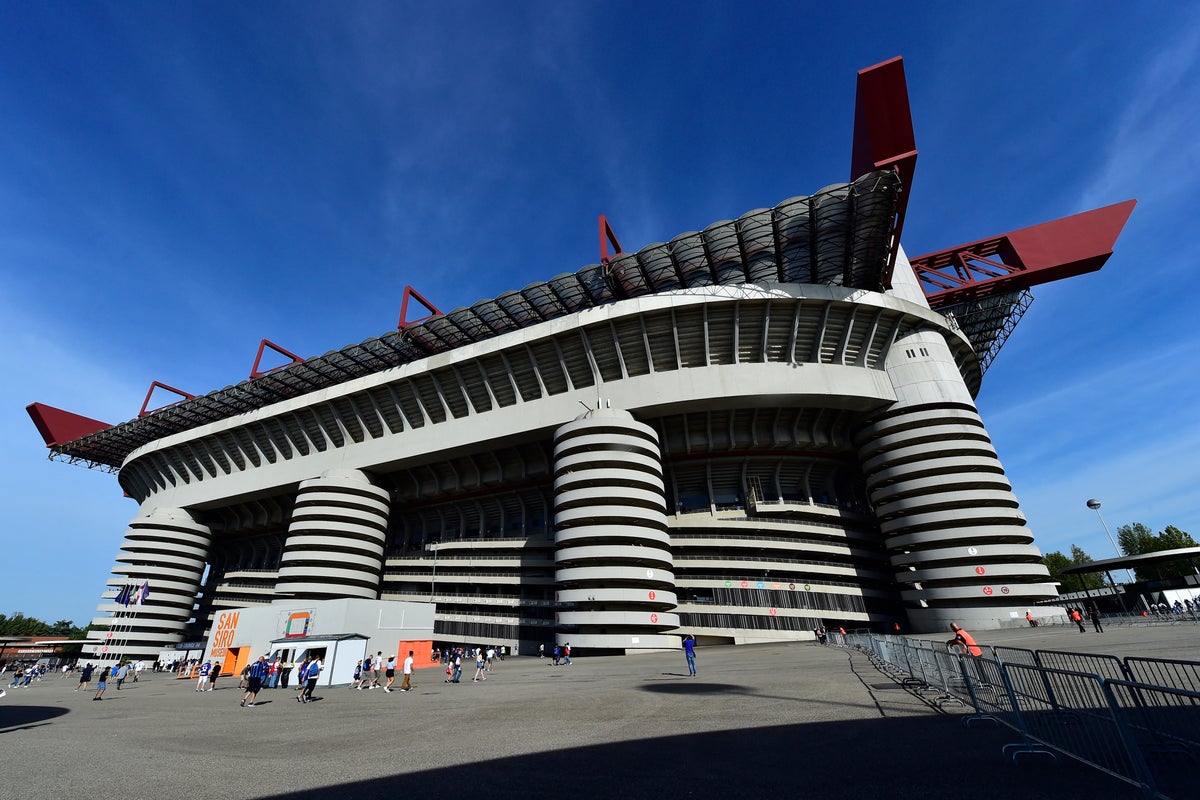
The grass at the Alfredo Di Stéfano stadium doesn’t care about history. It doesn’t feel the weight of the thirty-five league titles held by the men’s side of Real Madrid, nor does it recognize the ghost of Johan Cruyff that supposedly haunts every blade of turf touched by a Barcelona player. To the ground, a footfall is just a footfall. But to the eleven women in white kits, every step taken during the Clásico feels like wading through deep, cooling cement.
They are chasing a shadow. Specifically, they are chasing the shadow of Aitana Bonmatí, a woman who moves as if she has already seen the next ten seconds of the future and found them slightly tedious.
When Barcelona stepped onto the pitch for this latest installment of the most lopsided rivalry in modern sports, the score was technically 0-0. In reality, the psychological scoreboard already read like a eulogy. Real Madrid isn't just a football club; it is an institution built on the arrogant assumption of victory. Yet, in the women’s game, they are the disruptors who cannot quite find the frequency, the challengers who keep swinging at a ghost that isn't there when the punch lands.
Barcelona won 3-0. Again.
The scoreline is a familiar bruise, but the numbers—the dry, clinical data points about possession and shots on target—don't capture the suffocating nature of the evening. To understand what happened in Madrid, you have to look at the eyes of the defenders.
The Anatomy of an Inevitability
Consider Fridolina Rolfö. She is a Swedish powerhouse who plays for Barcelona with the calm detachment of a grandmaster. In the 10th minute, she didn't just score a goal; she punctuated a sentence that Barcelona has been writing for a decade. A corner kick drifted in, a slight flick from Caroline Graham Hansen—a player whose feet operate with the precision of a diamond cutter—and there was Rolfö.
1-0.
The sound that follows a goal like that in Madrid is unique. It isn't a roar or even a whistle. It is a collective exhale of breath, the sound of a stadium realizing that the script hasn't changed. We often talk about "the gap" in women’s football. We discuss it as if it’s a financial metric or a recruitment strategy. It isn't. The gap is a physical sensation. It’s the feeling of sprinting at full tilt and realizing your opponent is merely jogging, and they are still gaining ground.
Barcelona doesn't play football so much as they colonize the pitch. They take the ball and they treat it like a family heirloom, something too precious to be touched by "the others." In this match, they held the ball for long stretches of time that felt less like a game and more like a lecture.
Real Madrid tried to disrupt. They have invested millions. They have signed Galácticas of their own, like Olga Carmona and Linda Caicedo. But there is a specific kind of cruelty in how Barcelona absorbs pressure. They don't panic. They simply pass the ball to Bonmatí.
The Smallest Giant on the Pitch
Aitana Bonmatí is not tall. She does not look like she could move a mountain. But watching her navigate the Real Madrid midfield is like watching a needle thread itself through moving silk. Every time a Madrid player closed in, she disappeared. A shimmy, a drop of the shoulder, and she was gone, leaving nothing behind but a frustrated defender and a vacated space.
In the second half, the game transitioned from a contest to a demonstration.
Aitana’s goal to make it 2-0 was the moment the oxygen left the stadium. It wasn't a thunderbolt from thirty yards. It was a calculated, surgical arrival in the box. She moved into the area with a predatory stillness. When the ball arrived, the finish was academic. It was the 14th consecutive Clásico victory for Barcelona.
Fourteen.
In any other sport, we would call this a monopoly. In any other rivalry, we would call it a tragedy. But here, it is a testament to a philosophy that has become a religion. Barcelona Femení is what happens when a club decides that "good enough" is an insult. They aren't playing against Real Madrid anymore; they are playing against the very idea of a limit.
The Invisible Stakes
Why does this 3-0 win matter more than the dozens of others? Because for Real Madrid, the "Women's Clásico" has become a psychological wall they cannot climb.
Imagine you are a world-class athlete. You have won World Cups, like many of these Madrid players have. You are elite. You are the best in your neighborhood, your city, your country. Then you walk onto a field and encounter a group of women who seem to be playing a different sport entirely. It’s not that you aren't fast; it’s that they don't need to run. It’s not that you aren't strong; it’s that they never let you touch them.
The third goal, a clinical strike by Caroline Graham Hansen, was almost disrespectful in its simplicity. She cut inside, found the angle, and the ball was in the net before the goalkeeper could even process the threat. Hansen is arguably the best player in the world who doesn't have a trophy room full of individual awards, mostly because she plays in a team where everyone is a sun and she is just one of many stars.
The 3-0 scoreline is a lie because it suggests there was a moment where it could have been 2-1 or 2-2. There wasn't. From the first whistle, the air in the stadium felt heavy with the realization that Barcelona was simply visiting. They had come to collect three points, a clean sheet, and the pride of their rivals, and they were going to leave before dinner.
The Weight of the White Shirt
There is a burden to playing for Real Madrid. You are expected to be the protagonist of every story. But on this night, the players in white looked like supporting characters in someone else’s biopic.
Misa Rodríguez, the Madrid goalkeeper, made several saves that would have been the highlight of anyone else's career. She threw herself across the grass, defying physics to keep the score from becoming a massacre. But you can only hold back the tide with a bucket for so long. Eventually, the ocean wins.
The frustration was etched into the face of Olga Carmona. She is the woman who scored the winning goal in a World Cup final. She is a national hero. But in the 80th minute, chasing a lost cause near the touchline, she looked human. She looked tired. She looked like someone who had been trying to solve a puzzle with missing pieces for ninety minutes.
Barcelona’s dominance isn't just about money, though their budget is significant. It’s about a shared language. When Keira Walsh passes to Patri Guijarro, she isn't just moving the ball. She is communicating a decade of shared tactical DNA. They know where their teammates are without looking, the way you know where the furniture is in your childhood home in the dark.
The Silence of the Bernabéu
As the final whistle blew, there was no massive celebration from the Barcelona players. There was no dancing, no taunting of the crowd. They simply shook hands, hugged, and walked toward the tunnel. This is perhaps the most terrifying thing about them: they expected this.
For Real Madrid, this defeat is a mirror. It forces them to look at the gap—not the one on the scoreboard, but the one in their soul. They have the stadium, the name, and the kits. They have the fans who fill the seats. But they do not yet have the ghost. They do not have that intangible, telepathic connection to the ball that makes Barcelona look like they are playing in slow motion while everyone else is frantic.
The 3-0 defeat is a data point. But the way it felt was like a closing door.
Real Madrid is a club that buys its way out of problems. They sign the biggest names and build the biggest stands. But Barcelona Femení has proven that you cannot buy the kind of chemistry that produces a 14-game winning streak against your biggest rival. That requires time. It requires a refusal to compromise. It requires a certain level of arrogance to believe that you can hold the ball forever and never give it back.
As the lights dimmed at the Di Stéfano, the Barcelona players boarded their bus. They left behind a city that is still trying to figure out how to stop them. The problem for Real Madrid isn't that they are bad. They are, by almost any metric, one of the best teams in Europe.
The problem is that Barcelona has stopped being a team. They have become an environment. And you cannot beat the weather. You can only endure it, shivering in the cold, waiting for a sun that—for now—refuses to rise in Madrid.