When four oil tankers suffer coordinated mine damage in the Strait of Hormuz, the global energy market does not wait for a formal declaration of war to start pricing in catastrophe. Hulls buckle, crews scramble for lifeboats, and maritime underwriters in London immediately begin recalculating the cost of moving a single barrel of crude out of the Persian Gulf. While surface-level reporting treats these incidents as isolated flashpoints between Iran and Western-aligned shipping, the operational reality runs much deeper. Limpet mines and drifting naval ordnance are instruments of calibrated economic coercion, designed to inflict maximum financial friction without crossing the threshold into full-scale conventional warfare.
Understanding how four commercial vessels can be struck in one of the most heavily surveilled waterways on earth requires looking past cable-news graphics and into the mechanics of asymmetric naval warfare, maritime insurance markets, and physical chokepoint geography.
Anatomy of an Asymmetric Maritime Strike
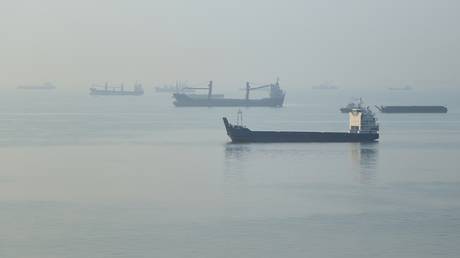
The Strait of Hormuz is not an open ocean. At its narrowest point between Oman and Iran, the waterway spans roughly 21 nautical miles, with the actual deep-water shipping lanes compressed into two channels—one inbound, one outbound—each just two miles wide, separated by a two-mile buffer zone. For a Very Large Crude Carrier (VLCC) drawing more than 60 feet of water, maneuvering room is virtually nonexistent.
In this constricted environment, conventional naval superiority loses much of its teeth. A billion-dollar guided-missile destroyer cannot easily spot a fiberglass skiff riding low in the chop at night, nor can satellite imagery reliably track a team of combat divers attaching a magnetic device below the waterline of an anchored tanker.
Why Limpet Mines Remain the Weapon of Choice
Naval mines have existed since the American Civil War, yet modern variants remain uniquely suited for gray-zone conflict in the Persian Gulf. Unlike anti-ship ballistic missiles or armed drones, which leave an unmistakable radar signature and an indisputable point of origin, underwater mines offer built-in plausible deniability.
A limpet mine is specifically engineered for sabotage rather than outright sinking. Attached magnetically to a ship's hull—typically near the engine room or slightly above the waterline to minimize catastrophic environmental spills—the device detonates on a timer after the attackers have vanished into coastal waters. The objective is rarely to send a supertanker to the bottom of the Gulf. Sinking a fully laden VLCC would trigger an ecological disaster across Iranian and Arab coastlines alike, inviting an overwhelming military response from international coalitions.
Instead, the tactical goal is disablement and psychological shock. Blowing a hole through outer hull plating forces a vessel out of commission, strands millions of dollars in cargo, and sends an unambiguous signal to every commercial shipping captain operating in the region.
The Intelligence and Attribution Trap
Following any multi-vessel strike in the Strait of Hormuz, a predictable diplomatic stalemate unfolds. Western naval intelligence points to the pattern of placement, the sophistication of the explosives, and the proximity to Iranian territorial waters. Tehran routinely denies involvement, suggesting either false-flag operations by regional rivals or convenient pretexts engineered by foreign powers seeking to justify military deployments.
From an investigative standpoint, absolute forensic proof in maritime sabotage is notoriously difficult to secure in real time. Once a blast occurs, saltwater corrodes explosive residue, unexploded ordnance must be recovered by specialized explosive ordnance disposal teams under threat of secondary attacks, and commercial shipowners are often reluctant to turn their damaged vessels into prolonged crime scenes. Every day a tanker sits idle in a Fujairah or Dubai anchorage awaiting forensic inspection costs its charterer tens of thousands of dollars.
The Invisible Toll on Global Energy Markets
Most observers watch the immediate spike in Brent crude futures when news of a tanker attack breaks. That initial price jump is largely algorithmic—automated trading desks reacting to keywords in wire alerts. The real economic damage happens quietly over the following weeks in maritime underwriting offices and chartering desks from Oslo to Singapore.
War Risk Premiums and the Cost of Passage
Commercial shipping operates on razor-thin margins governed by risk assessment. The Joint War Committee in London, which represents underwriters from Lloyd’s and the International Underwriting Association, continuously monitors geopolitical threats to global shipping lanes. When four tankers are hit in rapid succession, the Persian Gulf and surrounding waters are immediately flagged as high-risk zones.
For shipowners, this designation triggers mandatory war risk insurance surcharges. During periods of heightened tension in the Strait of Hormuz, these premiums can surge from a fraction of a percent of a vessel's hull value to several hundred thousand dollars per seven-day transit.
Consider a hypothetical example to see how this cascades down to consumer fuel prices. If a VLCC valued at $100 million faces a sudden war risk surcharge of 0.5 percent per voyage, the operator must immediately absorb $500,000 in extra insurance costs before burning a single ton of bunker fuel. Multiply that across the dozens of tankers transiting the strait daily, and the cost of moving oil rises dramatically even if not a single barrel is physically lost to the sea.
Rerouting Limits and the Illusion of Alternatives
Whenever hostilities flare near Iran, energy analysts inevitably point to overland pipelines as an escape valve. Saudi Arabia operates the East-West Pipeline (Petroline) to the Red Sea, and the United Arab Emirates runs the Habshan-Fujairah pipeline, which bypasses the Strait of Hormuz entirely by terminating on the Gulf of Oman.
Yet pipeline capacity is a fraction of maritime volume. Roughly a fifth of the world's petroleum liquids consumption passes through the Strait of Hormuz every single day. The existing bypass pipelines simply do not have the spare throughput to absorb that volume, nor can they replace the massive export terminals of Iraq, Kuwait, and Qatar—the latter of which relies almost entirely on the strait to ship liquefied natural gas (LNG) to Asian and European buyers.
When tankers are mined, the global energy system has no true detour. Every alternative involves higher freight rates, longer voyage times, or severe supply bottlenecks.
Iran's Strategic Calculus and the Sanctions Squeeze
To understand why Tehran tolerates—or actively orchestrates—the immense blowback of commercial shipping attacks, one has to look at the asymmetric nature of economic warfare in the Middle East.
For years, the core pillar of Western policy toward Iran has been maximum economic pressure through financial and oil export sanctions. By cutting Iranian crude off from major global buyers and severing its central bank from international clearing systems, Washington and its allies sought to force concessions on Iran's nuclear program and regional proxy network.
Tehran's strategic response has been built on a blunt, symmetrical doctrine. If Iran is prevented from exporting its oil freely through the Persian Gulf, then no other regional producer will enjoy effortless, cheap transit through the same waters.
The Dual-Command Reality in the Persian Gulf
Operating in the waters off southern Iran is not a monolithic military structure. Iran maintains both a conventional navy (IRIN), tasked with blue-water operations and safeguarding territorial borders, and the naval branch of the Islamic Revolutionary Guard Corps (IRGC Navy).
The IRGC Navy was built specifically for coastal asymmetric warfare. Equipped with swarms of fast-attack craft, mini-submarines, coastal anti-ship missile batteries, and specialized frogman units, it operates with wide tactical autonomy. Western naval commanders who have spent decades patrolling the Fifth Fleet's area of responsibility frequently note the sharp contrast between professional, predictable radio communications with regular Iranian naval vessels and the aggressive, unpredictable maneuvers of IRGC fast boats.
This dual structure creates persistent operational ambiguity. Even when diplomatic channels in Tehran signal a desire for de-escalation or nuclear negotiations, hardline elements within the security apparatus retain the capability to raise the temperature at sea within hours.
Why Coalition Patrols Struggle to Deter Sabotage
Whenever tankers are struck in the Strait of Hormuz, the immediate political reflex in Washington and European capitals is to announce new maritime security coalitions or deploy additional warships. Naval task forces conduct freedom-of-navigation patrols, escorts are organized for flagged vessels, and aerial surveillance drones fly continuous orbits over the shipping lanes.
These measures project resolve, yet they rarely stop determined sabotage.
The Asymmetry of Naval Defense
Guarding commercial shipping against state-backed asymmetric threats is a classic defender's dilemma. A coalition warship must maintain 100 percent vigilance across hundreds of square miles of congested water, twenty-four hours a day, in scorching heat and blinding humidity. An attacker only needs to succeed once, choosing the exact time, tide, and target.
Furthermore, commercial tankers are inherently vulnerable. Unlike warships built with armored citadels, compartmentalized hulls, and active sonar suites, a modern oil tanker is essentially a massive, thin-skinned steel box designed for maximum cargo capacity and fuel efficiency. Its freeboard—the distance from the waterline to the main deck—drops drastically when fully loaded, making it easy for small craft to pull alongside undetected in low visibility.
Naval escorts also run into harsh jurisdictional realities. Coalition warships operate in international waters and transit corridors, whereas Iranian fast-attack craft can dart out from dozens of rocky islands and coves along the Iranian coastline, execute an operation, and retreat back into sovereign Iranian territorial waters within minutes. Pursuing them across that maritime boundary transforms a defensive escort mission into an act of war.
The Quiet Transformation of Global Shipping
The cumulative effect of repeated mine strikes, drone harassment, and vessel seizures in the Strait of Hormuz is a permanent structural shift in how energy moves around the planet.
First, it has accelerated the rise of the shadow fleet—aging, poorly maintained tankers operating with opaque ownership structures, turned-off Automatic Identification System (AIS) transponders, and non-Western insurance coverage. Originally assembled to move sanctioned Russian, Iranian, and Venezuelan crude, these vessels operate outside traditional maritime safety standards. When mainstream Western shipowners pull back from high-risk Persian Gulf routes due to prohibitive insurance costs, older and less regulated operators step into the vacuum, raising the long-term risk of catastrophic mechanical failures or environmental spills.
Second, crew welfare has become an acute operational crisis. Seafarers—predominantly from the Philippines, India, and Eastern Europe—are civilian workers, not combatants. When four tankers are hit by mines in a single morning, maritime unions immediately demand hazard pay and the right for crew members to refuse sailing into designated war zones. Without willing crews, even the most heavily insured supertanker stays tied to the pier.
The Structural Vulnerability That Cannot Be Patched
Every incident in the Strait of Hormuz exposes the same uncomfortable truth about modern globalization. The entire architecture of just-in-time energy delivery rests on the assumption that narrow, contested waterways will remain peaceful and open to commercial traffic.
Navies can sweep mines, underwriters can adjust premiums, and refiners can draw down strategic petroleum reserves to weather short-term price shocks. None of those measures alters the geography of the Persian Gulf. As long as twenty percent of the world's oil must squeeze through a two-mile shipping lane bordered by a heavily armed adversary under severe economic siege, every tanker captain making the transit knows they are sailing through a loaded trap.