The coffee gets cold. Nobody remembers to microwave it.
Outside the window, a late-autumn wind strips the last stubborn maples of their color, rattling the glass in a frame that has needed caulking for three years. Inside, under the aggressive hum of a fluorescent strip light, the kitchen table is buried under a storm of paper. Medical bills with red final-notice stamps. A grocery receipt that looks like a phone number. A ballot guide printed on cheap newsprint, smelling faintly of warehouse ink and civic duty.
Meet Sarah. (Note: She is a composite sketch drawn from dozens of real conversations in Pennsylvania and Michigan living rooms, though her hesitation belongs to millions.) Sarah is thirty-nine. She works two jobs that don't offer dental, and she drives a sedan with a dashboard warning light she has learned to ignore through sheer force of will.
For the past six months, cable news pundits have yelled at her through muted screens in waiting rooms and diners. They call her an undecided voter. They speak of her as if she were a complicated calculus problem, a volatile chemical compound waiting to be triggered by a thirty-second television ad. They treat her blank slate as a moral failure or a strategic puzzle to be solved by campaign consultants earning retainer fees the size of a suburban mortgage.
Sarah is not a puzzle. She is exhausted.
Listen.
To understand why two critical states are tilting on a knife-edge right now, you have to abandon the spreadsheets. You have to sit at the formica table and watch the arithmetic of survival collide with the abstract promises of men and women who wear very expensive shoes.
When pollsters call Sarah’s cell phone while she is parked outside her second shift, she hangs up. Not because she doesn’t care. She hangs up because nobody on the other end of that line is asking about the price of eggs in a way that changes the total at the register.
Strip away the party platforms, the talking points, and the multi-million-dollar ad spends, and you find a singular, burning anxiety. Trust. Or rather, the profound, structural absence of it.
The Geography of Doubt
Drive two hours west of Philadelphia, past the sprawling logistics parks where trucks idle by the thousands, and you hit towns where the anchor factories closed down during the first Bush administration. The brick is darker there. The front porches are deeper.
In these neighborhoods, politics isn't an ideological sport. It's a weather system. You don't argue with a hurricane; you just board up the windows and hope the roof holds.
Yet, something strange happens when you talk to voters here away from the microphones. They aren't swinging blindly between left and right because they are confused about taxes or foreign policy. They are swinging because both sides feel like salespeople trying to flip a car with a blown transmission.
Consider a hypothetical steelworker named Dave. (Again, a silhouette molded from real field reports across the Rust Belt.) Dave voted blue in twenty-twelve, flipped red in sixteen, stayed home in twenty-to-twenty, and right now, sitting in his pickup truck in a grocery store parking lot, he has his hands gripping the steering wheel so tight his knuckles are white.
"They talk about the economy," Dave tells you, his voice gravelly from thirty years of breathing welding fumes. "Which economy? Because the one on Wall Street must be throwing a hell of a party, but down here in the basement, the lights keep flickering."
This is the chasm.
On one side, economic indicators flash green. Job creation numbers look impressive in quarterly reports. Gross domestic product ticks upward. But down in the basement—where rent jumps twelve percent in a single year, where daycare costs more than community college tuition, where a trip to the dentist requires choosing between a filling and a car payment—those macro stats feel like fairy tales told by people who have never stood in a pharmacy line and walked away empty-handed because the co-pay was fifty dollars more than their checking account balance.
The undecided voter is not floating in the center of a political spectrum. They are standing on a crumbling cliff, looking at two different maps, and suspecting that neither one shows the actual bridge.
The Emotional Architecture of the Ballot
Why do they wait? Why hold out until forty-eight hours before the polls close?
Because certainty feels dangerous.
When you have been let down by institutions—when the union pension shrank, when the local hospital merged and closed its maternity ward, when the politicians who promised to bring back manufacturing got indicted or moved to lobbying firms—making a definitive choice feels like handing a loaded weapon to a stranger.
Indcision is a protective shell. It is the last defense of the rational consumer living in a marketplace of bad options.
Walk through a diner in Grand Rapids on a Tuesday morning. The smell of frying grease and burnt decaf hangs heavy in the air. Booth three is occupied by a retired couple on fixed incomes; booth seven by a young tech contractor who moved inland to escape coastal rents. Their lives couldn't be more different, yet their eyes lock onto the local news scrolling silently on the wall above the pie case with the exact same expression of wary skepticism.
They want to believe. That is the secret nobody in Washington wants to admit.
Beneath the cynicism, beneath the social media burnout, beneath the defensive armor of political tribalism, there is a fierce, almost embarrassing desire for competence. They want someone to fix the potholes. They want the water coming out of the tap to be safe for their kids to drink without a filter. They want to know that if they work forty hours a week, the floor won't drop out from under them while they sleep.
When a campaign treats them like a demographic target to be manipulated with fear, they retreat. When a candidate talks down to them, they lock the door.
The Anatomy of the Pivot
So what actually moves them?
It is rarely a policy paper. It is almost never a high-production attack ad featuring ominous music and shadowy silhouettes.
It happens in the quiet spaces.
It happens when a candidate stops performing and shows a flash of human vulnerability. It happens when someone at a town hall stops reciting talking points and says, "You know what? We got that wrong, and here is how we are going to fix it."
Authenticity leaves a distinct residue. You can smell it, the same way you can smell rain on hot asphalt before the first drop hits.
Sarah found her answer last election cycle not from a commercial, but from a neighbor. An older woman down the block who had lost her husband and was struggling with property taxes. That neighbor didn't talk about tax brackets or deficit projections. She talked about dignity. She talked about the feeling of being seen by a local organizer who actually remembered her dog's name.
That is how elections are actually decided in the key states. Not through algorithms, but through the slow, agonizing accumulation of micro-trust. One conversation at a screen door. One moment of feeling like a citizen rather than a data point.
The kitchen table remains crowded. The coffee is completely cold now.
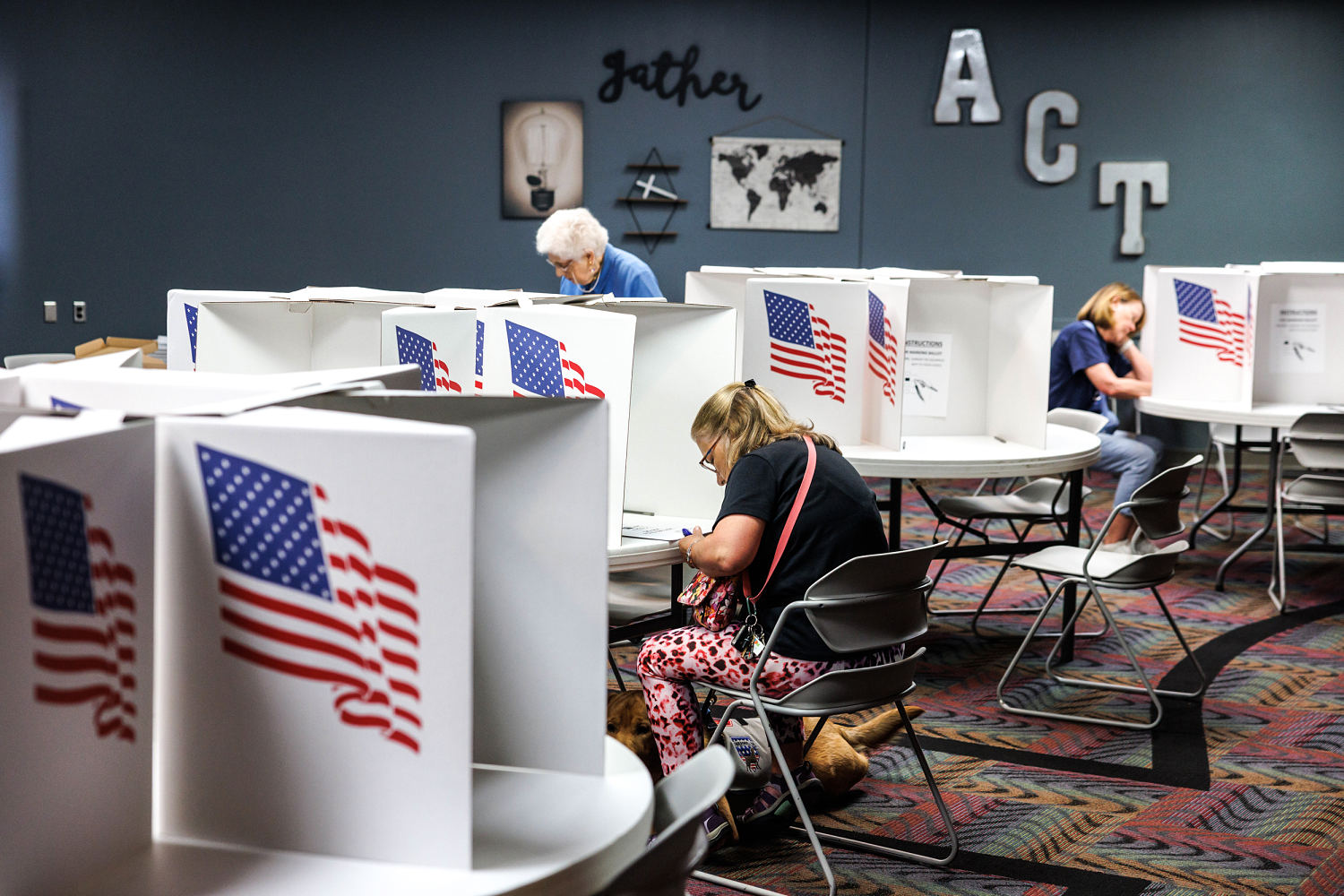
Sarah reaches out, picks up her blue ballpoint pen, clicks it once, and looks down at the blank circle next to a name she hasn't entirely trusted yet. Outside, the wind quiets. The light fades behind the horizon, leaving a thin, pale streak of orange against the gray. She leans in, presses the tip of the pen to the paper, and begins to write.