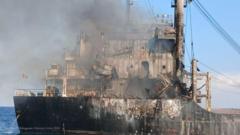
The headlines are screaming panic. Mainstream networks are running breaking news banners about a Kuwaiti power plant fire, immediately framing it as the opening salvo of a coordinated Iranian assault on United States allies in the Persian Gulf. Wall Street oil traders are shouting into their headsets, and regional analysts are dusting off their old escalation dominance models.
They are all looking at the wrong map.
The lazy consensus in modern geopolitical reporting assumes every industrial incident in the Middle East is an act of state-sponsored kinetic warfare. When a transformer blows or a turbine fails in the Gulf, the immediate knee-jerk reaction is to blame regional proxy networks. This narrative is not just lazy; it hides a much more systemic, uncomfortable reality about the state of global energy infrastructure.
The Myth of the Vulnerable Grid
Geopolitical commentators love to paint Gulf power plants as fragile dominoes waiting to be knocked over by external actors. They imply that a single drone strike or a cyberattack can permanently cripple the region's ability to export crude oil or keep the lights on in Kuwait City.
This view ignores the structural realities of modern energy engineering.
During my years analyzing infrastructure resilience across the Middle East, I have looked at the actual schematics of these facilities. Gulf power generation and desalination plants are not fragile glass houses. They are built like industrial fortresses, heavily compartmentalized with redundant systems designed to isolate damage within minutes. When an explosion occurs, the media treats it as a existential crisis. In reality, automated trip-switches and localized fire suppression systems usually contain the incident before the corporate communications team even finishes drafting their first press release.
Let us address the "People Also Ask" assumption that inevitably pops up during these crises: Can a strike on a Gulf power plant halt global oil exports?
The brutal, honest answer is no. The crude oil extraction and processing networks in the Eastern Province of Saudi Arabia, the United Arab Emirates, and Kuwait operate on entirely different industrial loops than the domestic civilian power grids. A black start at a domestic power plant does not mean the oil pumps stop spinning at the export terminals. The heavy hitters in the field—like Saudi Aramco and Kuwait Petroleum Corporation—maintain massive, independent, captive power generation capabilities. They do not rely on the civilian grid to keep the oil flowing to Asia.
The Maintenance Deficit Nobody Wants to Talk About
If you want to understand why a power plant in the Gulf catches fire, stop looking at satellite imagery of drone launch sites and start looking at procurement logs and maintenance schedules.
The Middle East features some of the harshest operating environments on earth. Ambient temperatures routinely surpass 50 degrees Celsius. Ambient dust and high salinity cause severe compressor fouling and accelerated turbine blade degradation.
Imagine a scenario where a facility is pushed to its absolute thermal limit for ninety consecutive days during the peak summer cooling season. The demand for air conditioning skyrockets, and the grid operator cannot afford to take a single gas turbine offline for routine compressor washing or bearing inspections. Under that kind of thermal stress, mechanical fatigue is not just possible; it is statistically inevitable.
- Thermal Stress: Continuous operation at maximum capacity during peak summer months.
- Particulate Ingress: High-velocity desert sand bypassing secondary filtration systems, eroding internal components.
- Catalytic Failures: Transformer fluid degradation leading to localized electrical arcing.
When a transformer explodes under these conditions, it looks spectacular on a social media video feed. It looks like a missile strike. But to an engineer, it looks like a classic case of deferred maintenance catching up with a utility provider that prioritized political stability—keeping the air conditioning running at all costs—over asset lifecycle management.
The Flaw in the Escalation Narrative
The prevailing media narrative insists that Iran benefits from striking these facilities directly. This logic collapses under the weight of basic economic reality.
Iran shares the same volatile maritime corridor—the Strait of Hormuz—with its Gulf neighbors. Any kinetic action that genuinely destabilizes the maritime insurance markets or shuts down shipping lanes inflicts immediate, severe economic pain on Iran's own energy export mechanisms, regardless of sanctions evasion tactics. Regional actors are rational economic agents, not comic book villains looking to blow up the neighborhood just to prove a point.
The real danger is not a regional war initiated by a power plant fire. The real danger is the miscalculation born from the media's reaction to it.
When Western outlets instantly attribute an industrial accident to state-sponsored aggression, they create immense political pressure on domestic governments to retaliate. This creates a highly dangerous feedback loop. A utility company suffers a catastrophic component failure due to a faulty batch of imported valves, the media labels it an act of war, and suddenly diplomats are forced to respond to an act of aggression that never actually happened.
Stop Watching the News, Watch the Insurance Premiums
If you want to know if the Gulf is actually on the brink of an energy collapse, stop reading the sensationalist op-eds. Watch the Lloyd's Joint War Committee circulars.
Underwriters do not care about geopolitical posturing or cable news ratings. They care about hard data and historical probability. When an incident is truly a game-shifting act of war, maritime hull war risk premiums spike instantly across the entire geographic region. When an incident is just an industrial fire, the premiums barely budge outside of the specific asset's localized insurance policy.
Right now, the international shipping insurance markets are treating these events with a collective shrug. They know what the pundits refuse to admit: the global energy supply chain is far more resilient than the clickbait headlines suggest.
Stop asking who fired the missile before you even check if the boiler blew. Investigate the engineering before you invent the conspiracy. The truth is far less theatrical, far more technical, and requires actually understanding how a gas turbine works under pressure. Everything else is just noise.