Picture a diner in Bethlehem, Pennsylvania, on a gray Tuesday morning.
The coffee is burnt, the vinyl booths are cracked at the seams, and a retired steelworker named Frank—let’s create Frank for a moment to stand in for the millions of voters holding the future of the Rust Belt in their calloused hands—is staring at the front page of the morning paper. Frank has voted Democratic since the Carter administration, though lately, his loyalty feels more like muscle memory than conviction. When he looks at Washington, he sees an abstract theater of noise. When he looks at his own kitchen table, he sees the rising cost of insulin, the slow hollowing out of his town’s Main Street, and a political class that seems entirely detached from the quiet desperation of working people.
For years, Frank thought he found his champion in John Fetterman. Fetterman looked like Bethlehem. He wore the Carhartt hoodies, towered over the polished suits in the Senate hallways, and spoke in the blunt, unfiltered cadence of someone who knew what it meant to take a punch.
Then came the rupture.
Over the last few years, the political ground beneath Pennsylvania has shifted in ways few pundits predicted. Fetterman, once the darling of the populist left, has pivoted sharply toward the center-right on foreign policy and domestic border enforcement, alienating a massive swath of the very grassroots coalition that carried him to victory in 2022. Into that widening fault line steps an unlikely challenger—a man whose life story reads less like a standard congressional resume and more like an epic of displacement, survival, and fierce intellectual defiance.
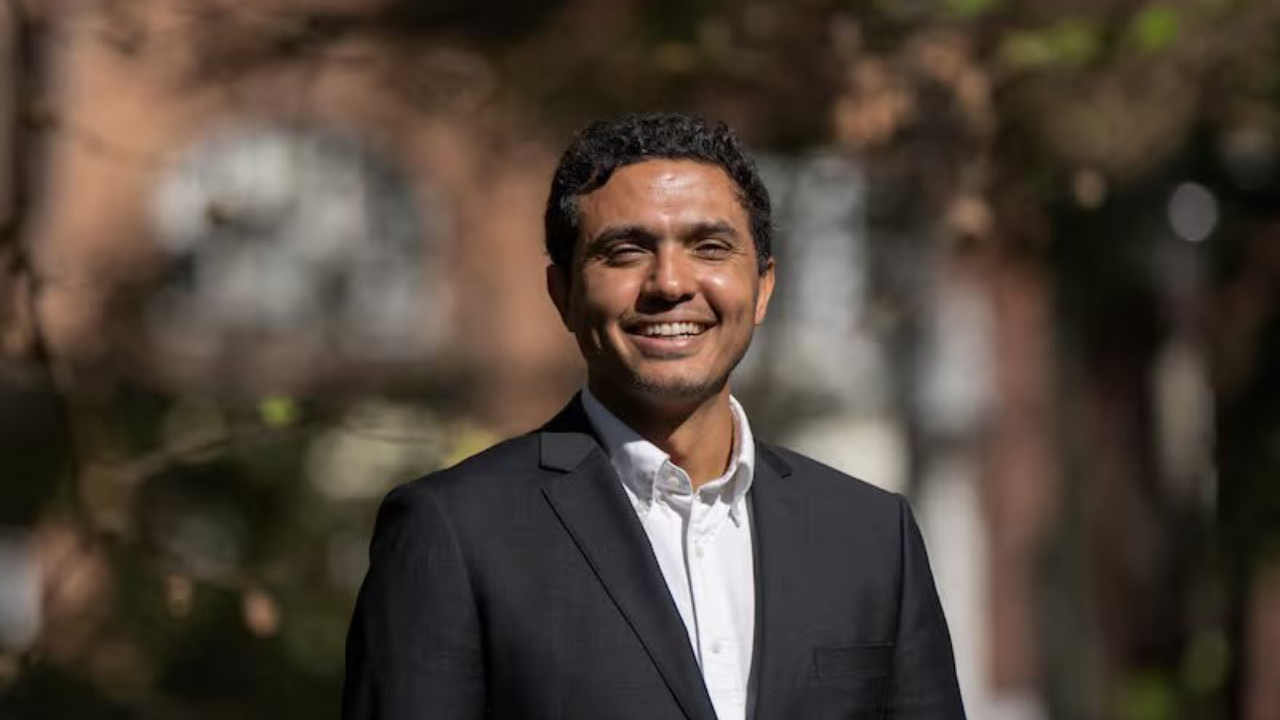
His name is Ahmed Moor. And if you haven't heard of him yet, you will.
The Architecture of an Outsider
To understand why Ahmed Moor is mounting a 2028 primary challenge against one of the most recognizable figures in American politics, you have to strip away the sterile bullet points of a typical campaign biography. You have to smell the salt air of the Mediterranean and feel the suffocating weight of a military blockade.
Moor was born in Gaza.
Let that sink in for a second. In the sterile corridors of the United States Senate, where foreign policy is routinely debated through the sanitized language of defense appropriations and strategic alliances, no one in the chamber carries the lived, visceral memory of growing up under occupation in the Gaza Strip. Moor does. As a child, his world was defined by checkpoints, curfews, and the sudden, terrifying roar of overhead aircraft. He watched his family navigate a reality where basic human dignity was treated as a luxury item, rationed out by distant powers.
Eventually, his family made it to the United States, settling in the American heartland and later putting down deep roots in Pennsylvania. Like millions of immigrants before him, Moor absorbed the American promise with the hunger of someone who knew what it meant to have nothing guaranteed. He didn’t just adapt; he excelled. He earned degrees from the University of Pennsylvania and Harvard University—institutions that serve as the traditional breeding grounds for the American establishment.
Yet, Moor never allowed the Ivy League polish to scrub away his origins. Instead of sliding comfortably into a lucrative corporate track or a safe consultancy role in Washington, he turned to writing, organizing, and urban policy. He co-edited After Zionism, a collection of essays challenging conventional orthodoxies in the Middle East, and built a career analyzing how systemic power shapes both impoverished neighborhoods in Philadelphia and besieged cities thousands of miles away.
He is, by every metric, an anomaly. He speaks the language of academic precision, yet his worldview is forged in the raw, uncompromising reality of survival.
A Collision of Worlds in the Keystone State
On paper, a matchup between John Fetterman and Ahmed Moor looks like a study in extreme contrasts.
Fetterman is the six-foot-eight giant from Braddock, a former mayor who built his brand on blue-collar authenticity and physical presence. Moor is a soft-spoken, cerebral Palestinian-American writer and policy analyst who relies on the sharp edge of an argument rather than the volume of his voice.
Critics will immediately point to that contrast as Moor’s fatal flaw. How, they ask, does a Gaza-born intellectual win over voters in Scranton, Erie, or the rural stretches of central Pennsylvania? How does someone whose name is synonymous with Middle Eastern advocacy convince a struggling machinist in Allentown that he cares about manufacturing jobs and opioid addiction?
It is a fair question. Honestly, looking at the sheer financial and institutional machine backing an incumbent senator, the odds against Moor are staggering. Primary challenges against sitting senators rarely succeed, especially in a state as notoriously expensive and politically tribal as Pennsylvania. If you are a voter looking at this race from the outside, it is easy to feel skeptical, even overwhelmed by the sheer scale of the uphill climb.
But that skepticism misses the deeper current moving beneath American politics right now.
Consider what happens when you peel back the surface labels. What connects a displaced family in Gaza to a laid-off factory worker in western Pennsylvania? On the surface, nothing. In reality, everything. Both are victims of a political economy that treats human beings as expendable collateral in service of larger, wealthier interests.
I remember sitting in a town hall in North Philadelphia a few years back, listening to a mother talk about how her neighborhood school didn't have clean drinking water while billions of dollars flowed effortlessly toward overseas military aid. The anger in that room wasn't partisan. It wasn't theoretical. It was the quiet, simmering rage of people who realized their government had endless money for destruction abroad and zero urgency for repair at home.
That is the bridge Ahmed Moor is trying to build. His campaign isn't a single-issue protest; it is an indictment of a broken system of priorities.
The Breaking Point With Fetterman
To understand why Moor’s candidacy has sudden, undeniable momentum among Pennsylvania’s progressive base, you have to look at the betrayal felt by Fetterman’s former supporters.
In 2022, young voters, Black and brown organizers in Philadelphia and Pittsburgh, and progressive activists knocked on hundreds of thousands of doors for Fetterman. They stood by him through his devastating stroke. They defended him against brutal media scrutiny because they believed he was one of them—a populist warrior who would challenge corporate greed and stand up for the marginalized.
Once in office, however, Fetterman’s posture hardened into something unrecognizable to his base. His unwavering, unconditional support for the Israeli military campaign in Gaza—often delivered with dismissive sarcasm toward anti-war protesters and Palestinian civilians—sparked outrage across the state. When constituents showed up at his offices pleading for a ceasefire, they weren't met with empathy; they were met with mockery and closed doors.
At the same time, Fetterman began distancing himself from the "progressive" label altogether, embracing hardline rhetoric on immigration and breaking with his party on key environmental and regulatory fights. To his defenders in the political center, this was smart, pragmatic politics tailored for a swing state. To the organizers who built his campaign, it was a slap in the face.
In politics, you can survive policy disagreements. You rarely survive the feeling of personal betrayal.
The Anatomy of a Different Kind of Campaign
Moor’s entry into the 2028 race transforms that simmering resentment into a concrete political vehicle. He isn't running to play spoiler, and he isn't running to simply give a few speeches at college campuses. He is running to test a radical thesis: that honesty, moral consistency, and working-class solidarity can beat billionaire PAC money.
Think of traditional political campaigns like a heavily processed meal—engineered in a lab by consultants to taste vaguely acceptable to everyone while nourishing no one. Every word is focus-grouped; every stance is hedged. Moor’s approach is the exact opposite. It is raw, unvarnished, and deeply personal.
When Moor talks about healthcare, he doesn't just recite statistics about insurance premiums; he talks about what happens to a human body when medical care is withheld as a tool of control. When he talks about housing in Philadelphia—a city grappling with a severe affordability crisis and predatory real estate speculation—he draws on his background in urban development to propose concrete, structural fixes rather than empty platitudes.
His platform rests on a simple, interconnected premise:
- Economic Dignity at Home: Raising the federal minimum wage, breaking up corporate monopolies that drive up grocery prices, and guaranteeing healthcare as a human right rather than an employer-controlled privilege.
- Accountability in Foreign Policy: Ending blank-check military aid to foreign governments that violate human rights, and redirecting those billions back into American infrastructure, public schools, and green energy jobs.
- Democratic Renewal: Stripping corporate lobbying money out of Washington so that senators answer to the people who live in their districts, not the donors who fund their super PACs.
None of these ideas are radical to the average voter. Polling consistently shows that majorities of Pennsylvanians—across party lines—want lower prescription drug costs, stronger unions, and less American entanglement in endless foreign wars. What makes Moor threatening to the establishment is that he actually means it. He has no corporate benefactors to appease, no defense contractors to protect, and no desire to climb the Senate leadership ladder by compromising his conscience.
What Happens When the Underdog Refuses to Blink
History is full of moments where the political class misread the room because they were looking at spreadsheets instead of human faces.
In 2018, almost no one gave a young bartender from the Bronx a chance against one of the most powerful Democrats in the House of Representatives. In 2020, few believed a progressive organizer in St. Louis could unseat a 20-year incumbent dynasty. In every single one of those cases, the establishment relied on the same tired playbook: bury the challenger in negative ads, question their viability, and assume voters are too cynical to demand something better.
Moor faces an even steeper climb. As a Palestinian-American candidate running for the U.S. Senate in a battleground state, he will inevitably face smear campaigns designed to paint him as extreme, divisive, or out of touch. The pro-Israel lobbying apparatus, which poured tens of millions of dollars into Democratic primaries during the 2024 and 2026 cycles to defeat critics of Israeli policy, will almost certainly target him with overwhelming financial force.
Watch how Moor responds to that pressure. Rather than retreating or softening his identity to make donors comfortable, he leans directly into his story. He talks openly about his family in Gaza. He talks about what it means to love America enough to demand that it live up to its stated ideals, rather than blindly applauding its worst impulses.
There is a quiet power in a candidate who cannot be bought because he has already survived the worst things power can do to a person.
Back to the Diner in Bethlehem
Let’s return to Frank, sitting in that cracked vinyl booth with his lukewarm coffee, reading about the upcoming Senate primary.
At first glance, Frank might think he has nothing in common with a writer born in a refugee camp halfway across the globe. They worship differently. They grew up worlds apart. Their accents, their histories, and their daily routines couldn't be more distinct.
Until Frank looks closer.
Until Frank realizes that the same political machine that ignored the slow death of Pennsylvania’s steel towns is the one writing blank checks for wars he never asked for. Until he sees a candidate who doesn't talk down to him, doesn't pander to him with costume changes, and doesn't treat his vote like a foregone conclusion.
The 2028 Pennsylvania Senate race is no longer just a routine contest for a congressional seat. It has become a referendum on the soul of the Democratic Party—and a test of whether an ordinary citizen, armed with nothing more than a fierce intellect and an unbreakable moral compass, can still walk into the arena and challenge a giant.
Somewhere in Philadelphia tonight, Ahmed Moor is lacing up his shoes, packing a stack of flyers into a worn messenger bag, and stepping out into the cold Pennsylvania air to knock on another stranger's door.