Four years of total silence between top generals isn't a policy. It's a gamble.
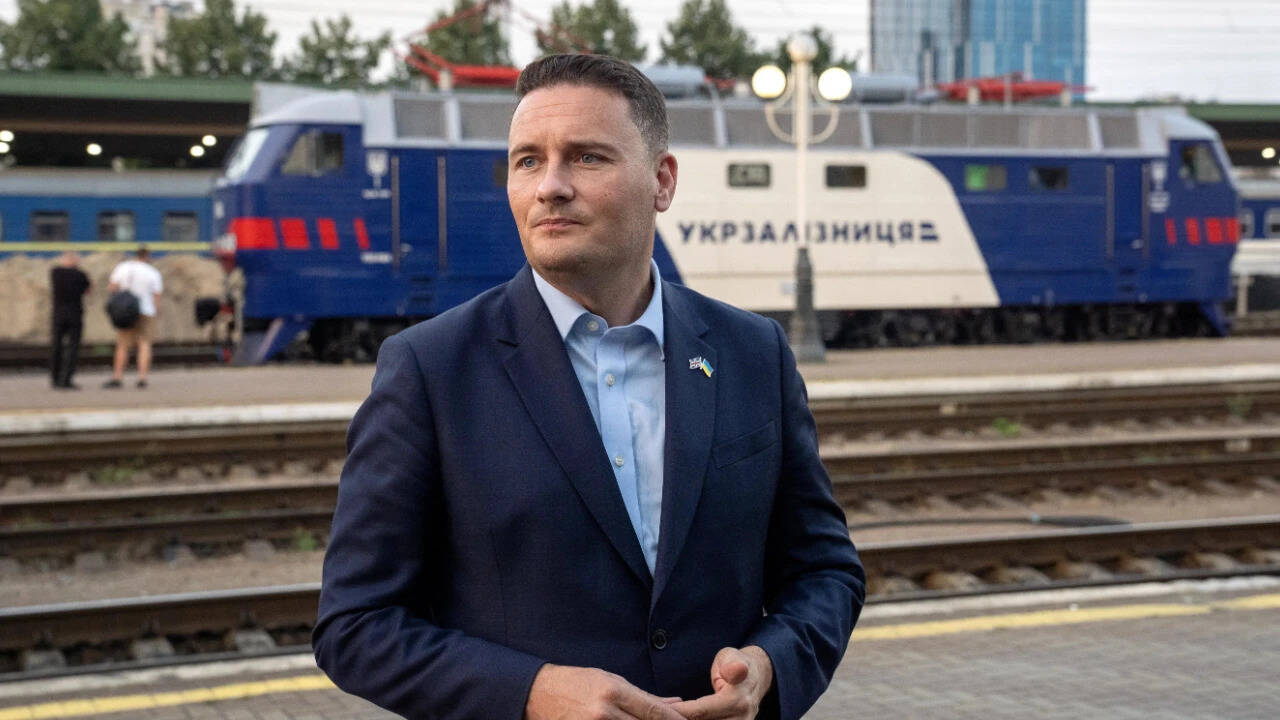
When British Defence Secretary Wes Streeting told the Financial Times in November 2026 that London needs a direct military-to-military hotline with Moscow, he wasn't pitching a peace treaty. He was admitting something far more uncomfortable. Since Russia launched its full-scale invasion of Ukraine in February 2022, not a single serving British defence secretary or chief of defence staff has spoken to their Russian counterpart. Not once. Meanwhile, Russian warships are suspected of jamming civilian aircraft off European coasts, undersea cables keep facing sabotage risks, and NATO jets regularly intercept Russian bombers over the North Sea. For an alternative look, see: this related article.
One radar glitch. One nervous pilot. Without a direct phone line between military commanders, a routine incident at 30,000 feet can spiral before an ambassador even gets through the front gates of the Kremlin.
What Actually Happened With the UK Military Hotline Proposal
Streeting's push for a UK military hotline with Russia didn't happen in a vacuum. His remarks came right as Russian and Ukrainian negotiators prepared for US-brokered talks in Abu Dhabi, their first direct diplomatic push since February 2026. For years, Britain relied almost entirely on its embassy in Moscow to pass messages. That's fine for formal diplomatic protests. It's useless when you have four minutes to verify whether an incoming radar signature is a malfunctioning drone or a pre-emptive strike. Further reporting on this matter has been published by Reuters.
"We have our embassy in Moscow. That is an important channel," Streeting explained. "I would much prefer there to be additional channels too, particularly military-to-military level. There is always a risk of miscalculation and that's why having that direct communication is important."
Less than two weeks later, Britain's top intelligence officer backed him up in public. Lt Gen Matthew Jones, Chief of Defence Intelligence, warned that while Russia isn't actively seeking a direct war with NATO, reckless behavior and miscalculation remain the single biggest triggers for a European conflict. When both your civilian defence boss and your military spy chief sound the exact same alarm within ten days, the threat assessment isn't theoretical anymore.
Why London Fell Behind Paris, Berlin, and Washington
Here's the part that stings in Whitehall. Britain isn't leading the charge on crisis de-escalation. It's playing catch-up.
While London maintained a strict freeze on senior military contact after 2022, other major Western capitals kept lines cracked open or quietly rebuilt them:
- The United States: The Trump administration has maintained steady high-level contact with Moscow throughout 2026 while brokering trilateral talks between Russia and Ukraine. Even during the darkest stretches of the war, the Pentagon and Russia's Ministry of Defence preserved dedicated deconfliction lines to keep American and Russian forces from colliding in Eastern Europe and the Middle East.
- France: President Emmanuel Macron broke a three-year silence in July 2025 by speaking directly with Vladimir Putin, reopening senior channels between Paris and Moscow.
- Germany: Berlin has similarly kept diplomatic and security backchannels active, outpacing British engagement even as European security tensions climbed.
Britain found itself isolated by its own tough posture. Having positioned itself as Ukraine's most vocal European backer—and having formally accused Russia of state-sponsored terrorism—London made any outreach look like a political retreat to domestic critics. That's the trap. When you turn basic crisis management into a loyalty test, you strip your own commanders of the tools they need to keep a cold standoff from turning hot.
The Mind Judo of Anglo-Russian Military Contacts
Wanting a hotline and getting Moscow to pick up the phone are two completely different problems.
Days after Streeting made his pitch, British defence ministers admitted a frustrating reality: Russia has either ignored or flat-out rejected UK efforts to establish senior military communication. Basic crisis hotlines still technically exist on paper, yet Moscow refuses to engage at the chief-of-staff or ministerial level.
Why? Because in the Kremlin's playbook, the silent treatment is a weapon.
As one former British official put it, part of Russia's routine is pretending the UK is irrelevant and doesn't warrant high-level engagement. Setting up and managing these channels is what insiders call the "mind judo" of Anglo-Russian relations. Back in August 2026, Russia's Foreign Ministry claimed it had received periodic signals from London about restoring military contacts, then smugly declared Britain had to "take the first step". By November, when Streeting publicly asked for those exact channels, Moscow stonewalled.
Russia loves watching British leaders ask for talks while the Kremlin leaves them on read. It feeds Moscow's domestic narrative that Britain is a second-tier power begging for relevance, all while keeping NATO's northern flank on edge.
How Military Deconfliction Lines Actually Work in a Crisis
Most people hear "military hotline" and picture a dusty red rotary phone sitting on a prime minister's desk. Real military-to-military deconfliction is far less cinematic and way more practical.
In practice, these channels operate on three distinct tiers:
- Operational deconfliction lines: Direct, 24/7 secure links between regional headquarters—like NATO's Allied Air Command or Royal Navy fleet commanders and their Russian Northern or Baltic Fleet equivalents. These exist to sort out immediate tactical friction, such as naval vessels crossing paths in the English Channel or fighter jets flying dangerously close over international waters.
- Chief-of-staff backchannels: Direct voice or secure text links between the UK Chief of the Defence Staff and Russia's Chief of the General Staff. These aren't used for negotiating borders. They're used when an intelligence warning flashes red—say, an unannounced missile test or a rogue drone crossing into NATO airspace—and the top brass need ten minutes of blunt, off-the-record clarity.
- Nuclear risk reduction centers: Automated, structured messaging systems established decades ago to notify each other of scheduled strategic exercises, ICBM test launches, and major troop movements so neither side mistakes a drill for a surprise attack.
Embassies can't do any of this. When an ambassador delivers a message, it passes through foreign ministries, gets translated, gets vetted by political advisors, and lands on a general's desk hours later. In modern warfare—where Lt Gen Jones noted that artificial intelligence and uncrewed drones are compressing decision times daily—a four-hour delay is an eternity.
Why Critics Hate the Idea and Why They're Wrong
Every time a British minister mentions talking to Moscow, the backlash is instant. Critics argue that opening a military hotline rewards Russian aggression, weakens deterrence, and signals to Vladimir Putin that Western resolve is cracking. If Russia is jamming GPS signals on commercial flights, running cyberattacks against UK infrastructure, and waging war in Ukraine, why give them the dignity of a direct line?
I get the emotional appeal of freezing Moscow out. Honestly, it feels right. You don't want to legitimize a regime that routinely threatens nuclear escalation.
History proves that logic backward. During the Cuban Missile Crisis in October 1962, it took nearly twelve hours for Washington and Moscow to receive and decode each other's critical messages—a delay that nearly triggered nuclear war over an accidental U-2 shootdown. The original Washington-Moscow hotline wasn't built because Kennedy and Khrushchev trusted each other. It was built because they didn't.
Deterrence relies on clarity, not silence. If a Russian warship jams 140 civilian aircraft off the European coast, or if a British reconnaissance jet gets buzzed over the Black Sea, telling Moscow directly—general to general—exactly where Britain's red lines sit makes deterrence stronger, not weaker. Ambiguity is what gets people killed.
What Needs to Happen Before the Next Close Call
Britain can't force Moscow to answer the phone, and begging publicly only hands the Kremlin easy propaganda wins. Instead of waiting for a grand diplomatic breakthrough, defence planners in London have to work around Russian stonewalling right now.
First, Britain should route tactical deconfliction through existing NATO command structures where operational lines still function, rather than treating every bilateral silence as an unbridgeable gap. Second, London needs to keep quiet about backchannel outreach—publicly announcing you want a hotline before the wires are connected invites Moscow to humiliate you by saying no. Finally, UK defence leadership has to match any push for communication with hard capability, proving to Moscow that when a British commander picks up that line, they're speaking from a position of genuine military strength rather than anxiety.
If you're tracking European security or defence policy over the coming months, watch three concrete indicators rather than political speeches:
- Chief-of-Defence-Staff contact: Watch for any unannounced phone readout between the UK Chief of the Defence Staff and Russian General Valery Gerasimov—that's the true signal that operational backchannels are alive again.
- Baltic and North Sea incident reports: Pay attention to how quickly NATO and Russian naval commands resolve airspace intercepts or GPS jamming events; faster stand-downs mean quiet tactical channels are working behind the scenes.
- Abu Dhabi diplomatic spillover: Track whether US-brokered trilateral talks produce broader European security annexes, which would give London political cover to formalize bilateral risk-reduction rules without looking like it blinked first.