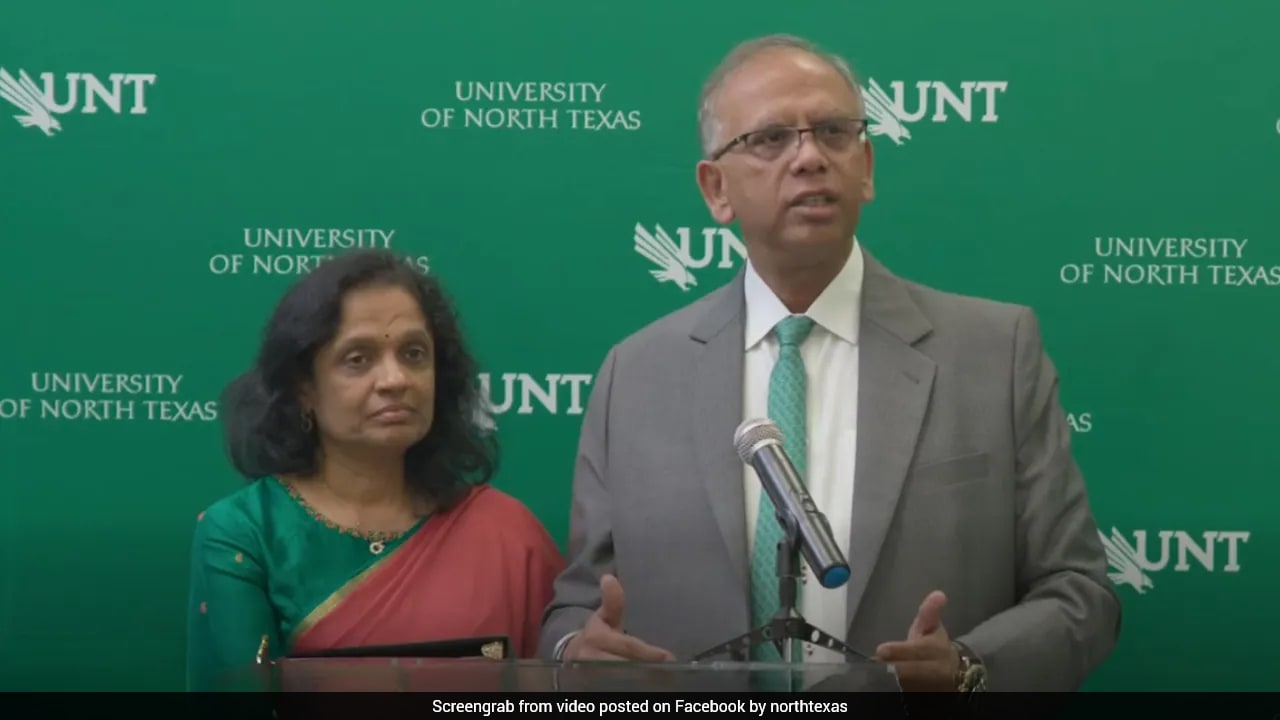
The transaction was clean, quiet, and monumental. Anuradha and Vikas Sinha transferred twenty million dollars to the University of North Texas, carving their names directly into the foundational architecture of American higher education. In exchange for the capital, the institution established the Anuradha and Vikas Sinha College of Artificial Intelligence and Advanced Analytics.
This is not a traditional story of wealthy alumni throwing spare currency at a football stadium or a brick-and-mortar library. It is a precise, calculated intervention in how the United States builds its technological workforce.
Higher education is currently suffering from a structural paralysis. Public funding has stagnated, state legislatures have pulled back support, and traditional academic departments move too slowly to keep pace with market demands. Universities are cash-strapped entities trying to teach twenty-first-century capabilities using nineteenth-century organizational models.
Enter the modern tech donor class.
Vikas Sinha earned his PhD in information science from the institution in 2023 and currently serves as a vice president at Broadcom. He understands the machinery from the inside out. When an immigrant technocrat funds an entire academic college, they are bypassing bureaucratic inertia entirely. They are building a bespoke pipeline for talent.
The twenty million dollars is not sitting in a vague operational fund. It is split across six permanent endowments designed to attack the problem from every angle. Leadership, scholarships, faculty professorships, entrepreneurship incubation, advanced research, and emerging technologies are all locked into the financial design.
Look closely at how modern philanthropic capital operates compared to historical donations. In the past, industrial titans built monuments to their egos with marble and mortar. Today's tech donors buy structural relevance. They want specialized infrastructure capable of churning out machine learning engineers, cybersecurity specialists, and data scientists before the curriculum becomes obsolete.
The new entity at the University of North Texas consolidates scattered disciplines under one organizational roof. Artificial intelligence, health informatics, cybersecurity, data science, and information science previously operated in academic silos. By forcing these departments into a single administrative unit, the institution eliminates departmental turf wars. It mirrors how modern software corporations actually function, blending engineering, data architecture, and applied research into unified product teams.
There is a broader economic shift occurring beneath the surface of this announcement. The traditional American dream relied on assimilation and quiet participation in existing systems. The new model relies on direct acquisition of institutional influence. Immigrant founders, executives, and technologists are no longer waiting for a seat at the table. They are buying the timber and redesigning the room.
Critics often point out the transactional nature of named colleges. Questions arise about corporate influence over academic curricula or the risk of prioritizing commercial applications over foundational theory. These are valid concerns. When funding comes tied to specific technological sectors like artificial intelligence and advanced analytics, humanities and pure sciences risk being squeezed out of the financial ecosystem.
Yet, public universities face an existential choice. They can maintain ideological purity while falling hopelessly behind the technological frontier, or they can partner with private wealth to stay operational. The University of North Texas chose survival and relevance.
The twenty million dollar check is just the latest installment in a multi-year strategy by the Sinhas. They started smaller. In 2024, they funded a department of data science. In 2025, they established an innovation lab. By 2026, they scaled their investment to an entire college. This is iterative philanthropy. It tests the administrative competence of the recipient institution before deploying heavy capital.
Every major public university in the country is currently watching this experiment. State funding models are broken, and tuition caps prevent institutions from pricing their way out of budget deficits. Private endowments tied directly to high-growth sectors like artificial intelligence represent the only viable escape route from systemic decline.
The name on the building matters, but the architecture of the curriculum matters more. As the first cohorts enter the Anuradha and Vikas Sinha College, they will not be studying abstract academic theory. They will be training on systems designed to feed directly into the corporate machinery that runs the global economy.
The ivory tower has officially accepted its new landlord, and the blueprints belong to the engineers who built the modern digital stack.