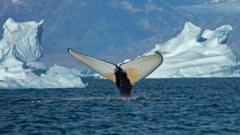
Every summer, the environmental commentariat finds a new creature to weaponize for clicks. This year, it is the majestic baleen whale, supposedly streaming into Greenlandic waters as the ice pack vanishes, treating the Arctic like an open-bar buffet. The lazy consensus prints itself: climate change melts the ice, whales move north, nature adapts, cue the melancholic violin music about a rapidly shifting world.
It is a neat, emotionally tidy narrative. It is also fundamentally backward.
I have spent decades watching environmental journalism substitute sentimentality for marine ecology, turning complex population dynamics into bedtime stories for urbanites who have never smelled a decaying fish. The reality of Greenlandic cetacean dynamics does not fit your favorite nature documentary, and pretending otherwise is worse than lazy—it is scientifically illiterate.
The Flawed Premise of the Great Northern Migration
The standard narrative assumes whales are passive refugees, fleeing warming southern zones to chase retreating ice like tourists moving to a cooler cabin. This completely misunderstands how mysticetes operate. Whales do not follow ice edges out of romantic desperation; they follow acoustic cues, continental shelf geography, and, most importantly, dense aggregations of zooplankton.
When commentators claim giant whales are moving into Greenland waters simply because the ice disappears, they ignore the physical oceanography. Ice retreat does not automatically equal a biological oasis. In many sectors, losing multi-year sea ice disrupts the stability of water columns, alters wind-driven upwelling, and scrambles the timing of the spring bloom.
If the water warms too fast, the cold-water copepods that humpheads and minkes rely on actually shrink in biomass and nutritional lipid content. You are looking at a marine desert disguised as an open highway.
What the Data Actually Shows
Let us look at the numbers marine biologists whisper about while PR departments draft press releases about happy whales.
- Calorie-to-Effort Ratio: A humpback or fin whale requires millions of calories a day. Swimming thousands of miles north into newly opened fjords makes zero energetic sense if the patch-density of prey is too low.
- The Temporal Mismatch: Whales operate on photoperiod cues—day length—not just temperature. When sea ice melts prematurely, the peak of primary production detaches from the arrival time of migratory predators.
- Acoustic Masking: As ice vanishes, wave action from increased wind fetch creates massive low-frequency ambient noise. Whales lose their communication highways long before they find any extra food.
This is not a triumphant expansion of habitat. It is an ecological squeeze.
Dismantling the People Also Ask Trap
Type whale migrations into any search engine and you will find the same predictable questions generated by algorithms designed to comfort you. Let us tear them apart.
Are whales invading the Arctic because their old habitats are too hot?
No. Ocean temperatures in temperate zones have risen, true, but cetaceans possess incredible thermoregulatory flexibility. They possess blubber layers designed to manage massive thermal swings. They are not fleeing a sauna; they are chasing erratic prey distributions caused by disrupted jet streams and shifting currents. The migration is a desperate search for calories, not a vacation to a cooler climate.
Does more open water mean more food for marine mammals?
This is the single most dangerous falsehood in modern conservation writing. Open water equals sunlight penetration, yes, but without the nutrient-rich meltwater pulses controlled by stable glacier dynamics and sea-ice edges, you get water columns that lack vertical mixing. Less ice can mean fewer nutrients, leading to starving giants in pristine blue water.
Can whale populations sustain this northern shift?
Only temporarily, and at the cost of long-term reproductive success. When mothers expend extra energy chasing fragmented food patches across wider geographical areas, calf survival rates plummet. The glowing reports of more sightings in Disko Bay miss the starving carcasses washing up on remote gravel beaches.
The Uncomfortable Truth About Conservation Tourism
Why do we cling to the myth of the happy northern whale? Because it keeps the funding pipeline active.
Organizations built on crisis management need visible indicators of change. A whale breaching against a backdrop of crumbling blue ice makes a phenomenal fundraising poster. It allows well-meaning donors in London and New York to feel that nature is dynamic, resilient, and photogenic.
I have seen institutions blow millions tracking individuals with satellite tags, knowing full well that the underlying food webs are collapsing from the bottom up. We spend our time counting fins while ignoring the collapse of the krill-like euphausiids that keep those animals alive.
The obsession with spatial expansion—the idea that animals moving into new geographic coordinates represents a win—is a terrestrial bias. Humans measure success by territory gained. Marine mammals measure success by lipid intake per unit of swimming effort. Right now, that ratio is tanking.
How to Read the Next Eco-Headline
When you encounter the next viral piece about wildlife colonizing the melting Arctic, apply a simple filter.
Ask for the lipid data. Ask for the calf-to-adult ratios. Ask whether the sightings represent a thriving population or a starving vanguard forced to range over three times their historical territory just to stay alive.
Nature does not care about your narrative arc. The whales are not winning an award for northern expansion; they are running a desperate marathon on a shrinking treadmill. Stop cheering for the scenery and start looking at the empty plates.