The wind off the North Sea doesn't care about geopolitics. It doesn't care about trade deficits, or special relationships, or the shifting tectonic plates of Western alliances. It simply bites. For the engineers working the rigs off the coast of Aberdeen, the cold is a constant, a physical weight that reminds them exactly where the fuel that heats London’s living rooms actually comes from.
But a different kind of chill is blowing across the Atlantic.
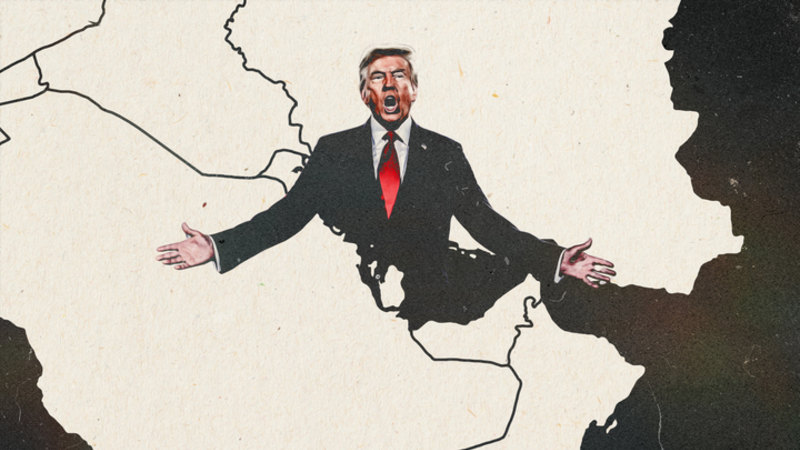
When Donald Trump looked toward the United Kingdom and essentially told the British government to "get your own oil," he wasn't just making a policy statement. He was shattering a long-held illusion of shared security. For decades, the transatlantic bond functioned like an unspoken insurance policy. The U.S. provided the umbrella—military, economic, and energy—and the UK operated under its shade.
That shade is vanishing.
The Empty Tank of Diplomacy
Consider a hypothetical family in a terraced house in Manchester. Let’s call them the Harrisons. To them, "energy independence" isn't a campaign slogan; it is the difference between keeping the heating on until 10:00 PM or turning it off at 8:00 PM to save a few pounds. When global markets shudder because of a comment made in a gold-trimmed office in Florida, the Harrisons feel it in their marrow.
The message from Washington is no longer a suggestion. It is an ultimatum. By telling the UK to stop looking west for its energy salvation, Trump has forced a nation that once pioneered the industrial age to reckon with its own depleted cupboards. The "Special Relationship" has always been a bit of a romanticized myth, but now the romance has been replaced by a ledger.
The ledger says the UK is short on black gold.
The numbers are stubborn. Britain’s North Sea production has been in a slow, agonizing decline since the turn of the millennium. We are watching the sunset of an era. While the United States has undergone a fracking revolution, turning itself into a global energy titan, the UK has spent years debating, hesitating, and ultimately legislating itself into a corner.
The Ghost of the North Sea
Walking through the docks of a Scottish port today feels like walking through a museum of what used to be. Huge, rusted chains lie coiled like sleeping serpents. The scale of the infrastructure is massive, built for a time when we thought the oil would flow forever.
There is a specific kind of silence that falls over an industry that knows its best days are in the rearview mirror.
The American perspective is blunt: Why should U.S. taxpayers and corporations subsidize the energy security of a nation that refuses to dig its own holes? From a purely transactional standpoint—the only standpoint that seems to matter in the current political climate—the logic is indestructible. If you have resources beneath your feet and you choose not to extract them because of environmental pressures or political optics, do not expect your neighbor to sell you theirs at a discount.
It is a hard truth. Brutal.
But it ignores the delicate web of global stability. When the U.S. pivots to an "America First" energy policy, it creates a vacuum. Vacuums in geopolitics are never filled by something friendly. If the UK can’t get its oil from a traditional ally, it must look elsewhere. It must look to regimes that don't share its values. It must look to markets that use energy as a leash.
The Fracking Elephant in the Room
We have to talk about the ground beneath our feet.
Fracking is a word that curdles the blood of many in the British countryside. It conjures images of poisoned wells and trembling earth. This fear is real. It is grounded in a deep love for a landscape that is small, crowded, and ancient. Unlike the vast, empty stretches of Pennsylvania or Texas, the UK doesn't have "middle of nowhere" spaces to spare.
Yet, this is exactly the leverage being used against the British government. The American message is clear: If you want the reward, you must take the risk. If you won't frack your own land, don't ask us to ship you the products of ours while we take the heat for it.
This creates a paralyzing paradox for British leadership. On one hand, there is the commitment to Net Zero—a noble, essential goal to prevent the literal boiling of the planet. On the other, there is the immediate, visceral need for affordable energy to keep the lights on in hospitals and the machines running in factories.
Transitioning to green energy is a marathon. But the country is currently gasping for air at mile two.
The invisible stakes are found in the tension between these two realities. It is easy to tweet about the environment from a heated office. It is much harder to explain to a pensioner why their bill has tripled because the "Special Relationship" just sent them a "Return to Sender" notice.
The End of the Security Blanket
For eighty years, the West has operated on the assumption of a shared destiny. We assumed that in a crisis, the pipelines and the shipping lanes would remain open because we were on the same team.
That team is being downsized.
The rhetoric coming out of the U.S. isn't just about oil; it’s about the end of the American protectorate. It’s a signal that the era of the global policeman—and the global gas station—is winding down. Each nation is being told to find its own way home in the dark.
For the UK, this is a moment of profound vulnerability. It is a mid-sized island with high consumption and dwindling reserves. To "get your own oil" is a command that requires billions in investment, years of planning, and a political will that currently doesn't exist. It requires a choice between environmental purity and national solvency.
Imagine the Cabinet Table. The maps are spread out. The charts show the gap between what we need and what we have. It is a chasm.
The American stance forces a confrontation with reality that no one in Westminster wanted to have. It is a cold shower of a policy. It strips away the comforting rhetoric of "allies" and replaces it with the stark language of "competitors."
The Human Cost of High Ground
We often talk about these things in terms of "sectors" and "indices." We forget the human face of energy.
I remember talking to a shopkeeper in a coastal town whose entire business model was threatened not by a lack of customers, but by the sheer cost of keeping the refrigerators running. He wasn't a political strategist. He didn't care about the intricacies of trade deals. He just knew that a few years ago, his electricity bill was a footnote, and now it was a death sentence for his business.
When a superpower tells an ally to fend for themselves, it is people like that shopkeeper who pay the price first.
The irony is that the UK has the potential to be a leader in the next energy revolution. The wind that bites off the coast of Aberdeen is a goldmine. The tides that crash against the Cornish cliffs carry enough kinetic energy to power millions of homes. We have the brains. We have the geography.
But we don't have the time.
The transition to a renewable future requires a bridge. For decades, that bridge was built of American cooperation and North Sea reserves. Now, one side of the bridge is being dismantled by an ally who is tired of carrying the load, and the other side is crumbling due to age and neglect.
The Ledger of the Future
There is no easy exit from this narrative.
If the UK chooses to drill and frack to satisfy the American demand for self-sufficiency, it risks its environmental soul and the fury of its own citizens. If it refuses, it remains at the mercy of a global market that is becoming increasingly volatile and an ally that has grown indifferent.
The "Get your own oil" comment is a bell that cannot be un-rung. It marks the moment the UK was told, in no uncertain terms, that it is on its own. It is a rejection of the collective security model that defined the 20th century.
Now, the halls of power in London must decide what kind of nation they want to be. Will they double down on the ghosts of the North Sea, or will they sprint toward a future where they truly don't need anyone else's permission to keep the lights on?
The wind continues to blow across the North Sea. It is indifferent to the frantic meetings in London or the bluster in Washington. It offers a choice: harness the gale, or huddle in the cold, waiting for a shipment of oil that may never come.
The era of the security blanket is over. The lights are flickering, and the room is getting colder.