The psychological state of a population is a lagging indicator of systemic volatility. While international headlines focus on kinetic exchanges and enrichment percentages, the internal stability of Iran is currently defined by a phenomenon of "permanent emergency." This is not a collection of individual fears, but a measurable structural deterioration of the social contract. The collapse of predictability—economic, physical, and legal—has created a state of hyper-vigilance that serves as a primary friction point for the state's long-term viability.
The Triad of Systematic Uncertainty
The anxiety described by residents is the output of three intersecting vectors. To understand the current Iranian domestic landscape, one must look past the surface-level fear of war and analyze the mechanisms that sustain this atmosphere.
1. The Erosion of the Economic Floor
Inflation in Iran functions as a form of psychological attrition. When a currency loses value at the rates seen in the rial, time itself becomes an enemy. The inability to project the cost of basic goods six months into the future removes the possibility of long-term planning. This "short-termism" is a survival mechanism.
The relationship between purchasing power and social stability is linear until it reaches a tipping point of "zero-sum survival." In this state, the middle class undergoes a forced proletarianization. The anxiety is not merely about being poor; it is about the loss of agency. Every financial decision becomes a high-stakes gamble against a fluctuating exchange rate, creating a baseline of cortisol that never resets.
2. Kinetic Volatility and the "Gray Zone" Life
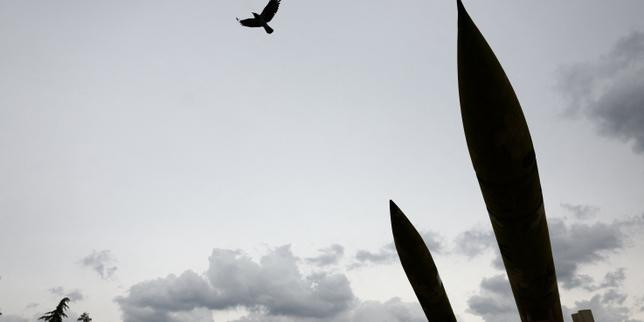
The threat of external military strikes exists in a "gray zone"—perpetual enough to disrupt life, but intermittent enough to prevent habituation. Unlike a hot war, where mobilization creates a specific set of protocols, the current state of "neither war nor peace" forces the civilian population to maintain a high level of readiness for an event that may or may not occur.
The psychological cost of this ambiguity is higher than that of a defined conflict. In a defined conflict, the risks are known. In the current Iranian context, the risk is a variable that changes based on a tweet, a proxy strike in a third country, or a midnight diplomatic failure. This creates a "permanent startle response" among the urban population.
3. The Arbitrary Nature of Domestic Enforcement
Internal security measures act as a secondary layer of unpredictability. When laws are applied inconsistently—such as those regarding social conduct or digital access—the citizenry can never be certain of the "safe" path. This creates a "panopticon effect" where the fear of the state is internalized. The anxiety is not about a specific law, but about the lack of a legible boundary between legal and illegal behavior.
The Mechanics of Social Atrophy
The result of these stressors is a process of social atrophy. This manifests in specific, observable ways that undermine the foundations of a functioning society.
- Brain Drain as Capital Flight: Human capital is fleeing the country not just for better wages, but for "predictability." The loss of the professional class creates a feedback loop; as experts leave, the systems they managed (healthcare, engineering, education) degrade, further increasing the anxiety of those who remain.
- The Atomization of Society: Under extreme stress, collective identity fractures. People retreat into immediate family units or individual survival modes. This reduces the capacity for civil society to function, but it also makes the population harder to govern, as traditional social levers of influence lose their efficacy.
- The Secularization of Despair: Traditional coping mechanisms, including religious and communal structures, are being tested. When the "next day" is constantly in doubt, the focus shifts from metaphysical or ideological goals to immediate, material security.
Categorizing the Risk Profiles
The intensity of this anxiety is not distributed equally. It follows specific demographic and geographic fault lines.
The Urban Precariat
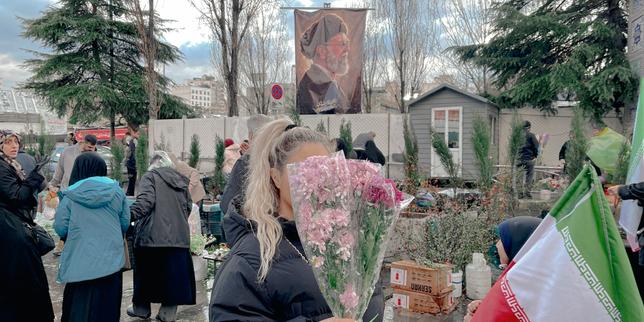
This group, largely concentrated in Tehran and Isfahan, feels the highest level of kinetic anxiety. They are the primary targets of both economic shifts and potential external strikes. Their anxiety is "acute" and "reactive."
The Rural Underclass
In provinces further from the center, the anxiety is "chronic" and "resource-based." It is driven by environmental degradation—specifically water scarcity—and the total collapse of local economies. For this group, the fear is not a missile strike, but the literal disappearance of the means to sustain life.
The Youth Demographic
For those under 30, the anxiety is "existential." They are looking at a horizon where the traditional milestones of adulthood (home ownership, career stability, marriage) are mathematically impossible. This creates a volatility that is disconnected from international relations and rooted entirely in domestic failure.
The Feedback Loop of State Response
The state's response to this widespread anxiety often exacerbates the problem. To maintain control, the apparatus frequently increases the level of unpredictability. Security crackdowns or sudden shifts in economic policy are designed to keep opposition off-balance, but they also destroy the very stability the state needs to function.
This creates a "security paradox." The more the state tries to secure itself against perceived threats (internal or external), the more it destabilizes the psychological foundation of its people. A population that feels it has nothing to lose is a population that cannot be deterred by traditional means.
Structural Bottlenecks to Stabilization
Three primary bottlenecks prevent the easing of this national anxiety:
- The Sanctions Trap: Even if domestic policy improved, the external economic pressure ensures a ceiling on recovery. This keeps the economic vector of anxiety locked in place.
- The Succession Vacuum: The uncertainty regarding future leadership creates a "wait-and-see" paralysis in both the markets and the bureaucracy.
- The Information Gap: The divide between state media narratives and the lived reality of the citizens creates a "cognitive dissonance" that is exhausting. Trust is a prerequisite for stability; in its absence, rumors and misinformation drive public behavior.
Strategic Forecast of Domestic Resilience
The current state of "permanent worry" is not a sustainable equilibrium. It is a slow-motion depletion of national resilience. The following indicators will signal whether this anxiety transforms into a different state of social order:
- The Velocity of the Rial: If the currency hits specific psychological benchmarks against the dollar, expect a shift from "anxious survival" to "active desperation" in urban centers.
- Infrastructure Failure Rates: As the "permanent emergency" diverts funds from maintenance to security, the failure of power grids or water systems will act as a catalyst for localized unrest that the state cannot easily suppress with rhetoric.
- Migration Patterns: Watch the rate of "temporary" exits. When the professional class begins to move their families out while staying behind to work, it indicates a total loss of faith in the mid-term security of the environment.
The strategic reality is that Iran is managing a crisis of "national exhaustion." The psychological state of the inhabitants—wondering if they will see the next day—is the most accurate metric of a system that has over-leveraged its social capital to pay for its geopolitical ambitions. The final stage of this process is not necessarily a revolution, but a "systemic hollow-out" where the structures of the state remain, but the human energy required to animate them has evaporated.
The immediate move for any observer or analyst is to monitor the internal "misery index"—a combination of inflation, unemployment, and the frequency of localized protests. When these metrics decouple from international news cycles, it indicates that the domestic pressure has reached an independent, self-sustaining level of volatility.