Everyone is treating Donald Trump’s January 1 warning to Iran like a countdown to a brand-new war. It isn't.
When the president told Fox News in late November 2026 that Washington will "see what happens after Jan. 1" and warned of fresh military strikes if diplomacy fails, cable news panels immediately went into overdrive. They framed it as a sudden, impulsive ultimatum. Look closer at the timeline, the Pentagon's budget, and the actual map of the Persian Gulf, and you'll see something completely different. The eight-month US-Iran conflict never actually ended. What we're watching right now isn't the start of a war—it's a high-stakes standoff over how to close one out before the money runs out.
The Real Reason Behind Trump’s New Year Deadline For Iran
If you want to understand why Trump picked early 2027 instead of next Tuesday, follow the money and the calendar.
First, there's the domestic political reality. Throughout October 2026, Trump repeatedly held off on major escalations ahead of the November 3 congressional midterm elections. The war was unpopular at home, and voters were already furious about energy prices spiking. Once Democrats swept the House in that election—capturing at least 258 seats—the political math in Washington changed overnight.
Trump suddenly faced a hostile incoming Congress that will take office in January 2027. Days after his Fox News comments, Trump casually dropped a massive clue about why the New Year matters so much. He stated that the US has enough funding to sustain operations in the Iran conflict until late January.
Think about what that means.
A new House majority threatens to choke off war funding and force messy impeachment fights—like the ones already swirling around Defense Secretary Pete Hegseth over Operation Epic Fury. By setting a New Year deadline for a diplomatic breakthrough, Trump isn't just pressuring Tehran. He's boxing in his own timeline, trying to force a settlement before a newly seated Congress can pull the financial plug on his military leverage.
What Is Actually Happening On The Ground Right Now
Most headlines make it sound like the guns are silent while diplomats sip tea in Doha. That's flat-out wrong.
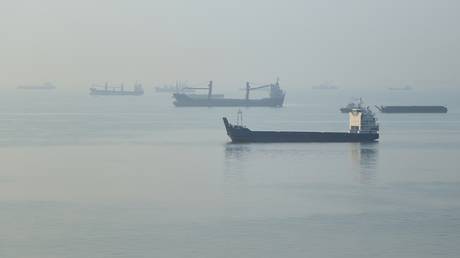
A fragile ceasefire has technically existed since April 8, 2026, following the initial massive wave of US and Israeli strikes. Yet the region has spent the last seven months on a knife-edge. The US Navy is actively enforcing a strict naval blockade of Iranian ports, choking off Tehran's economic lifelines. Meanwhile, Iran has kept a stranglehold on commercial traffic through the Strait of Hormuz, severing huge chunks of Persian Gulf oil and gas exports from global markets.
In the week leading up to Trump's November 23 warning, hostilities flared up again across the Gulf:
- Iranian forces expanded their strikes against neighboring Gulf states, specifically targeting a US air base in Kuwait.
- Washington warned Tehran against any attempt to breach the naval blockade, with Trump bluntly declaring on Fox News that if Iranian vessels try to break through, "they'll all be at the bottom of the sea like the rest of the navy".
- B-1 and B-2 bombers have remained on 96-hour alert for weeks, even as the USS George Washington rotated back toward the Pacific and Patriot air defense batteries were rushed to Israel.
This isn't peacetime diplomacy. It's active economic and naval siege warfare paired with intermittent missile exchanges.
Why Indirect Talks Through Qatar And Pakistan Are Stalled
You might wonder why Tehran hasn't caved under a naval blockade and the threat of fresh B-2 bombing runs.
During his November 22 Fox News interview, Trump mocked Iranian diplomats as "professional tap dancers," accusing them of stalling while continuing regional attacks. He isn't wrong about the stalling, though the reasons go deeper than diplomatic gamesmanship.
Right now, Qatar and Pakistan are acting as the primary mediators shuttling messages between Washington and Tehran. A Qatari delegation even traveled to Tehran on November 21 to jumpstart negotiations, yet Iran’s deputy foreign minister publicly confirmed that formal talks haven't even begun.
Why? Because both sides are demanding concessions the other refuses to give up front.
Tehran’s Preconditions For Talking
Iranian leaders saw the US midterm election results just like everyone else. Figures like Mohsen Rezaei, secretary of Iran's Supreme National Security Council, openly mocked the Trump administration after the November vote, viewing Trump's domestic setback as fresh leverage. Tehran has laid out strict preconditions—seven conditions in total, according to diplomatic reports—before it will even discuss its nuclear program. At the top of that list is an immediate end to the US port blockade and sweeping sanctions relief. From Tehran's perspective, negotiating while its ports are blockaded is negotiating with a gun to its head.
Washington’s Red Lines
On the other side of the table, the White House wants Iran to halt attacks in the Strait of Hormuz, curb its ballistic missile program, and permanently abandon any path to a nuclear weapon before Washington lifts the naval cordon. Interestingly, Trump has explicitly walked back any talk of toppling the Iranian government. "I just don't want them to have a nuclear weapon," he said in late November, adding that regime change "was never a criteria for me".
That admission matters. By taking regime change off the table, Trump signaled to Tehran that a deal is actually possible—provided they don't try to run out the clock until January.
The Outside Pressure From Israel And Washington Hawks
Trump isn't making this call in a vacuum.
In Jerusalem, Israeli Prime Minister Benjamin Netanyahu—currently leading a caretaker government following Israel's own recent elections—has been actively lobbying Washington to join a massive new four-to-seven-day air campaign against Iran. For Netanyahu, hitting Iran's remaining military infrastructure while the US still has bombers on alert is a golden opportunity.
Meanwhile, inside Washington, intelligence leaks have poured gasoline on the fire. Reports citing anonymous US officials recently alleged an Iranian plot involving a dirty bomb targeting senior administration officials in Washington—claims that prompted Trump to call Iranian leaders "crazy". Whether those leaks reflect imminent threats or bureaucratic maneuvering by hawks trying to box Trump into striking, they make diplomatic compromise infinitely harder to sell to the American public.
Yet Trump has alternated wildly between threatening "the biggest attack" and declaring just weeks ago after meeting the Qatari Prime Minister that the war is "effectively over". Current and former officials point out a simple truth: he genuinely hasn't made up his mind. He hates endless foreign wars, hates high gas prices even more, and wants a signature deal he can brag about.
What Happens If January 1 Arrives Without A Deal
So what should you actually watch for over the next five weeks? Forget the cable news hype and track three concrete indicators that will tell you whether we're headed for a handshake or another round of airstrikes.
- Movement in the Strait of Hormuz and Iranian ports. The fastest way this crisis boils over before New Year's Day isn't a failed diplomatic meeting in Doha—it's an Iranian gunboat or drone testing the US naval blockade. If Tehran tries to escort a tanker out of a blockaded port, US forces have standing orders to sink it, which would trigger immediate retaliation across Gulf bases.
- Qatari and Pakistani shuttle diplomacy. Watch whether Iran drops its demand for lifting the blockade before talks start. Mediators are pushing a phased framework where Iran pauses Hormuz disruptions in exchange for partial maritime relief. If formal face-to-face or direct proximity talks aren't announced by mid-December, the diplomatic window closes.
- Capitol Hill budget battles. Keep an eye on defense appropriations in Washington. Because current funding carries operations only into late January, any move by lawmakers to restrict Pentagon spending for Middle East deployments will force Trump's hand—either pushing him to strike while he still has the cash or compelling him to accept an imperfect truce.
The New Year deadline isn't an arbitrary date pulled out of thin air. It's the exact intersection where Iran's economic pain from the blockade collides with Trump's shrinking political and financial runway at home. Both sides know the clock hits zero in January, and neither can afford to blink first.
Watch this NDTV report on Trump warning Iran of fresh US strikes after the New Year to hear his exact remarks on the stalled negotiations and the naval blockade.