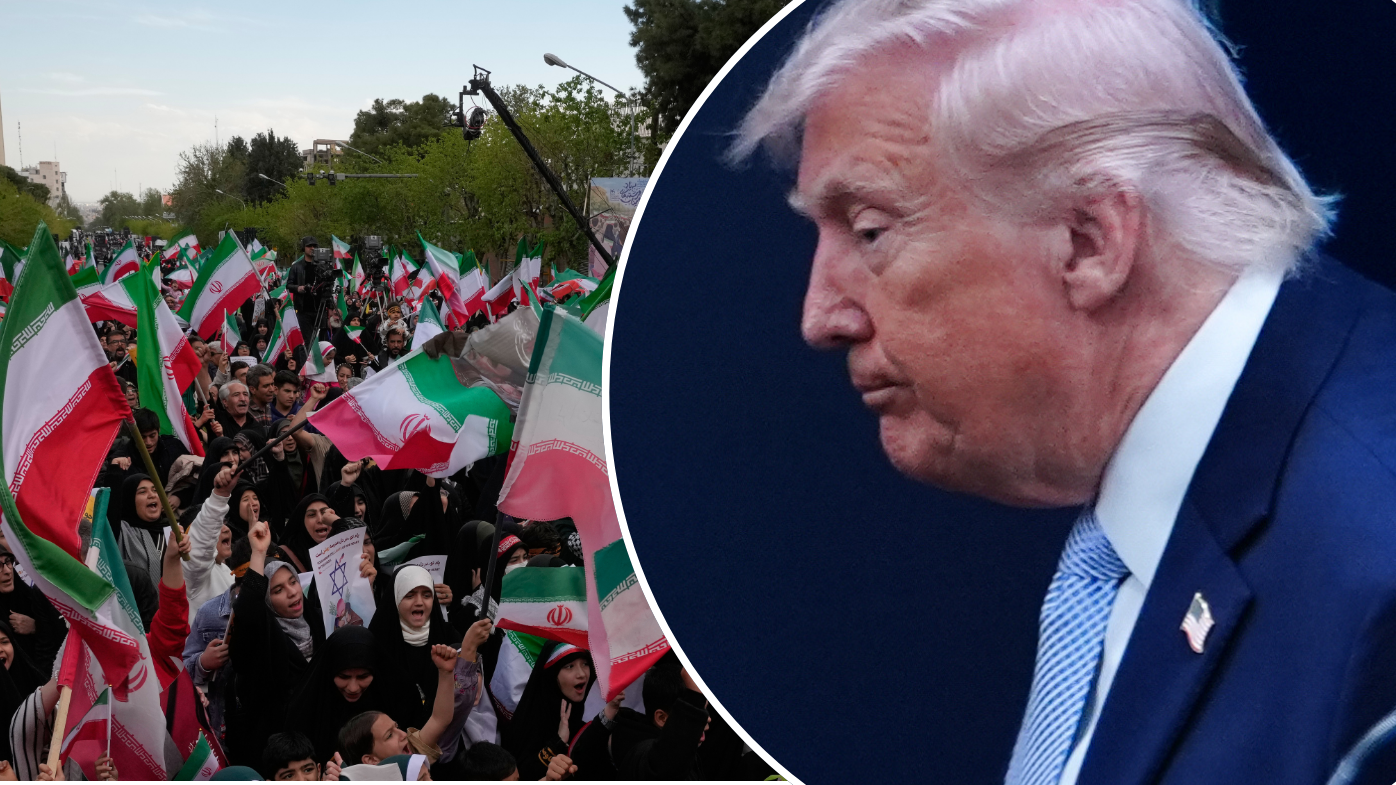
The meeting between Donald Trump and NATO Secretary General Mark Rutte functions less as a diplomatic formality and more as a stress test for the operational logic of the North Atlantic Treaty Organization. While traditional reporting focuses on the personalities involved, the true friction exists at the intersection of two conflicting strategic doctrines: the burden-sharing model of the incoming U.S. administration and the collective defense requirements of a European continent facing an escalating multi-front security crisis. The central instability is not merely budgetary; it is a fundamental disagreement on the scope of NATO’s mandate regarding non-European threats, specifically the role of Iranian proxy networks and their impact on Atlantic security.
The Tri-Front Tension Framework
To understand the current strain on the alliance, one must map the three distinct pressures currently converging on the NATO leadership structure.
1. The Fiscal Burden-Sharing Mandate
The U.S. demand for increased defense spending—historically targeted at 2% of GDP—is transitioning from a guideline to a prerequisite for American security guarantees. This creates a binary choice for European member states: achieve fiscal compliance or face a reduction in the American forward-deployed footprint. The mechanism at play is a decoupling of "General Deterrence" from "Specific Commitment." While the U.S. remains the anchor of the alliance, its willingness to provide high-end capabilities (e.g., ISR, missile defense, strategic airlift) is now contingent on European states assuming the cost of conventional ground-based defense.
2. The Iranian Escalation Loop
The strain mentioned in the context of Iran reflects a divergence in threat perception. The U.S. view often categorizes Iran as a global disruptor that necessitates a coordinated NATO response, particularly regarding its ballistic missile proliferation and support for regional militias. European capitals, conversely, frequently treat Iran as a localized Middle Eastern problem to be managed through containment and diplomatic de-escalation. When these two views collide, NATO’s decision-making apparatus freezes.
3. The Eastern Flank Absorption
The ongoing conflict in Ukraine acts as a massive sink for European defense resources. Every euro or pound sterling diverted to the Ukrainian front is a resource not spent on modernizing domestic NATO-ready forces. This creates a "readiness gap" that the incoming Trump administration perceives as a lack of serious intent, further fueling the drive for a structural overhaul of the alliance’s funding model.
The Cost Function of Collective Defense
The viability of NATO depends on a stable cost function where the perceived benefit of the security umbrella exceeds the financial and political cost of maintaining it. This equation is currently imbalanced.
- Variable A: The Hegemonic Subsidy. Historically, the United States has provided a "security subsidy" to Europe, allowing member states to underfund their militaries while maintaining social safety nets.
- Variable B: The Threat Multiplier. Technological parity among near-peer adversaries (Russia) and asymmetrical disruptors (Iran) has increased the price of maintaining a credible deterrent.
- Variable C: Political Will. The internal domestic pressures in various member states—ranging from German fiscal austerity to French pursuit of "Strategic Autonomy"—act as a drag on the alliance’s ability to pivot.
The failure of Variable A to keep pace with Variable B, coupled with a decline in Variable C, results in a "Strategic Deficit." The Trump-Rutte meeting is an attempt to negotiate the terms of who covers this deficit.
Defining the NATO-Iran Disconnect
The alliance currently lacks a unified doctrine regarding Iranian activity. This creates three specific operational vulnerabilities:
Tactical Divergence on Maritime Security
The Red Sea and Persian Gulf are vital to European energy security and global trade. However, NATO as an entity has struggled to project power in these regions without overwhelming U.S. leadership. When the U.S. seeks a "Maximum Pressure" stance, European allies often hesitate, fearing a total collapse of existing non-proliferation frameworks. This creates a gap that Iran exploits through gray-zone tactics, such as drone strikes and maritime harassment, which do not quite trigger Article 5 but significantly degrade the alliance's collective economic interests.
The Missile Proliferation Threat
Iranian ballistic missile development directly affects the security of NATO’s southern flank. The integration of Iranian technology into Russian military operations in Eastern Europe has effectively "globalized" the threat. The distinction between a "Middle Eastern threat" and a "European threat" is now a false dichotomy. The challenge for Rutte is convincing the skeptical Trump administration that European NATO members recognize this reality and are prepared to invest in the necessary integrated air and missile defense (IAMD) systems to counter it.
The Structural Bottleneck of Consensus
NATO operates on the principle of consensus, which is its greatest strength and its most significant operational weakness. The inclusion of members with diverging geopolitical priorities—such as Turkey’s unique relationship with Russia and Iran versus the hawkish stance of the Baltic states—means that any move toward a more aggressive stance on Iran or a radical shift in funding will be met with internal resistance.
The U.S. administration’s likely strategy involves bypassing this consensus through "Mini-lateralism." Instead of seeking broad NATO-wide agreements that are often watered down, the U.S. may focus on forming high-capability coalitions with specific partners like Poland, the UK, and the Baltic states. This effectively creates a two-tier NATO:
- Tier 1: High-spending, high-readiness nations directly aligned with U.S. strategic objectives.
- Tier 2: Nations that meet the minimum criteria but lack the political will or fiscal space to contribute to global power projection.
This two-tier structure is the "Quiet Crisis" of the alliance. It maintains the appearance of unity while the functional reality of collective defense fragmentizes.
Quantifying the Strategic Pivot
If the alliance is to survive in its current form, it must shift from a "Reactive Posture" to a "Resilient Posture." This requires specific, measurable milestones that the Trump-Rutte dialogue must address:
- Hard Target Spending: Moving beyond the 2% floor to a "2% + 1%" model, where the additional percent is earmarked specifically for high-intensity conflict readiness and emerging technology integration (AI, autonomous systems).
- Unified Threat Assessment: Creating a formalized NATO-Iran working group that syncs intelligence and develops a shared "Red Line" framework for Iranian intervention in European theaters.
- Logistical De-risking: Reducing the reliance on non-NATO supply chains for critical defense components, a point the Trump administration has frequently highlighted as a core national security risk.
The Decoupling Risk
The primary risk of the current trajectory is not a total U.S. withdrawal from NATO, but a "Functional Decoupling." This occurs when the U.S. maintains its treaty obligations on paper but reduces its active participation in European defense planning. If the U.S. perceives that its interests in the Indo-Pacific or the Middle East are being hampered by European recalcitrance, it will naturally shift its best assets (F-35s, carrier groups, cyber offensive capabilities) away from the European theater.
European states currently lack the industrial base to replace these assets. The "Autonomy" French President Macron often speaks of would take decades and trillions of euros to achieve. Therefore, the Rutte leadership is in a position of "Asymmetric Dependency." They need the U.S. more than the U.S. needs the current iteration of NATO.
Strategic Realignment Requirements
The path forward for the alliance requires a brutal assessment of current deficiencies. The meeting is a negotiation over the price of continued American involvement. To stabilize the relationship, NATO leadership must offer more than rhetoric; they must offer a roadmap for a self-sufficient European defense pillar that can function as a "Force Multiplier" for American interests rather than a "Resource Drain."
- Immediate Reallocation: Member states must shift budgets toward ammunition stockpiles and long-range fires, moving away from "parade militaries" to combat-effective forces.
- Iranian Deterrence Integration: NATO must officially incorporate the threat of Iranian proxy warfare and missile proliferation into its Strategic Concept, allowing for coordinated sanctions and military deterrence.
- The Burden-Sharing Audit: Implementation of a transparent, quarterly audit of member state defense investments, removing the ambiguity that has allowed some nations to mask underfunding.
The alliance is entering a period where the "Security for Influence" trade-off is being renegotiated. The U.S. is signaling that its influence is no longer for sale at the price of European defense under-investment. The success of the Rutte-Trump dialogue will be measured not by the joint statement issued afterward, but by the subsequent defense budget authorizations in Berlin, Paris, and Rome.
Strategic Action: European NATO members must immediately move to authorize multi-year defense procurement contracts that guarantee a minimum 2.5% GDP spend. Failure to do so by the next fiscal cycle will likely trigger a U.S. pivot toward a "Transactional Defense" model, where American security guarantees are scaled directly to the level of local military contribution, effectively ending the era of the universal NATO umbrella.